
Introduction
A well-built clothing trims list does more than note buttons, zippers, and labels—it defines how a garment will function, look, and move through production. For fashion designers, trims affect cost, sourcing timelines, minimum order quantities, and the overall brand impression of each piece. This guide outlines the essential trim categories to include, explains why each matters in development and manufacturing, and helps you make more accurate decisions when building tech packs or planning collections. With a clear trims framework in place, it becomes easier to balance design intent with production realities.
Why a strategic clothing trims list matters
In industrial apparel manufacturing, a comprehensive clothing trims list is far more than an inventory of decorative accessories. Trims encompass all physical components of a garment excluding the core fabric, forming a critical segment of the Bill of Materials (BOM). Strategic management of these components is essential for maintaining production efficiency, forecasting accurate margins, and ensuring brand consistency across seasonal collections.
Impact on cost and brand positioning
The financial weight of trims within garment production is substantial, often accounting for 10% to 30% of the total manufacturing cost depending on the product category. Selecting premium hardware, such as polished brass zippers or genuine horn buttons, elevates the perceived value of the garment, allowing brands to position themselves in the contemporary or luxury markets. Conversely, over-specifying trims on budget-conscious fast-fashion items rapidly erodes gross margins. Precision in the trims list ensures that cost engineering aligns seamlessly with target retail pricing and brand expectations.
Trim choices that affect lead times and MOQs
Procurement timelines for clothing trims frequently dictate the critical path of the entire manufacturing cycle. While standard commodity trims may be available ex-stock, custom dyed-to-match (DTM) components typically add 3 to 5 weeks to lead times. Furthermore, bespoke hardware featuring engraved brand logos often requires mold creation, pushing minimum order quantities (MOQs) to thresholds of 5,000 to 10,000 pieces per style or colorway. Failing to account for these logistical constraints in the initial trims list inevitably results in production bottlenecks and missed delivery windows.
What to include in an essential clothing trims list
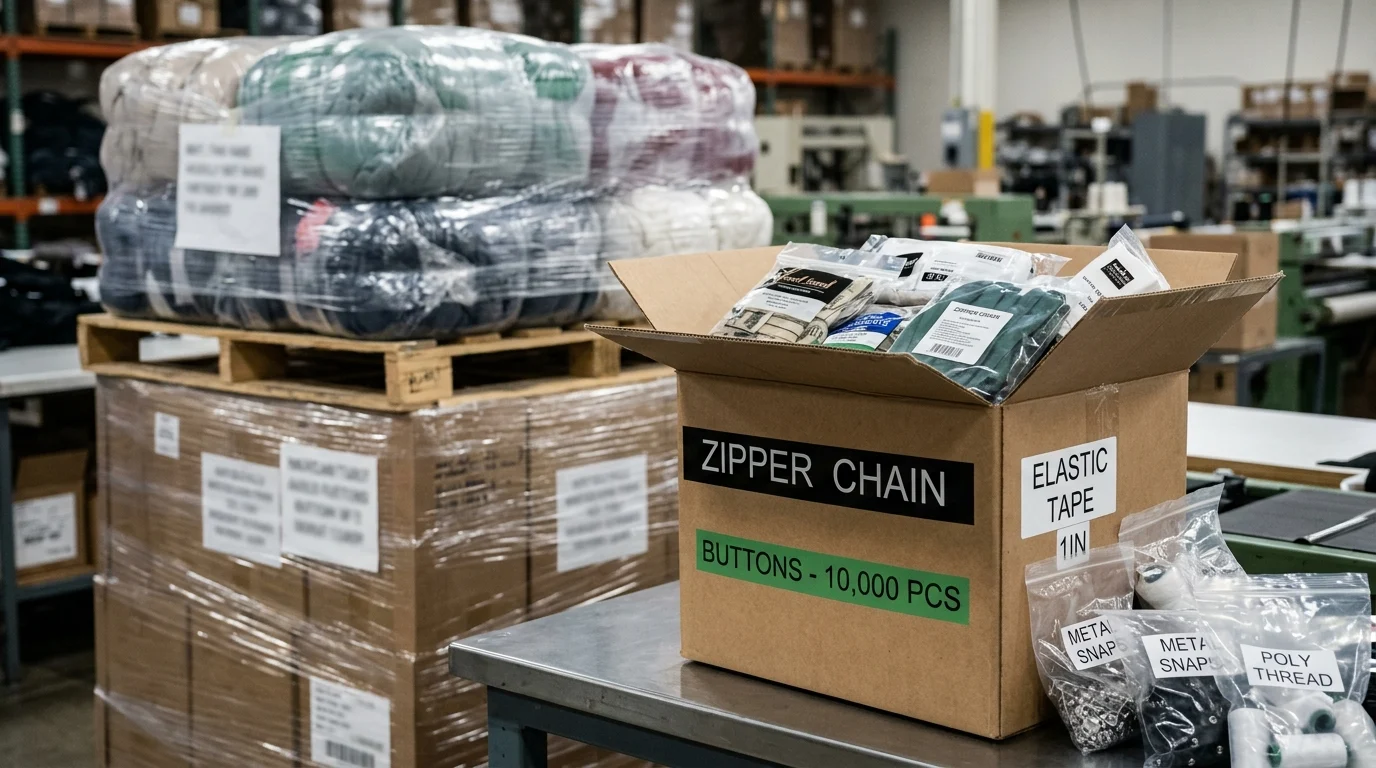
A highly functional clothing trims list categorizes components systematically to streamline procurement and factory handover. Distinguishing between functional necessities and aesthetic enhancements allows technical designers and sourcing managers to prioritize testing, allocate budgets effectively, and establish clear supplier mandates.
Functional trims for closures and support
Functional trims are engineered to provide structural integrity, closure, and adjustability to the garment. This category includes zippers, buttons, hook-and-eye closures, snaps, rivets, and elastics. The specifications for functional trims must be rigorously defined; for example, heavy denim requires zippers with a lateral tensile strength exceeding 50 to 100 pounds to prevent bursting under stress. Drawcords and toggles must similarly meet durability metrics to withstand repeated industrial laundering.
Decorative trims that add visual value
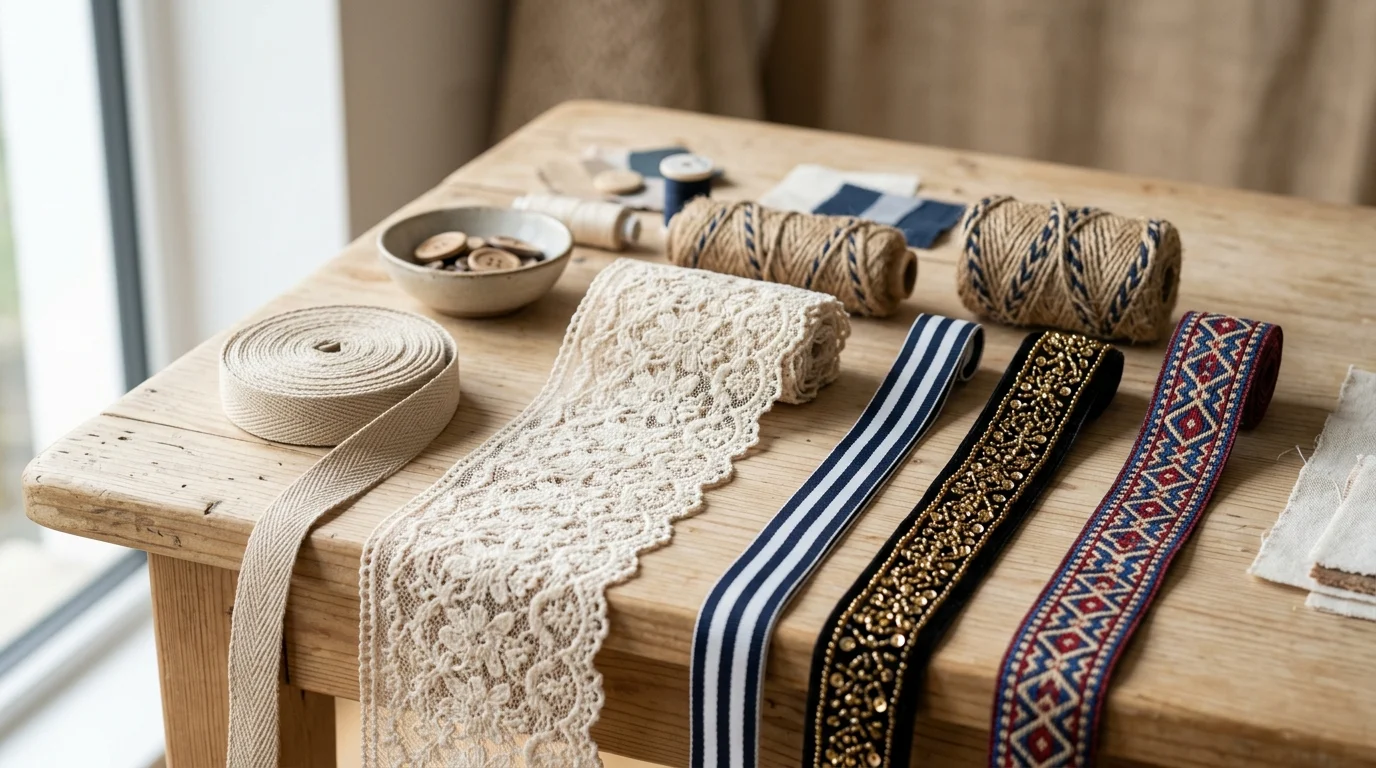
Decorative trims serve primarily to enhance the visual appeal and tactile interest of a design. Items such as lace edgings, embroidered appliques, grosgrain ribbons, piping, and woven labels fall into this classification. While they may not bear structural loads, decorative trims require careful specification regarding colorfastness and shrinkage. A cotton lace trim that shrinks 5% on a polyester garment that shrinks 1% will cause irreversible puckering along the seam line.
Classifying trims by garment category
To optimize the BOM, trims should be classified by the specific demands of the garment category. Outerwear demands robust, weather-resistant hardware, whereas intimates require lightweight, skin-friendly components with high elasticity.
| Garment Category | Typical Functional Trims | Standard Specification Examples |
|---|---|---|
| Heavy Outerwear | Metal zippers, snap buttons, bungee cords | #8 to #10 zipper teeth, 15mm heavy-duty snaps |
| Denim & Workwear | Shank buttons, metal rivets, heavy thread | 17mm brass shanks, 9mm burr rivets |
| Intimates & Swim | Picot elastic, underwires, hook-and-eye | 8mm to 12mm width elastics, nylon-coated wires |
| Lightweight Wovens | Shell buttons, concealed zippers, interfacing | 14L to 18L (Ligne) buttons, #3 invisible coil zippers |
How to compare clothing trims by material and performance
Evaluating clothing trims requires a comparative analysis of material properties and performance metrics. Sourcing professionals must weigh the physical characteristics of each trim against the intended lifecycle of the garment, ensuring that components do not degrade faster than the primary textile.
Key comparison criteria
Establishing strict comparative criteria prevents premature garment failure. Key performance indicators include colorfastness to washing and light (targeting a minimum of Grade 4 on the grayscale), dimensional stability (shrinkage tolerance strictly under 3%), and corrosion resistance for metal components. Hardware must routinely pass a 48-hour salt spray test to ensure it will not rust during transit or consumer use. Additionally, the melting point of synthetic trims must be verified to survive commercial pressing operations.
Comparing zippers, buttons, and elastics
Different materials offer distinct advantages and limitations within the same trim category. When comparing zippers, molded plastic offers a lighter weight and smoother glide for activewear, whereas brass provides superior durability for heavy canvas. For buttons, natural Corozo offers a premium, sustainable aesthetic but requires careful dye management, whereas polyester resin provides high uniformity at a fraction of the cost.
| Trim Type | Material Option A | Material Option B | Performance Trade-off |
|---|---|---|---|
| Zippers | Brass (Metal) | Nylon Coil | Brass offers high tensile strength but is heavy and prone to oxidation; Nylon is highly flexible and lightweight but has lower burst strength. |
| Buttons | Corozo (Natural) | Urea / Resin (Synthetic) | Corozo provides luxury appeal and resists melting under high heat; Resin is highly cost-effective and impact-resistant. |
| Elastics | Woven Spandex | Knitted Rubber | Woven Spandex retains width when stretched and has high recovery; Knitted Rubber is cheaper but degrades faster exposed to heat and oils. |
Sourcing, compliance, and quality control for clothing trims
The integrity of a clothing trims list is ultimately defined by the reliability of the supply chain executing it. Rigorous supplier evaluation, adherence to international compliance standards, and systematic quality control are non-negotiable elements of modern apparel manufacturing.
Evaluating trim suppliers
Selecting trim suppliers involves auditing their manufacturing capabilities, capacity, and quality management systems. Industry best practices dictate partnering with facilities holding ISO 9001 certifications and OEKO-TEX Standard 100 accreditations. A reliable trim supplier should maintain a defect rate strictly below 1.5%. Sourcing teams must also evaluate the vendor’s ability to provide consistent dye lots and their responsiveness to rapid prototyping during the sampling phase.
Compliance requirements and restricted substances
Trims are frequently the source of restricted substance compliance failures. Global regulations, such as REACH in the European Union and the CPSIA in the United States, impose severe limits on toxic chemicals. For children’s apparel, lead content in metal trims must remain below 90 parts per million (ppm), and phthalates in plastic components must not exceed 0.1%. Furthermore, all metal hardware coming into prolonged contact with the wearer’s skin must be certified nickel-free to prevent allergic contact dermatitis.
Quality checks to reduce attachment failures
Even compliant trims can fail if improperly attached. Quality control protocols must include standardized mechanical testing on the production floor. Pull tests are mandatory for buttons, snaps, and rivets, typically requiring the attachment to withstand 90 Newtons of force for 10 seconds without detaching. Additionally, all garments featuring metal trims must pass through calibration-checked needle detector machines to ensure no ferrous fragments remain from the sewing process, safeguarding the end consumer.
How to build a decision-ready clothing trims list
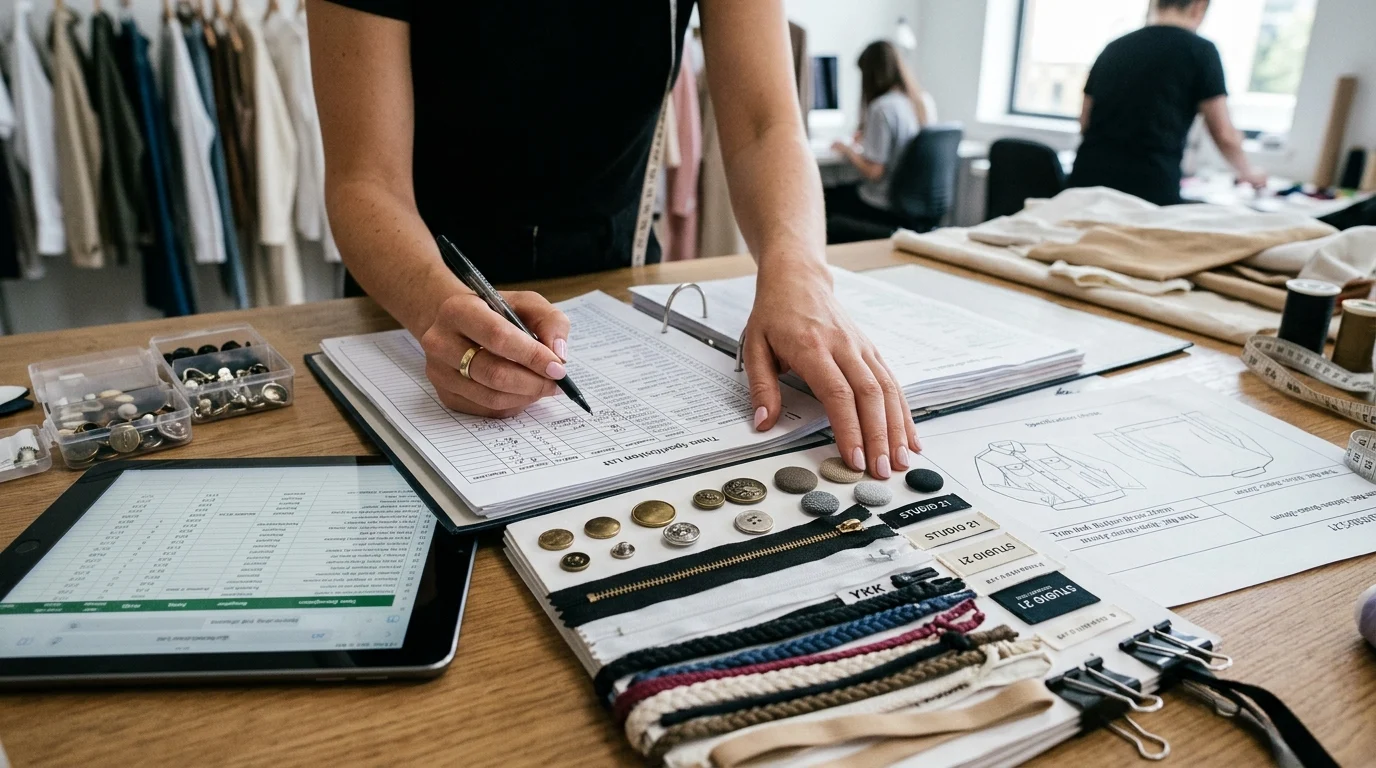
Transitioning from theoretical design to actionable production requires building a decision-ready clothing trims list. This document, often integrated into a Product Lifecycle Management (PLM) system, serves as the central source of truth for cross-functional teams, bridging the gap between creative intent and commercial viability.
Step-by-step list-building process
The list-building process follows a structured sequence. First, technical designers extract every required component from the garment sketch to establish BOM placeholders. Next, sourcing teams identify standard versus custom trims, assigning specific supplier codes, lead times, and MOQs to each item. A critical threshold in this process is the cut-off date: all trims must be finalized, approved, and ordered at least 60 days prior to the factory’s scheduled fabric cut date to ensure components arrive at the sewing facility in time for assembly.
Decision criteria for aesthetics and margin
Finalizing the list requires balancing aesthetic aspirations with strict margin requirements. Sourcing managers evaluate the Free on Board (FOB) cost implications of every trim. For example, if a jacket has a target FOB price of $15.00, the total trim budget should typically not exceed $2.50 to maintain a healthy 65% wholesale gross margin. If the initial trim selection breaches this threshold, designers must pivot—swapping custom-molded hardware for open-market alternatives or replacing imported lace with domestically sourced equivalents—without compromising the garment’s core identity.
Key Takeaways
- The most important conclusions and rationale for Clothing Trims
- Specs, compliance, and risk checks worth validating before you commit
- Practical next steps and caveats readers can apply immediately
Frequently Asked Questions
What counts as a clothing trim?
A clothing trim is any garment component besides the main fabric, such as zippers, buttons, labels, webbing, elastic, rivets, snaps, and hook-and-loop tape.
Why should designers create a trims list early?
An early trims list helps control cost, avoid MOQ surprises, and prevent lead-time delays, especially for custom dyed or logo-branded trims.
Which trims are most important for functional performance?
Focus on closures and support items: zippers, buttons, snaps, hook-and-loop tape, elastic, drawcords, toggles, rivets, and eyelets. Match strength to the garment type.
How can I reduce sourcing risk for custom clothing trims from China?
Use verified suppliers, confirm specs in the BOM, approve samples, and schedule QC before shipment. Tramigo can support audits, sampling, negotiation, and inspection.
What should I check when comparing trim materials?
Check durability, colorfastness, wash performance, corrosion resistance, skin contact safety, and shrinkage compatibility with the main fabric to avoid failure or puckering.


