
Introduction
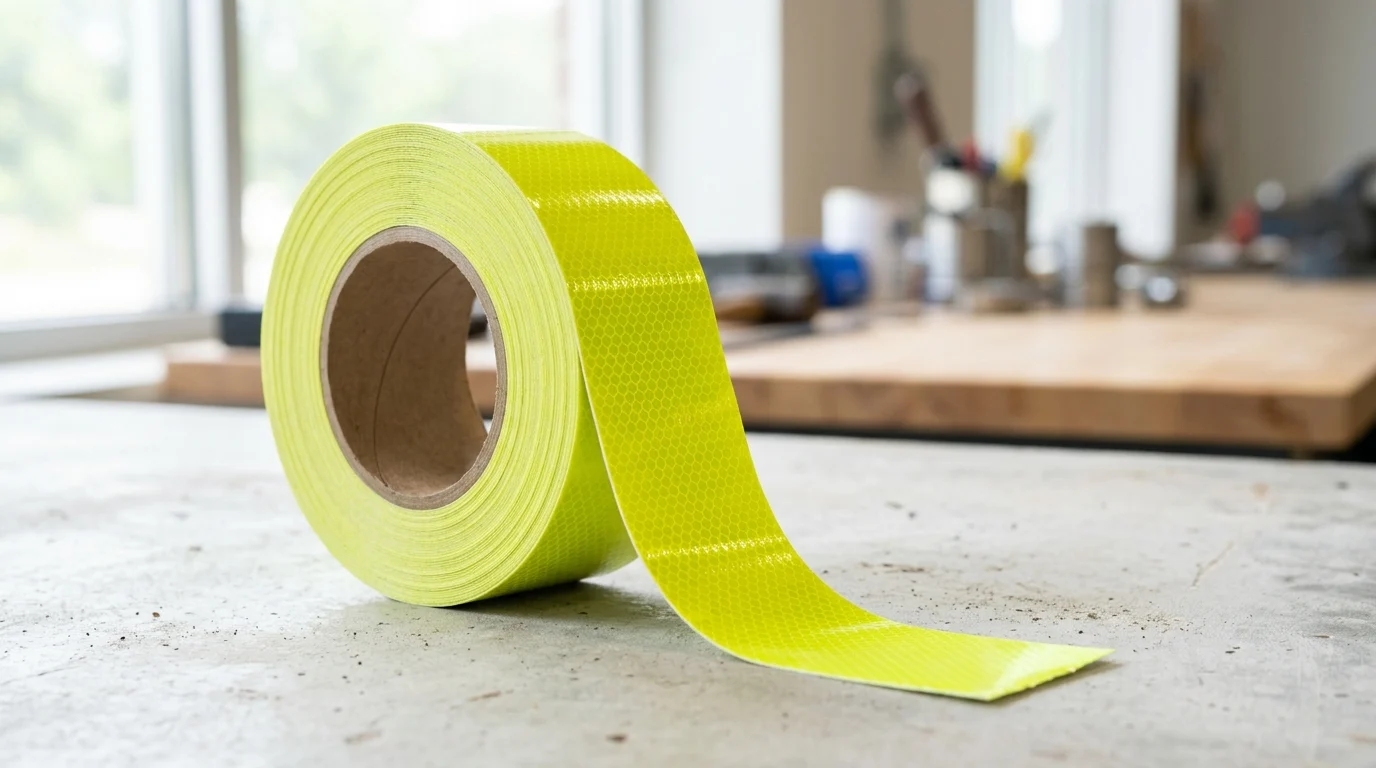
Choosing between custom and standard reflective tape affects more than purchase price. It shapes visibility performance, adhesive reliability, compliance outcomes, and even how well markings support branding or identification in the field. Standard options work well when fast availability and baseline specifications are enough, but they can fall short in harsh environments or applications with strict photometric and durability requirements. Custom tape gives buyers more control over reflectivity, color, construction, and adhesive behavior, often at the cost of longer lead times and higher unit pricing. This article compares both paths so you can match tape selection to operational demands, safety targets, and total lifecycle value.
Why Choose Custom vs Standard Reflective Tape
Procurement professionals and engineers face a fundamental divergence in strategy when specifying Reflective Tape for industrial, automotive, and safety applications. The decision between standard off-the-shelf products and custom-engineered solutions dictates not only upfront material costs but also long-term asset performance and regulatory compliance.
While standard reflective tapes offer rapid deployment and predictable baseline specifications, they often lack the specialized adhesives or precise photometric profiles required for extreme environments. Conversely, custom formulations allow organizations to dial in specific performance metrics, such as achieving minimum retroreflectivity levels of 250 cd/lux/m² at specific observation angles, ensuring both safety and operational longevity.
Impact on visibility, branding, and cost
The integration of microprismatic or glass bead technologies heavily influences overall visibility and brand representation. Custom manufacturing allows buyers to specify the exact alignment of microprisms to achieve targeted retroreflectivity at precise observation angles, such as 0.2° or 0.33°, which is critical for highway-speed visibility. From a branding perspective, custom tape permits the embedding of corporate logos or specific Pantone colors beneath the top protective film, ensuring the branding remains visible without compromising the 50% minimum reflective surface area mandated by many fleet safety standards.
Standard tapes, while reliable for general visibility, restrict buyers to commodity colors and generic patterns. This standard approach keeps baseline costs near $0.15 to $0.25 per linear foot, whereas customized runs involving bespoke print cylinders and proprietary adhesive blends typically shift pricing into the $0.40 to $0.80 per linear foot range, depending on volume.
Where buyers lose margin with the wrong choice
Margin erosion frequently occurs through either over-specification or under-specification. Utilizing a standard commercial-grade tape on a high-value asset with a 10-year operational lifespan is a common procurement error. Standard acrylic adhesives and basic enclosed-lens constructions typically degrade within 3 to 5 years under heavy UV exposure, resulting in delamination and requiring labor-intensive removal and reapplication.
Conversely, purchasing custom-engineered, DOT-C2 certified high-intensity tape for temporary indoor warehousing applications represents severe over-specification. In such scenarios, buyers can waste up to 300% on unit costs for durability and retroreflectivity parameters that the specific use case will never actually require.
Key Differences Between Custom and Standard Reflective Tape
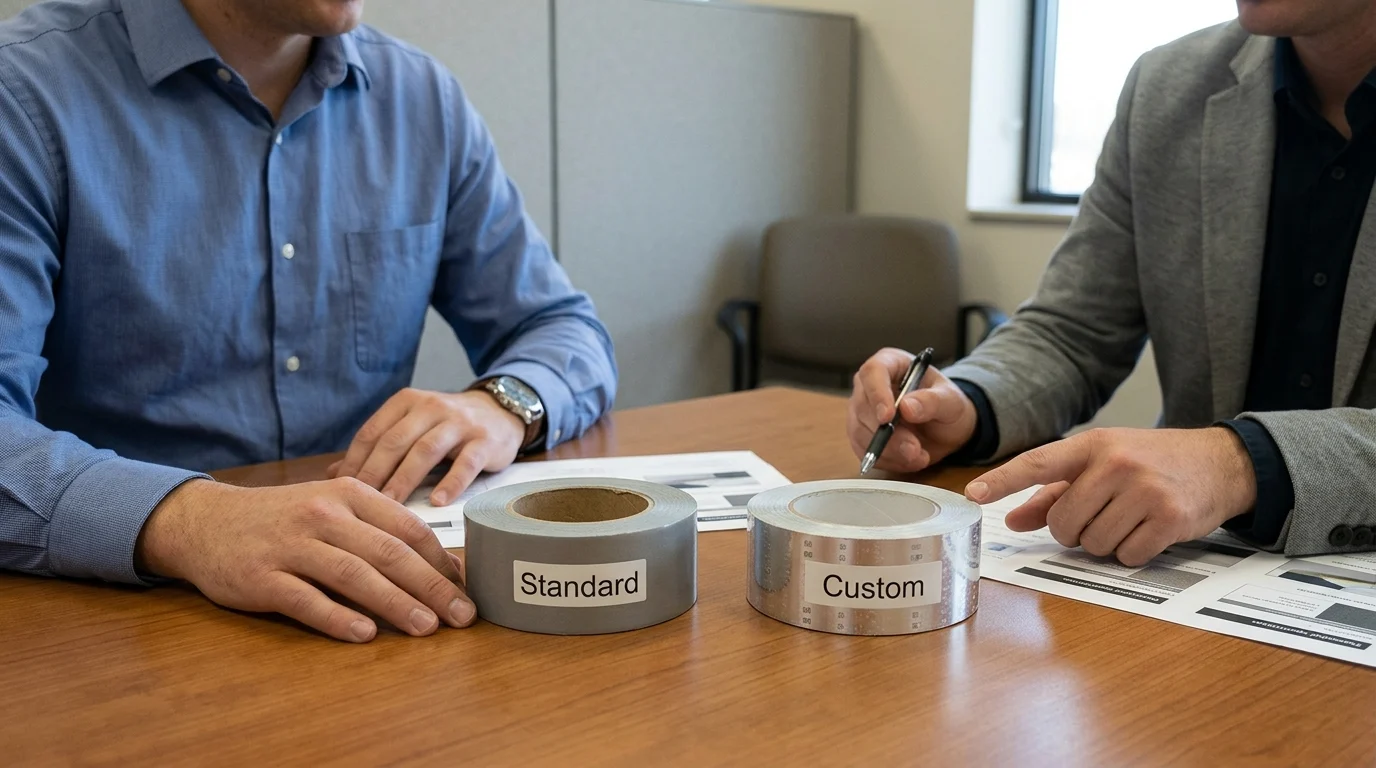
Distinguishing between standard and custom reflective tapes requires a thorough analysis of material science, converting capabilities, and manufacturing tolerances. The core differences dictate how the material will behave under mechanical stress, chemical exposure, and varying light conditions.
Material grade, reflectivity, and adhesive performance
Material grade and reflectivity are the primary technical differentiators. Standard reflective tapes generally utilize enclosed lens glass beads or basic truncated microprisms, achieving maximum retroreflectivity values around 300 cd/lux/m². Custom tapes, however, frequently employ full-cube microprismatic technology, which can push reflectivity well beyond 800 cd/lux/m², returning a significantly higher percentage of light to the source.
Adhesive performance is equally critical. Standard tapes rely on generic pressure-sensitive acrylic adhesives that perform adequately within a temperature band of 20°C to 40°C. Custom tape formulations can incorporate high-tack, modified silicone or rubber-based adhesives specifically rated for extreme temperature fluctuations ranging from -30°C to 70°C, preventing premature edge lifting in harsh climates.
Customization options for print, color, width, and converting
Standard tapes are typically converted and sold in generic 2-inch or 4-inch master rolls. Customization unlocks specialized converting options, such as non-standard widths (e.g., 1.375 inches) that optimize material yield for specific OEM assembly lines. Furthermore, custom converting processes like kiss-cutting and the selection of specific release liners (such as poly-coated kraft versus PET) are essential for manufacturers utilizing automated robotic application systems.
Print and color customization involves advanced flexographic or UV printing techniques. By printing on the top film layer or beneath a protective overlay, custom tapes can feature serialized barcodes, specific hazard warnings, or exact corporate color matches that standard safety yellow or red tapes cannot accommodate.
Side-by-side comparison factors
Evaluating these factors side-by-side clarifies the operational trade-offs between rapid availability and specialized performance.
| Feature/Metric | Standard Reflective Tape | Custom Reflective Tape |
|---|---|---|
| Retroreflectivity | 50 – 300 cd/lux/m² (Typical) | Up to 800+ cd/lux/m² (Engineered) |
| Adhesive Range | 20°C to 40°C | -30°C to 70°C (Application specific) |
| Converting Options | Standard 2″ / 4″ rolls | Custom widths, kiss-cut, bespoke liners |
| Production MOQ | Low (e.g., 10-50 rolls) | High (e.g., 500+ square meters) |
| Typical Lead Time | 3 to 5 business days | 4 to 8 weeks (Includes tooling) |
How to Evaluate Compliance, Application, and Total Cost
Navigating the procurement of Reflective Tape demands rigorous evaluation of regulatory frameworks, environmental stressors, and total cost of ownership (TCO). A unit-price-only approach frequently obscures downstream costs associated with application failures or compliance penalties.
Required regulations, testing, and documentation
Industrial and automotive applications are governed by strict regulatory standards such as FMVSS 108, ECE 104, and ASTM D4956. Standard tapes are generally pre-certified to meet generic Type I or Type III thresholds. However, highly regulated environments may require custom tapes engineered to pass stringent Type VIII or Type XI specifications.
Meeting these advanced standards requires rigorous documentation. Custom tape manufacturers must provide independent photometric testing reports and batch-specific Certificates of Analysis (CoA) to prove that the retroreflective coefficient remains compliant across every shipped roll, mitigating legal liability for the end-user.
Surface, temperature, and weather considerations
Substrate surface energy dictates adhesive selection and long-term durability. Low Surface Energy (LSE) plastics, such as high-density polyethylene (HDPE) with a surface energy below 37 dynes/cm, actively resist standard acrylic adhesives. Applying standard tape to LSE or highly curved surfaces typically results in edge lifting or complete delamination within 90 days.
Environmental stressors such as salt spray, chemical washdowns, and prolonged UV index exposure require custom protective topcoats. Evaluating weatherability involves reviewing accelerated weathering data, ensuring the tape maintains structural integrity and minimum photometric performance after thousands of hours of simulated exposure.
Cost factors beyond unit price
The total cost of ownership extends far beyond the invoice price per roll. While standard tape presents a lower upfront cost, it often incurs higher indirect labor costs if manual cutting, trimming, or surface priming is required on the assembly floor.
Investing in custom pre-cut tape or specific adhesive formulations can increase the initial unit cost by 15% to 20%. However, this optimization frequently reduces manual application time by up to 40% and eliminates the need for liquid adhesion promoters, ultimately lowering the overall assembly line costs and improving throughput.
How to Source and Order Custom Reflective Tape
Effective sourcing of bespoke safety materials requires rigorous supplier qualification and a structured prototyping phase. Establishing a resilient supply chain for reflective products ensures that production lines are not halted by material non-conformances or logistical bottlenecks.
How to qualify suppliers and review samples
Qualifying a supplier extends beyond reviewing marketing materials; it requires auditing their manufacturing facilities for ISO 9001 compliance and verifying their in-house photometric testing capabilities. Procurement teams must request documented evidence of accelerated weathering tests—such as 2,000 hours in a Xenon Arc chamber—to substantiate any claims regarding UV resistance and lifespan.
Reviewing physical samples is a mandatory step before committing to mass production. Engineers should perform peel adhesion tests (e.g., ASTM D3330) on the actual production substrates to validate that the custom adhesive formulation performs as specified under real-world conditions. Initiating dialogue regarding testing protocols is a critical phase of the Reflective Tape sourcing cycle.
Ordering workflow for artwork, dimensions, and approvals
The ordering workflow for custom materials is highly structured. It begins with the submission of vector artwork (CMYK or exact Pantone matching) for any top-layer printing, followed by the approval of digital die-lines for custom converting.
Engineers must establish acceptable manufacturing tolerances during this phase. For custom slitting, a tolerance of ±0.5mm is standard, but tighter tolerances may be required for automated dispensing equipment. Formal sign-off on first-article inspection (FAI) reports guarantees that the initial production run matches the approved prototype in both dimensions and retroreflective performance.
Lead times, MOQs, and supply chain risks
Custom manufacturing inherently alters supply chain dynamics. While standard tapes can be shipped within 3 to 5 days with low minimum order quantities (MOQs), custom tape requires the fabrication of specialized tooling, print cylinders, and bespoke adhesive coating runs.
This custom process pushes lead times to 4 to 8 weeks and typically requires MOQs exceeding 500 square meters. To mitigate supply chain risks, buyers should negotiate blanket orders with scheduled releases, ensuring the supplier holds adequate safety stock to buffer against unexpected spikes in production demand.
Which Option Fits Different Use Cases Best
Aligning the selection of reflective materials with the specific lifecycle and operational demands of the end product prevents capital misallocation. The decision ultimately hinges on balancing the duration of the application against the severity of the operational environment.
When standard reflective tape is the better choice
Standard reflective tape is the optimal choice for applications characterized by short lifecycles or controlled environments. Temporary traffic control devices, indoor facility demarcations, and short-term asset tracking do not benefit from the premium features of custom engineering.
In these scenarios, a standard commercial-grade tape (Type I) offering 50 to 70 cd/lux/m² provides entirely adequate visibility for a 1 to 2-year lifespan. The rapid availability and low unit cost of standard rolls maximize cost-efficiency without compromising basic safety mandates.
When custom reflective tape delivers better ROI
Custom reflective tape delivers superior return on investment (ROI) in high-stakes, long-lifecycle applications. OEM vehicle manufacturing, high-visibility corporate fleets, and specialized maritime safety equipment require materials that will not fail prematurely.
Specifying a custom tape designed for a 10-year lifecycle on a commercial trailer prevents severe downstream costs. Avoiding a single instance of premature delamination saves an estimated $500 to $800 in replacement labor and asset downtime per vehicle over a decade, far offsetting the initial premium paid for custom adhesive and microprismatic technology.
Simple decision framework for selection
To streamline procurement, buyers can utilize a structured evaluation matrix to determine the most viable path based on application parameters.
| Application Variable | Standard Tape Recommended | Custom Tape Recommended |
|---|---|---|
| Expected Lifespan | < 3 Years | 5 to 10+ Years |
| Substrate Surface Energy | High (e.g., Aluminum, Steel) | Low (e.g., HDPE, Powder Coats) |
| Regulatory Requirement | Generic (e.g., basic OSHA) | Strict (e.g., FMVSS 108, ECE 104) |
| Branding/Aesthetics | Not required | Serialized data, logos, exact colors |
| Application Method | Manual hand-application | Automated robotic dispensing |
Further reading:
Key Takeaways
- The most important conclusions and rationale for Reflective Tape
- Specs, compliance, and risk checks worth validating before you commit
- Practical next steps and caveats readers can apply immediately
Frequently Asked Questions
When should I choose custom reflective tape over standard tape?
Choose custom tape when you need specific reflectivity, unusual widths, branded printing, or adhesives for harsh temperatures. Standard tape is usually best for general visibility and faster, lower-cost purchasing.
How much more does custom reflective tape usually cost?
Standard reflective tape often runs about $0.15–$0.25 per linear foot, while custom options commonly range from $0.40–$0.80, depending on volume, printing, and adhesive requirements.
What adhesive performance differences matter most?
Standard acrylic adhesives typically suit moderate conditions around 20°C to 40°C. Custom tapes can use higher-tack blends rated roughly from -30°C to 70°C for better hold in cold, heat, or demanding outdoor use.
Can custom reflective tape include logos, colors, or barcodes?
Yes. Custom reflective tape can be produced with corporate logos, Pantone-matched colors, serialized barcodes, and warning text, often protected under a top film to preserve visibility and durability.
How can I avoid overspending on reflective tape for my application?
Match the tape grade to the job. Use standard tape for temporary indoor or basic visibility needs, and reserve custom or DOT-grade products for long-life assets, highway exposure, or strict compliance requirements.


