
Introduction
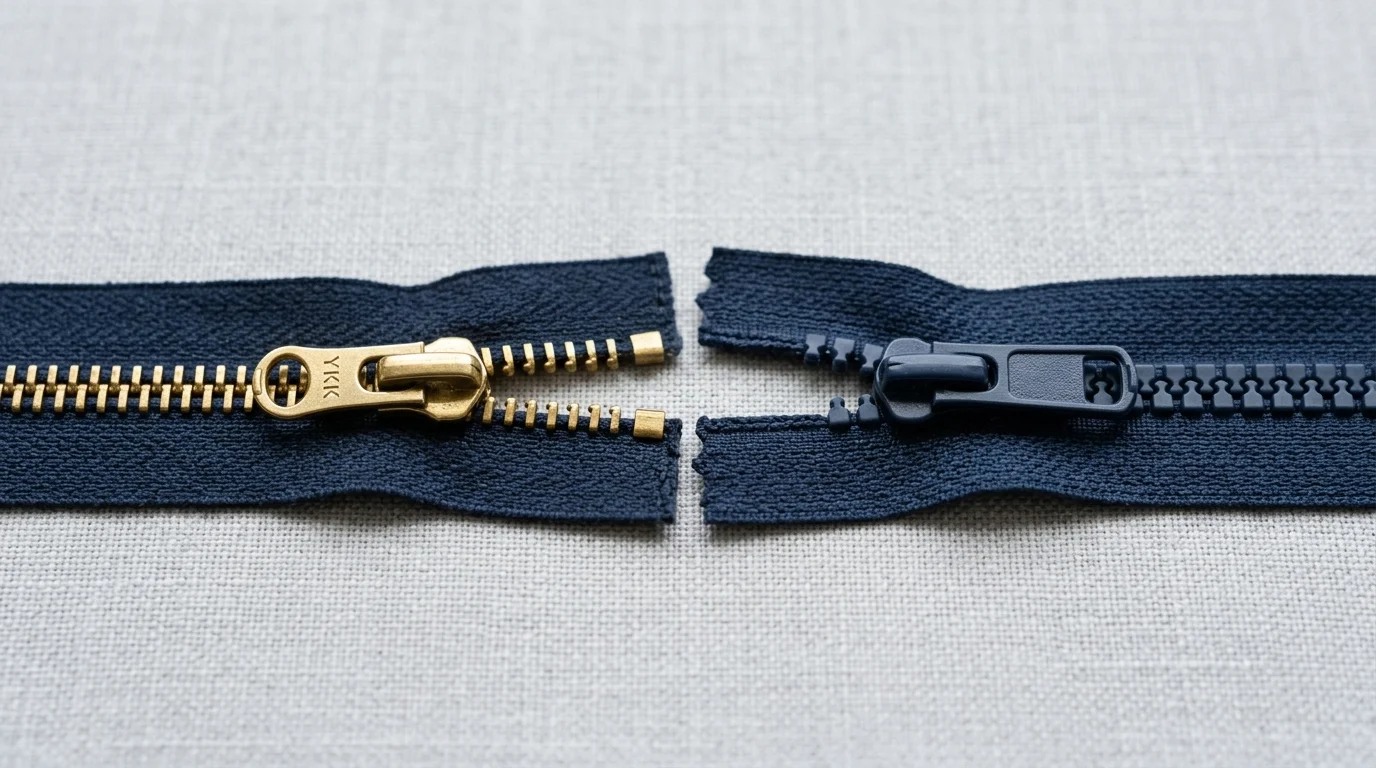
Choosing between plastic and metal zippers affects far more than the look of an outdoor jacket. The material influences weather resistance, weight, flexibility, corrosion risk, repairability, and how the jacket performs in cold, wet, or high-wear conditions. This comparison explains where plastic zippers offer practical advantages, where metal still makes sense, and how each option fits different jacket types, price points, and user needs. By the end, readers will have a clearer basis for selecting the right zipper for performance, durability, and overall product design.
Why Zipper Choice Matters for Outdoor Jackets
The selection of a closure system is arguably the most critical hardware decision in outerwear design. Industry data suggests that faulty or improperly specified closures account for up to 70 percent of all warranty returns in the technical apparel sector. For outdoor jackets, the debate often centers on the fundamental material of the track: plastic versus metal.
This decision dictates not only the aesthetic profile of the garment but also its functional lifespan in harsh environments. Manufacturers must evaluate these materials rigorously, as a single failure can render an expensive piece of technical outerwear completely unwearable.
Impact on durability and weather resistance
Durability and weather resistance are paramount when designing jackets meant to withstand rain, snow, and high winds. A high-performance outdoor jacket often features a waterproof rating exceeding a 10,000mm hydrostatic head, but this rating is instantly compromised if the front closure allows moisture penetration.
Materials respond differently to these environmental challenges. Specialized polymer-based closures can be engineered with polyurethane coatings to create a watertight seal, effectively blocking precipitation and wind. Conversely, traditional metallic options, while exceptionally durable against sheer mechanical force, struggle to achieve the same level of seamless waterproofing without the addition of bulky external storm flaps.
Best fit by product type, price tier, and use
case
The optimal choice relies heavily on the product category, target retail price, and intended use case. Premium alpine shells designed for mountaineering prioritize weight reduction and freeze resistance, making engineered polymers the industry standard. In contrast, heavy-duty workwear or heritage-style parkas often utilize metallic hardware to signal ruggedness and justify higher price tiers through tactile weight and classic aesthetics.
Reputable manufacturers understand their materials deeply, aligning the hardware specifications with the garment’s precise market positioning. This ensures consumer expectations regarding longevity and performance are met without inflating production costs unnecessarily.
Plastic vs Metal Zippers: Types and Construction
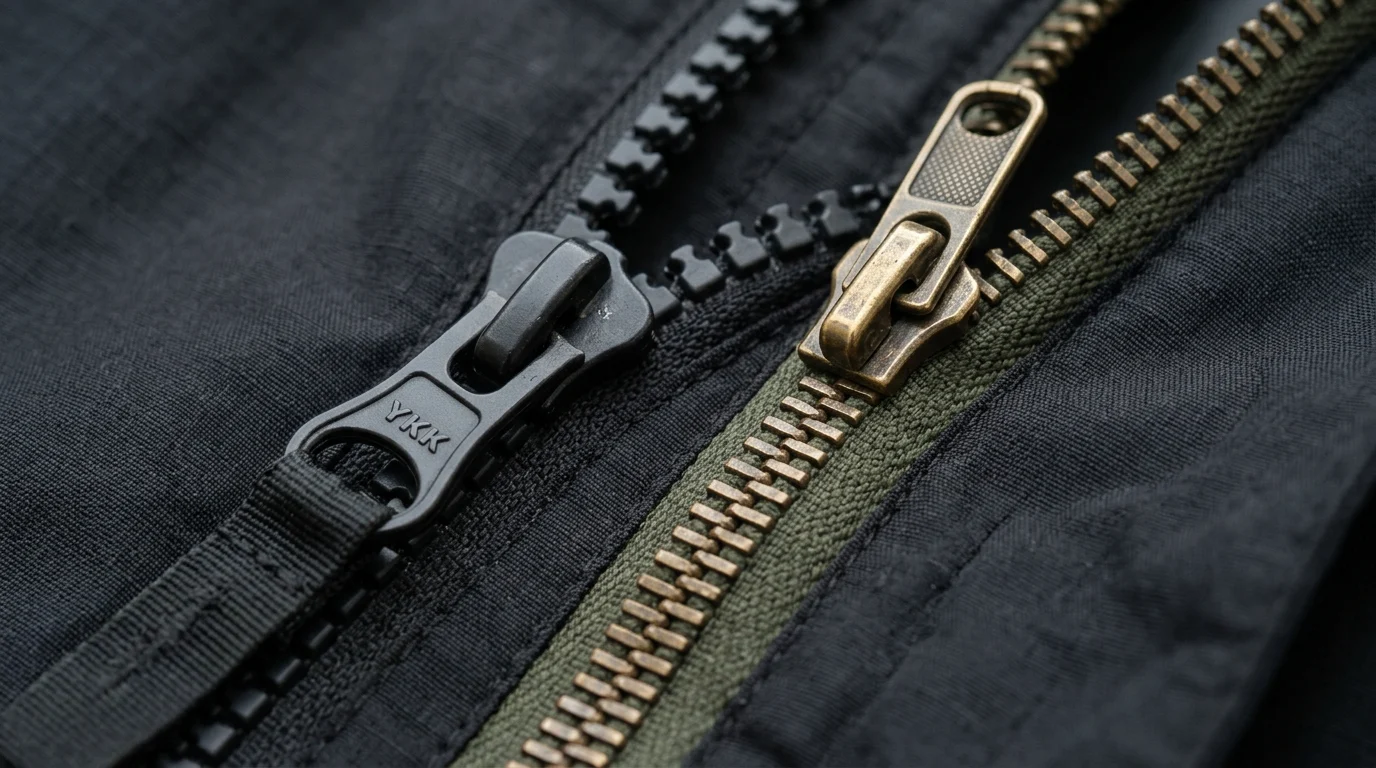
Understanding the structural differences between closure materials requires a close look at their manufacturing processes and physical compositions. The anatomy of these fastening systems dictates their flexibility, weight, and operational smoothness.
While the basic mechanical principle remains the same across types, the material science behind them divides them into distinct operational categories suitable for different textile applications.
Coil, molded plastic, and metal zipper designs
The industry primarily categorizes these closures into three designs: nylon coil, molded plastic, and metal teeth. Nylon coil variants are extruded and sewn onto the tape, offering immense flexibility and a low profile ideal for lightweight shells.
Molded plastic designs utilize polyacetal (POM) resin injected directly onto the tape, resulting in individual teeth that interlock smoothly. POM boasts a melting point of approximately 175°C, making it stable under standard laundering and heat-pressing conditions. Metallic options, typically stamped from brass, aluminum, or nickel alloys, feature individual teeth clamped onto the fabric tape, providing a heavy, rigid, and highly durable track.
Key components: tape, teeth, slider, and gauge
Every closure system relies on four key components: the fabric tape, the interlocking teeth (or elements), the sliding mechanism, and the gauge size. The gauge refers to the width of the teeth when closed, which dictates the overall load-bearing capacity.
For outdoor jackets, a #5 gauge (approximately 5mm wide) is the industry standard for front closures, offering a reliable balance of strength and weight. Heavy winter coats or tactical gear frequently escalate to a #8 or #10 gauge for enhanced durability under heavy tension.
| Closure Type | Primary Material | Flexibility | Standard Jacket Gauge |
|---|---|---|---|
| Coil | Extruded Nylon | High | #3 to #5 |
| Molded | Polyacetal (POM) | Moderate | #5 to #8 |
| Metal | Brass / Aluminum | Low | #5 to #10 |
Performance Comparison: Strength, Wear, and Exposure
When deployed in field conditions, the performance gap between polymer and metallic components becomes highly quantifiable. Engineering teams evaluate these materials through rigorous laboratory testing to predict failure rates.
By simulating years of wear, environmental exposure, and mechanical stress, developers can determine which material will survive the specific rigors of outdoor use.
Core criteria for side-by-side evaluation
Key metrics for comparison include crosswise strength, operating force, and reciprocating cycle endurance. Crosswise strength measures the lateral force required to burst the interlocking teeth—a critical metric for tight-fitting garments.
A standard #5 molded plastic closure typically withstands around 400 Newtons (N) of lateral force before failure. In comparison, a high-quality #5 brass closure can exceed 500 N, offering superior burst resistance. However, operating force—the effort required to pull the slider—is generally lower and smoother in POM-based systems, reducing user fatigue. When evaluating zipper products, buyers must weigh this trade-off between absolute burst strength and ease of operation.
Failure modes under salt, abrasion, and repeated use
Failure modes differ drastically based on environmental exposure. Metallic teeth are highly susceptible to oxidation and galvanic corrosion when exposed to saltwater or harsh chemical environments, leading to seizing or tooth loss. Conversely, polymer teeth are immune to rust but can suffer from UV degradation over prolonged periods, becoming brittle under intense sunlight.
In standard reciprocating tests, premium closures of both types are expected to survive a minimum of 10,000 open-and-close cycles. However, abrasive environments containing sand or grit will wear down polyacetal teeth faster than brass, altering the interlocking geometry and eventually causing the track to split under tension.
Cost, Sourcing, and Compliance Factors
Beyond physical performance, supply chain economics dictate the feasibility of any component. Procurement teams must navigate complex matrices of unit costs, minimum order requirements, and strict international compliance standards.
Securing reliable hardware at scale requires balancing the upfront unit cost against the potential risk of compliance failures or delayed production schedules.
Unit cost, MOQ, lead time, and replacement rate
The economic disparity between materials is significant. Stamped brass or nickel closures generally command a unit cost ranging from $0.80 to $1.50, depending on the finish, length, and slider complexity. Molded polyacetal alternatives are considerably more cost-effective, typically landing between $0.30 and $0.70 per unit.
Minimum Order Quantities (MOQs) for custom-dyed tapes and branded sliders usually range from 1,000 to 3,000 pieces across both categories. Standard lead times hover around 3 to 5 weeks, though complex metallic finishes like antique brass or gunmetal can extend this timeline due to additional electroplating processes.
Testing and restricted-substance requirements
Regulatory compliance is non-negotiable in modern apparel manufacturing. All components must adhere to global standards such as REACH in Europe and the CPSIA in the United States.
Metallic closures face intense scrutiny regarding heavy metal content; for instance, lead (Pb) concentrations must remain strictly under 90 parts per million (ppm) for any garments intended for children. Nickel release is another critical metric, requiring specialized plating techniques to prevent contact dermatitis. Polymer closures bypass heavy metal concerns but must pass stringent tests for phthalates and azo dyes used in the fabric tape.
Supplier evaluation and sample review
Rigorous supplier evaluation and sample review processes are essential to maintain quality control prior to bulk ordering. Procurement managers must evaluate the color fastness of the fabric tape, requiring a minimum Grade 4 rating under ISO 105-C06 wash testing to prevent dye bleeding onto the jacket shell.
Additionally, slider lock mechanisms—such as auto-lock or semi-auto-lock pins—must be tested for spring retention to ensure the jacket does not unzip involuntarily during vigorous movement.
| Sourcing Metric | Molded Polymer | Metallic Alloy |
|---|---|---|
| Average Unit Cost | $0.30 – $0.70 | $0.80 – $1.50 |
| Standard MOQ | 1,000 – 3,000 units | 1,000 – 3,000 units |
| Lead Compliance Risk | Low | High (requires strict testing) |
| Standard Lead Time | 3 – 4 weeks | 4 – 6 weeks |
How to Choose the Right Zipper
Synthesizing performance data, economic constraints, and aesthetic goals is necessary to finalize the hardware specification. Creating a standardized decision matrix prevents costly redesigns.
By matching the physical properties of the closure to the specific demands of the jacket, designers ensure the garment performs optimally in its intended environment.
Step-by-step selection framework
The selection process begins with assessing the fabric weight and environmental demands. As a rule of thumb, jacket shells weighing over 300 grams per square meter (GSM) require a minimum gauge of #8 to maintain structural proportionality and prevent track warping.
Next, designers must evaluate weather exposure; garments destined for high-precipitation or marine environments should automatically default to coated polymer options to avoid corrosion and water ingress. Finally, brands can reach out for consultation with hardware specialists to align the slider design and tape color with the broader aesthetic vision of the collection.
When plastic is better and when metal is better
Molded polymer is undeniably superior for sub-zero alpine conditions, as it remains thermally neutral and will not freeze against the wearer’s skin at temperatures dropping below -10°C. It is also the default choice for ultralight rainwear where every gram matters.
Conversely, metallic hardware excels in high-abrasion, dry environments such as heavy-duty workwear, motorcycle jackets, and fashion-forward streetwear. The rigid interlocking strength and heavy drape of brass or aluminum complement dense materials like canvas and leather, providing a tactile sense of durability that lighter polymers cannot replicate.
Further reading:
Key Takeaways
- The most important conclusions and rationale for Plastic Zippers vs Metal Zippers
- Specs, compliance, and risk checks worth validating before you commit
- Practical next steps and caveats readers can apply immediately
Frequently Asked Questions
Which zipper type is better for waterproof outdoor jackets?
Plastic, especially coated coil or molded styles, is usually better. It seals more easily against rain and wind, while metal often needs a storm flap to improve water protection.
Are metal zippers more durable than plastic zippers?
Metal handles high mechanical force well, but quality plastic zippers are often more practical for outdoor jackets because they resist moisture, flex better, and reduce weight.
What zipper size is best for outdoor jacket front closures?
A #5 zipper is the common standard for most outdoor jackets. Choose #8 or #10 for heavy winter coats, workwear, or gear exposed to higher tension.
Do plastic zippers perform better in cold weather?
Yes, they are often preferred for alpine and winter shells. Engineered plastic zippers are lighter and less likely to freeze up than metal hardware in harsh conditions.
When should a brand choose metal zippers for jackets?
Use metal zippers for heritage parkas, rugged workwear, or premium styles where weight, classic appearance, and a sturdy feel matter more than maximum waterproofing.


