
Introduction
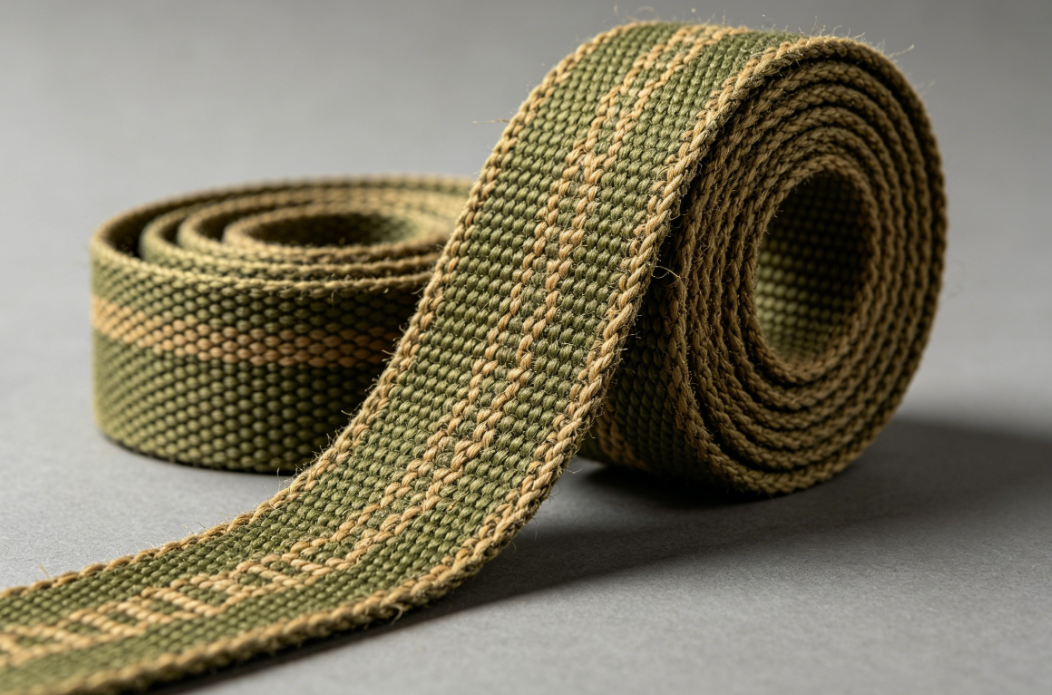
Sustainability claims carry more weight when they are backed by material choices that affect both emissions and supply chain resilience. Recycled webbing straps are becoming a practical option for brands that need durable components without relying entirely on virgin polyester. This article explains how recycled webbing supports ESG goals, where it can reduce environmental impact, and why procurement teams are paying closer attention to cost, compliance, and customer expectations. It also sets out the tradeoffs to evaluate, helping readers understand when recycled straps offer a real strategic advantage rather than a simple marketing upgrade.
Why recycled webbing straps are a strategic choice
Transitioning to recycled materials is no longer a niche marketing tactic but a baseline requirement for modern supply chains. The integration of recycled webbing straps allows brands to lower their carbon footprint while maintaining industrial-grade performance. With the textile industry responsible for approximately 10% of global carbon emissions, adopting recycled alternatives provides a measurable sustainability metric that stakeholders increasingly demand.
Brand and procurement benefits
Procurement teams are recognizing that recycled webbing straps offer a dual advantage: meeting corporate ESG (Environmental, Social, and Governance) targets and appealing to environmentally conscious consumers. Brands replacing virgin polyester with rPET (recycled polyethylene terephthalate) webbing can report a reduction in energy consumption by up to 50% during the raw material extraction phase.
Furthermore, establishing a supply chain around recycled materials insulates brands against incoming regulations and virgin plastic taxes, which are increasingly common in European and North American markets. By adopting these materials early, companies avoid premium rush charges when compliance deadlines eventually mandate sustainable transitions.
Where demand is growing
The demand for recycled webbing is experiencing a compound annual growth rate (CAGR) of roughly 6.5% within the outdoor gear, pet accessories, and automotive safety sectors. In particular, the outdoor apparel and backpack markets have seen a 40% year-over-year increase in product lines featuring 100% recycled strapping components.
This surge is driven by end-users who expect the hardware and trims of their gear to match the eco-friendly claims of the primary fabrics. As major retailers implement stricter supplier scorecards, the adoption of sustainable webbing is shifting from an optional upgrade to a mandatory requirement for securing wholesale distribution.
What recycled webbing straps are and how they compare
Feedstocks, constructions, and specifications
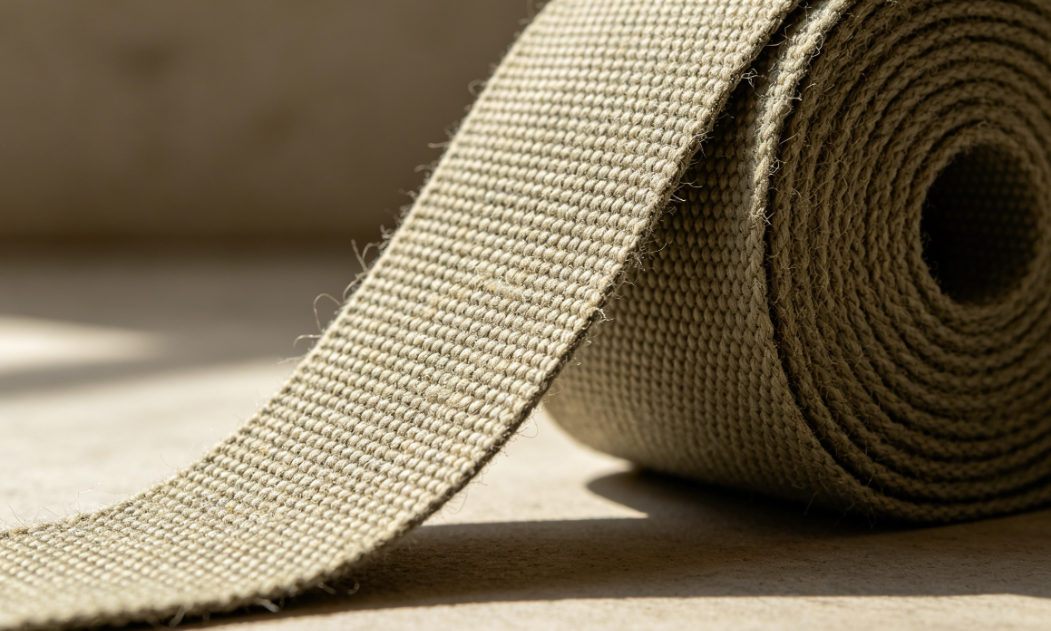
The most common feedstock for recycled webbing straps is post-consumer PET bottles. It takes approximately 5 to 10 standard 500ml plastic bottles to produce one meter of heavy-duty 25mm (1-inch) webbing. The construction methods—such as plain, twill, or tubular weaves—remain identical to virgin production, allowing manufacturers to utilize existing loom infrastructure without retooling.
Standard specifications range from lightweight 0.8mm thickness for apparel trims to heavy-duty 2.5mm thickness capable of bearing extreme tension. High-tenacity rPET yarns can be engineered to meet precise denier requirements, ensuring the final weave is as tight and resilient as traditional synthetics.
Recycled vs virgin polyester webbing
When comparing recycled to virgin polyester, the mechanical properties are nearly indistinguishable, though the environmental impact differs significantly. Both materials offer excellent UV resistance, low water absorption, and high abrasion resistance. However, rPET yarns may exhibit a slightly duller finish depending on the purity of the recycled flakes.
From a manufacturing standpoint, recycled polyester requires dyeing at the same high temperatures (around 130°C) as virgin polyester, meaning finishing facilities do not need to alter their thermal processing parameters. The primary difference lies in the embodied energy and the diversion of plastic waste from landfills.
Buyer comparison criteria
Procurement managers must weigh several factors when evaluating recycled webbing straps against traditional options. Key considerations include tensile strength, cost premiums, and production energy.
| Feature | Recycled Polyester (rPET) | Virgin Polyester |
|---|---|---|
| Tensile Strength (25mm width) | 800 – 1,200 kg | 850 – 1,250 kg |
| Energy to Produce | ~50% less | Baseline |
| Cost Premium | +10% to 20% | Baseline |
| Dyeing Temperature | 130°C | 130°C |
While the cost premium for recycled materials can range from 10% to 20%, the long-term brand equity and compliance benefits frequently offset this initial procurement expense.
Quality, compliance, and traceability checks
The integrity of sustainable sourcing relies on rigorous verification. Without proper traceability, brands risk utilizing materials that fail to meet safety standards or falling victim to greenwashing. Implementing stringent quality control protocols ensures that recycled webbing straps perform reliably under stress.
Key certifications and test standards
The gold standard for verifying recycled content is the Global Recycled Standard (GRS), which mandates a minimum of 20% recycled material, though premium suppliers often achieve 100%. Additionally, OEKO-TEX Standard 100 certification is critical to ensure the webbing is free from harmful substances, a common concern when processing post-consumer waste.
For load-bearing applications, webbing must still pass rigorous textile standards. This includes ISO 105-B02 for colorfastness to artificial light and ASTM D6770 for abrasion resistance under load. Certifications act as a baseline, but specific batch testing remains necessary for high-stakes applications.
How to verify performance
Performance verification requires laboratory testing of tensile strength, elongation, and tear resistance. For instance, a standard 38mm (1.5-inch) recycled webbing strap used in tactical backpacks must consistently demonstrate a breaking strength of at least 1,500 lbs (approx. 680 kg).
Buyers should request third-party lab reports from their suppliers to confirm that the rPET fibers have not degraded during the mechanical recycling process. Mechanical recycling can sometimes shorten fiber staple lengths, which may marginally reduce the maximum load capacity if not properly mitigated during the extrusion phase.
Documentation to reduce greenwashing risk
To mitigate greenwashing risks, procurement teams must secure a transparent paper trail. This includes Transaction Certificates (TCs) for every batch of recycled webbing straps, proving the exact volume of certified recycled material shipped.
Reviewing the supplier’s company background and manufacturing capabilities can also provide insight into their operational transparency and long-term commitment to sustainable practices. A reliable vendor will provide full lifecycle documentation, from the origin of the post-consumer waste to the final woven product, ensuring absolute traceability.
Operational trade-offs in sourcing and scaling
Transitioning a supply chain to incorporate recycled materials involves navigating specific operational challenges. While the environmental benefits are clear, brands must carefully manage inventory, logistics, and supplier relationships to maintain profitability and avoid production bottlenecks.
MOQ, customization, and dye lot variation
Minimum Order Quantities (MOQs) for custom-dyed recycled webbing are typically higher than virgin counterparts, often starting at 3,000 to 5,000 meters per color. This is due to the complexities of purging extrusion machines between rPET production runs.
Furthermore, because recycled flakes come from varied sources, achieving perfect color consistency across different dye lots can be challenging. A tolerance of ΔE ≤ 1.5 (Delta E) is generally considered acceptable in the industry for recycled textiles, compared to a stricter ΔE ≤ 1.0 for virgin synthetics. Brands must account for these slight variations in their quality control manuals.
Logistics, regional sourcing, and landed cost
The geographic location of the recycling facility significantly impacts the landed cost. Sourcing recycled webbing straps from established textile hubs in Asia may offer lower unit prices—averaging $0.40 to $0.80 per meter for standard widths—but incurs higher freight costs and carbon emissions during transit.
Conversely, nearshoring to local suppliers reduces lead times from an average of 60 days to 20 days but can increase unit costs by up to 40%. Buyers must calculate the total landed cost, factoring in shipping rates, import tariffs, and potential carbon border adjustment taxes when selecting a supplier region.
Practical steps to trial suppliers
Before committing to large-scale production, brands should execute a phased trial. This begins with requesting stock samples to evaluate hand-feel, weave density, and edge finishing. Next, ordering a pilot run of 1,000 meters allows for prototype assembly and field testing.
Engaging with the vendor’s customer support team during this phase is crucial to assess their responsiveness to quality issues. A successful trial will confirm the supplier’s ability to handle custom jacquard weaves, printed logos on recycled substrates, and timely delivery schedules.
When recycled webbing straps are the better choice
Determining whether to switch to recycled materials requires an analysis of product positioning, target demographics, and technical requirements. While recycled webbing straps are highly versatile, they offer the highest return on investment in specific market segments where sustainability directly drives sales.
Best-fit product categories and use cases
Recycled webbing is exceptionally well-suited for consumer goods where brand narrative and sustainability are closely linked. Outdoor backpacks, pet collars and leashes, lifestyle tote bags, and casual belts are prime candidates. In these categories, the slight 10% to 15% cost premium is easily absorbed by the retail price and justified by the eco-conscious marketing angle.
However, for ultra-critical life-safety equipment, such as aviation harnesses, fall-arrest systems, or heavy industrial rigging, virgin materials are still predominantly used. This is due to stringent regulatory frameworks that demand absolute traceability of molecular integrity, which the mechanical recycling process cannot always guarantee at scale.
Decision criteria for brands
Brands must evaluate their transition based on cost absorption, performance needs, and consumer expectations. The matrix below outlines favorable conditions for making the switch.
| Criteria | Favorable for Recycled Webbing | Keep Virgin Webbing |
|---|---|---|
| Target Market | Eco-conscious consumer goods | Price-sensitive or industrial |
| Retail Price Point | Medium to Premium | Entry-level / Discount |
| Safety Regulations | Standard consumer testing | Life-critical safety ratings |
| Sourcing Volume | Can meet 3,000m+ MOQs | Requires small, sporadic orders |
Ultimately, the shift toward sustainable materials is an inevitable industry progression. By systematically evaluating suppliers, understanding the technical specifications, and aligning material choices with corporate ESG goals, brands can successfully integrate recycled webbing into their product lines without compromising on quality or operational efficiency.
Further reading:
Key Takeaways
- The most important conclusions and rationale for recycled webbing straps
- Specs, compliance, and risk checks worth validating before you commit
- Practical next steps and caveats readers can apply immediately
Frequently Asked Questions
Are recycled webbing straps as strong as virgin polyester webbing?
Usually yes for most applications. Typical 25mm rPET webbing tests around 800–1,200 kg tensile strength, close to virgin polyester, so buyers should confirm exact specs with the supplier.
What products commonly use recycled webbing straps?
They are widely used in backpacks, outdoor gear, pet collars and leashes, luggage, and some automotive applications where durability and sustainability both matter.
Do recycled webbing straps cost more?
Often slightly more. Expect about a 10%–20% premium versus virgin polyester, but brands may offset this through ESG reporting, retailer compliance, and stronger sustainability positioning.
How can buyers verify recycled webbing strap claims?
Ask for traceability documents, recycled-content certification, test reports for tensile strength, and clear feedstock details such as post-consumer PET bottle sourcing.
Where can brands explore recycled webbing strap options on Tramigo Blog?
You can review product-related recycled webbing strap options through the Tramigo Blog product page at https://www.tramigoblog.com/products/.


