
Introduction
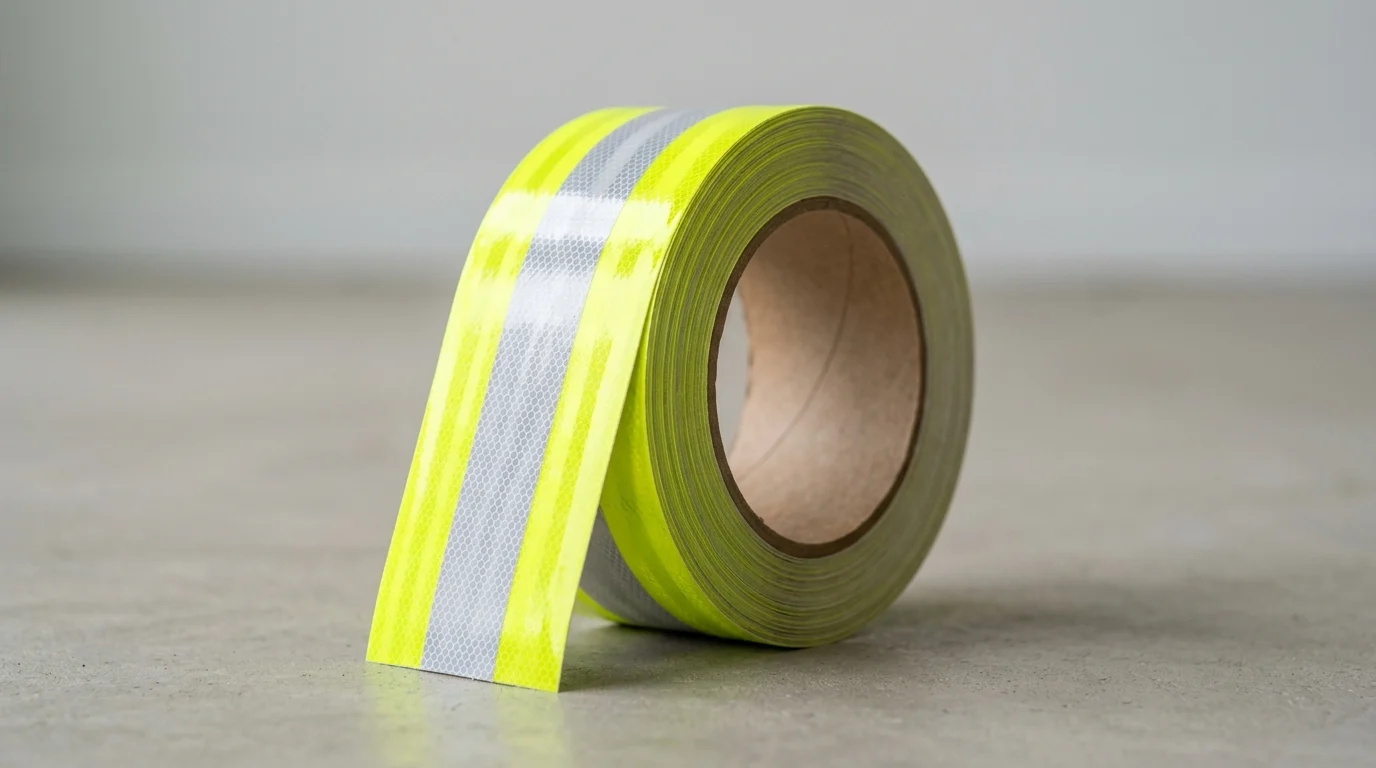
Choosing safety reflective tape is not just about brightness at purchase; the material determines how well it performs after weather, washing, abrasion, and chemical exposure. Different substrates and reflective technologies affect durability, flexibility, adhesion, and long-term compliance with visibility standards for garments, vehicles, and industrial equipment. This guide explains the main material options used in safety reflective tape, where each works best, and which tradeoffs matter most in real operating conditions. By the end, you will be able to compare tape materials more confidently and match them to the demands of your application, maintenance routine, and safety requirements.
Why material selection matters for safety reflective tape
Specifying the correct substrate and reflective technology for safety reflective tape directly impacts worker visibility, product lifecycle, and regulatory compliance. Material degradation leads to compromised retroreflectivity, escalating liability risks for fleet operators and industrial garment manufacturers.
Performance requirements
High-visibility safety apparel (HVSA) and vehicle conspicuity markings must adhere to rigorous international standards, such as ANSI/ISEA 107, CSA Z96, and UN ECE R104. These frameworks dictate the minimum coefficient of retroreflection ($R_A$). For instance, Class 2 and Class 3 safety garments typically require an $R_A$ exceeding 330 cd/lx/m² at specific observation angles.
Procuring substandard safety reflective tape results in rapid photometric degradation, causing fleets or garments to fail compliance audits within months of deployment. Manufacturers must strictly monitor these photometric thresholds to ensure long-term visibility.
Operating conditions
Environmental stressors dictate the baseline material chemistry. Tape applied to commercial vehicles must withstand extreme temperature fluctuations ranging from -40°C to 80°C, alongside exposure to road salts, grease, and high-pressure chemical washdowns.
In the apparel sector, the tape must survive a minimum of 50 to 100 industrial wash cycles at 60°C without delaminating or losing its reflective index. UV radiation poses another severe threat; improperly UV-stabilized materials will yellow and turn brittle, reducing the tape’s effective lifespan from a standard 5-7 years down to less than 12 months in high-sunlight regions.
Best materials and constructions for safety reflective tape

The fundamental architecture of safety reflective tape consists of a carrier substrate, the reflective optical layer, and an adhesive or heat-activated backing. Selecting the optimal combination requires evaluating the mechanical properties of the base polymer against the intended application surface.
PVC, PET, acrylic, and aluminum-backed options
Different polymer substrates offer distinct mechanical advantages. Polyethylene terephthalate (PET) is the industry standard for rigid applications due to its exceptional tensile strength and thermal stability, though it lacks conformability. Polyvinyl chloride (PVC) provides superior flexibility, making it ideal for dynamic surfaces like high-visibility clothing or tarpaulins, often retaining integrity beyond 50,000 flex cycles.
Acrylic substrates deliver premium UV resistance, ensuring 7-10 year outdoor durability, while aluminum-backed tapes are engineered specifically for rough, uneven surfaces like concrete or corrugated metal due to their “dead stretch” characteristics.
| Substrate | Key Advantage | Typical Lifespan | Estimated Cost ($/sqm) |
|---|---|---|---|
| PET | High tensile strength | 3-5 Years | $1.20 – $2.50 |
| PVC | High flexibility | 2-4 Years | $1.50 – $3.00 |
| Acrylic | Premium UV resistance | 7-10 Years | $3.50 – $6.00 |
| Aluminum | Dead-stretch conformability | 4-6 Years | $4.00 – $7.50 |
Glass bead vs prismatic trade-offs
Optical performance relies on either micro-glass bead or micro-prismatic technology. Glass bead tape operates via exposed or enclosed high-index microscopic spheres, offering excellent wide-angle reflectivity. This makes it highly effective for close-range, multi-directional visibility, typically achieving an $R_A$ of 300-500 cd/lx/m². However, it scatters light more broadly than prismatic alternatives.
Conversely, micro-prismatic tape utilizes precisely molded polymer pyramids (corner-cube geometry) to reflect light back to the source in a highly concentrated cone. This technology achieves a significantly higher retroreflectivity index—often exceeding 800 cd/lx/m²—making it the mandatory choice for highway signage and high-speed vehicle conspicuity where long-distance visibility is critical. Prismatic tapes are generally 30-50% thicker and carry a cost premium, but their superior dirt and water resistance offset the initial expenditure.
How to evaluate and source safety reflective tape
Effective procurement of safety reflective tape requires a holistic evaluation of the supplier’s manufacturing capabilities, quality control tolerances, and supply chain reliability. Buyers must look beyond the initial cost per square meter to assess the total cost of ownership, including application efficiency and field failure rates.
Compliance, adhesive, converting, and logistics factors
The adhesive system is as critical as the reflective face. Pressure-sensitive adhesives (PSAs) require specific peel adhesion values, typically demanding >15 N/25mm on stainless steel substrates, to ensure long-term bonding. Converting specifications also demand strict tolerances; high-quality slit rolls must maintain width accuracy within ±1mm to prevent jamming in automated application machinery. For textile integration, heat-transfer films require precise converting parameters, usually bonding at 140°C–160°C for 10–15 seconds under 3–4 kg of pressure.
Logistics and minimum order quantities (MOQs) significantly impact sourcing strategies. Standard commercial MOQs range from 500 to 1,000 square meters per SKU. Procurement managers must factor in typical manufacturing lead times of 15 to 30 days, alongside international shipping durations and adhesive shelf-life limits (usually 12-24 months at 20°C). Partnering with suppliers that maintain transparent contact and support channels mitigates risks associated with delayed shipments or specification discrepancies.
How procurement teams choose the best option
Advanced procurement teams execute rigorous vendor audits, evaluating ISO 9001 certifications and requesting third-party laboratory test reports for EN ISO 20471 or DOT-C2 compliance. A crucial metric is the defect rate; top-tier manufacturers maintain defect rates below 0.5%, ensuring consistency across large production runs.
Furthermore, buyers must verify the manufacturer’s operational history and core competencies. Reviewing a supplier’s company background provides insight into their R&D investments and production capacity. By balancing upfront material costs with proven durability metrics and stringent quality assurance, organizations secure reflective materials that guarantee long-term safety and regulatory adherence.
Further reading:
Key Takeaways
- The most important conclusions and rationale for safety reflective tape
- Specs, compliance, and risk checks worth validating before you commit
- Practical next steps and caveats readers can apply immediately
Frequently Asked Questions
Which material is best for safety reflective tape on vehicles?
PET or acrylic works best on rigid vehicle panels. Choose acrylic for stronger UV resistance and longer outdoor life, especially in hot, sunny regions.
What material should I choose for reflective tape on safety clothing?
PVC is usually best for garments because it flexes well and handles repeated movement. For industrial apparel, confirm it also survives 50–100 wash cycles at 60°C.
Is prismatic or glass bead reflective tape better?
Prismatic is better for long-distance vehicle conspicuity and higher brightness. Glass bead is a practical choice for closer-range, multi-angle visibility where extreme reflectivity is not required.
How can I check if safety reflective tape meets compliance needs?
Ask the supplier for test data against standards like ANSI/ISEA 107, CSA Z96, or ECE R104. Also verify maintained retroreflectivity, not just initial brightness.
What should buyers check before ordering safety reflective tape from a supplier?
Review substrate type, reflective technology, adhesive strength, width tolerance, and durability data. On sites like Tramigo, product and contact pages can help you request application-specific recommendations.


