
Introduction
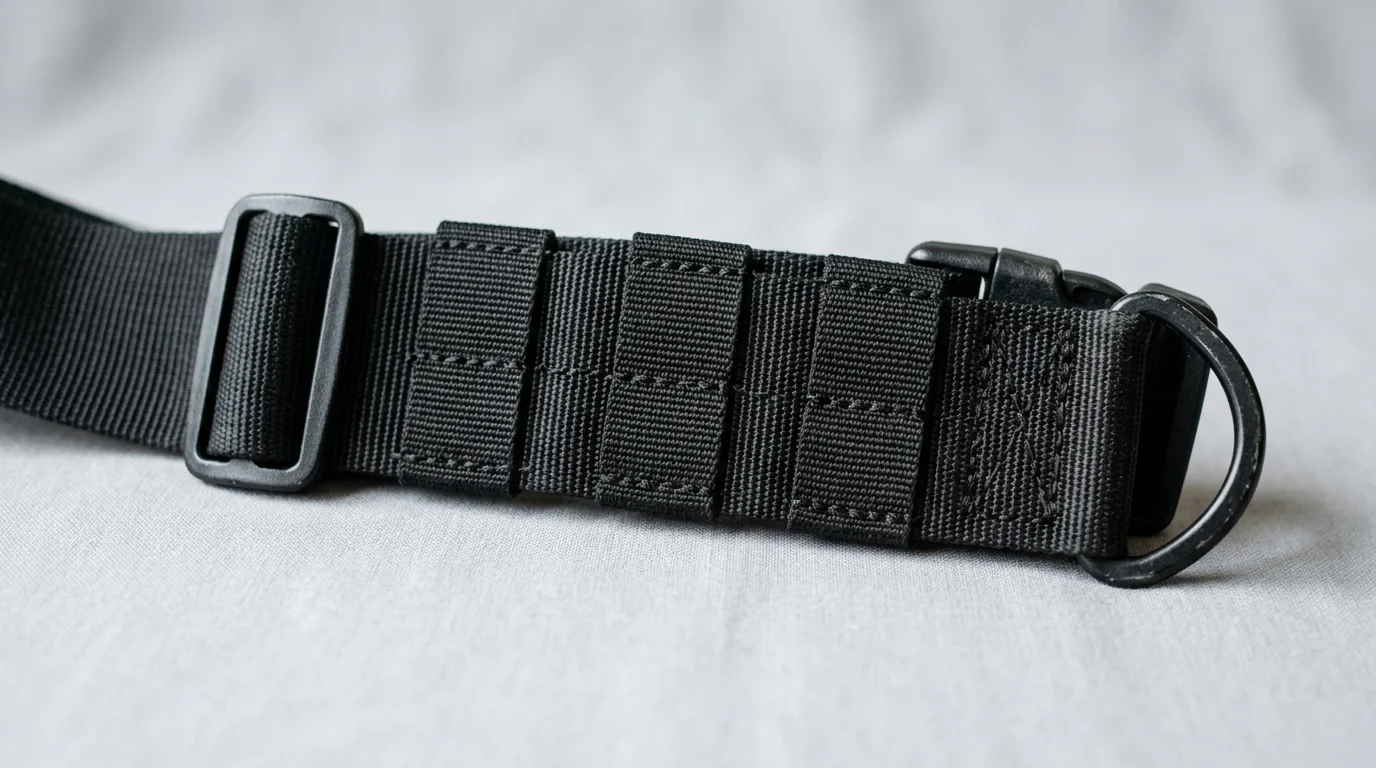
For tactical gear brands, webbing is more than a strap material—it is a core structural component that affects load support, abrasion resistance, stitching performance, and long-term reliability. Choosing military-grade webbing helps manufacturers reduce failure risk in high-stress conditions while signaling a higher standard of quality to professional and enthusiast buyers alike. This article explains why that material choice matters, what performance traits brands look for, and how military-spec webbing influences both product durability and market credibility across belts, carriers, packs, and other load-bearing gear.
Why tactical gear brands prefer military-grade webbing
In the highly competitive landscape of tactical equipment, the structural integrity of load-bearing gear fundamentally relies on the quality of its components. Brands targeting law enforcement, military personnel, and serious outdoor enthusiasts understand that equipment failure in the field can have catastrophic consequences. As a result, the selection of raw materials is subjected to intense scrutiny during the product development phase.
The foundational skeleton of plate carriers, tactical belts, and modular backpacks depends heavily on specialized textiles. By standardizing on military-grade components, manufacturers establish a baseline of reliability that directly impacts user safety and product longevity. This strategic material choice serves as a critical differentiator in a crowded market where end-users rigorously test and review their gear.
How webbing affects product performance and brand positioning
The integration of military-grade straps and bindings directly correlates with the overall performance envelope of tactical equipment. When a one-inch strip of nylon is tasked with supporting a 30-pound load under dynamic movement, the material’s tensile strength and resistance to friction become paramount. High-tier tactical gear webbing is engineered to endure over 10,000 abrasion cycles without critical failure, ensuring that harnesses and slings remain functional in austere environments.
From a brand positioning perspective, utilizing certified military-specification (MIL-spec) materials communicates an uncompromising commitment to quality. Marketing a product as built with MIL-spec components allows brands to justify premium pricing tiers. Consumers in this sector are highly educated regarding material science; they actively look for specific weave patterns and resin treatments. Brands that leverage these premium materials often see a defect rate of less than 0.1% in their load-bearing assemblies, reinforcing a reputation for rugged dependability.
Why procurement and product teams prioritize military-grade materials
Procurement and product development teams operate under the constant pressure of balancing material costs with functional requirements. However, experienced teams prioritize military-grade materials because the long-term operational savings far outweigh the initial procurement costs. Using standardized, rigorously tested textiles eliminates the unpredictable variance often found in commercial alternatives, streamlining the manufacturing process.
By investing in high-grade webbing, manufacturers mitigate the risk of catastrophic seam failures and hardware detachment. Industry data indicates that brands transitioning from commercial straps to true military-grade alternatives frequently experience up to a 40% reduction in warranty claims related to material tearing or fraying. For procurement teams, this dramatic drop in reverse logistics costs and replacement inventory makes the higher upfront cost of premium materials a mathematically sound business decision.
What defines military-grade tactical webbing
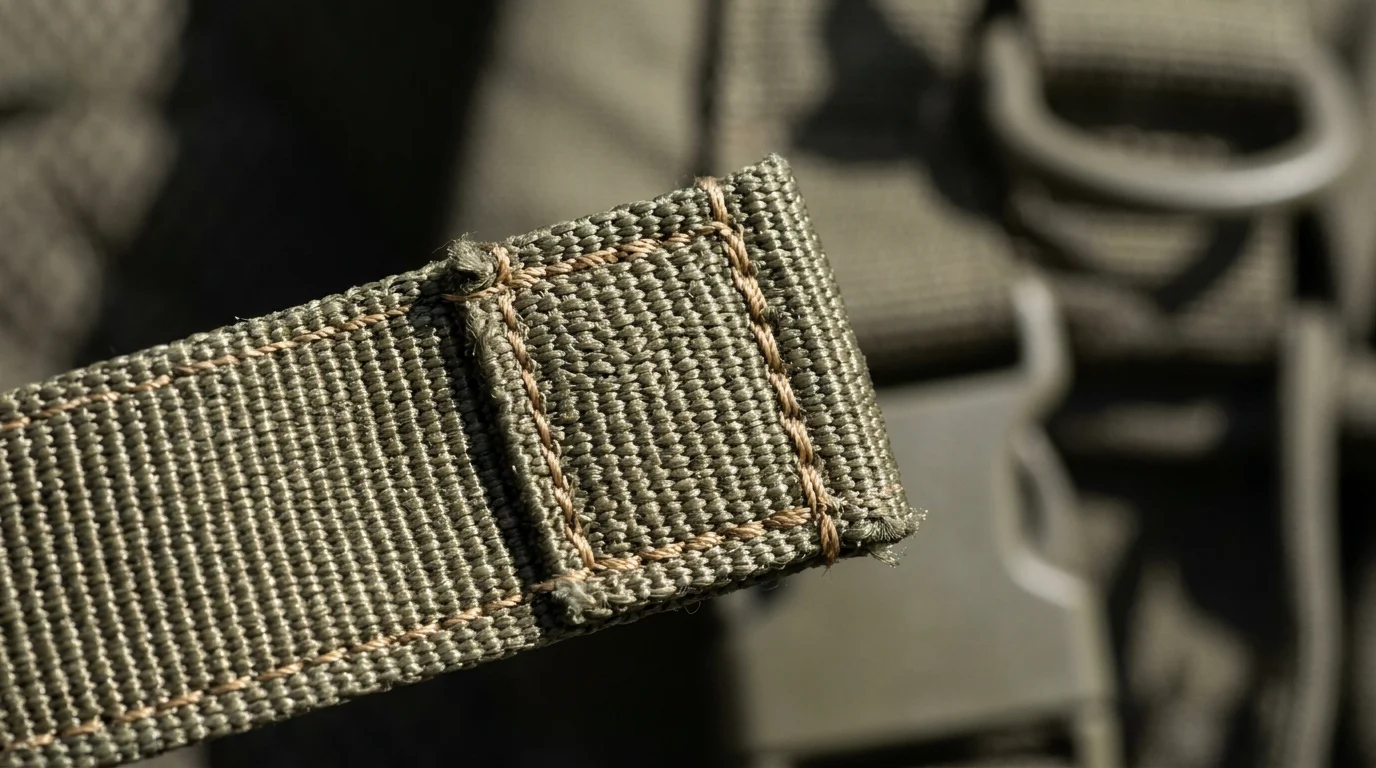
Defining what elevates standard nylon straps to military-grade status requires moving beyond marketing terminology and examining technical specifications. Military-grade webbing is a highly engineered textile, manufactured under strict tolerances to ensure predictable performance under extreme duress.
These materials are subjected to chemical treatments and specific weaving techniques that fundamentally alter their physical properties, making them suitable for life-saving and heavy-duty tactical applications.
Materials, weave, strength, abrasion resistance, and colorfastness
The foundation of military-grade performance lies in the selection of raw polymers. High-tenacity Nylon 6 or Nylon 6,6 is the industry standard due to its exceptional strength-to-weight ratio and inherent resistance to environmental degradation. A standard 1-inch military webbing, such as those conforming to MIL-W-43668 Type III, boasts a minimum breaking strength of 1,000 pounds. The weave architecture—whether a flat plain weave or a tubular construction—is tightly controlled to prevent unravelling if snagged or punctured.
Abrasion resistance is further enhanced through specialized resin coatings that lock the fibers in place, reducing internal friction during dynamic flexing. Colorfastness is another critical metric; true military-grade tactical gear webbing is typically solution-dyed. This means the pigment is added to the liquid polymer before extrusion, ensuring the color permeates the entire fiber rather than just sitting on the surface, preventing fading even after prolonged exposure to harsh UV radiation.
MIL-spec standards, testing protocols, and traceability
Strict adherence to formalized Military Specifications (MIL-spec) separates professional-grade materials from commercial lookalikes. These standards dictate everything from the yarn denier to the final finishing processes. Testing protocols are exhaustive, utilizing standardized methods like ASTM D5034 to verify breaking strength and elongation under load. Furthermore, traceability is mandatory; manufacturers must be able to track every spool back to its original polymer batch.
| Specification | Material | Typical Width | Min. Breaking Strength |
|---|---|---|---|
| MIL-W-17337 | Nylon | 1 inch | 1,200 lbs |
| MIL-W-43668 (Type III) | Nylon | 1 inch | 1,000 lbs |
| AA-55301 (Type III) | Nylon | 1 inch | 1,000 lbs |
| MIL-W-5625 (Tubular) | Nylon | 1 inch | 4,000 lbs |
For suppliers catering to the United States Department of Defense, Berry Amendment compliance (10 U.S.C. 2533a) is a mandatory standard, requiring that the webbing be 100% grown, reprocessed, reused, or produced in the United States. Even for brands selling strictly to the civilian market, adopting these rigorous testing protocols ensures consistent batch-to-batch quality.
Military-grade vs commercial tactical webbing
When designing load-bearing equipment, manufacturers must frequently navigate the decision between utilizing true military-grade materials and commercial off-the-shelf (COTS) alternatives. While COTS products may look visually identical on a showroom floor, their performance characteristics diverge sharply under operational stress.
Understanding the technical and economic disparities between these two tiers of webbing is essential for product managers aiming to optimize their Bill of Materials (BOM) without compromising end-user safety.
Key comparison criteria for tactical applications
The primary comparison criteria for tactical applications revolve around environmental resilience and structural consistency. Commercial webbing often utilizes piece-dyeing methods and standard-tenacity yarns, resulting in a product that may lose up to 35% of its tensile strength after six months of direct UV exposure. In contrast, military-grade variants are engineered to retain over 90% of their structural integrity under identical conditions.
Another critical differentiator is Near-Infrared (NIR) signature management. Military personnel and tactical law enforcement operate in environments where night vision devices are prevalent. Military-grade webbing is treated to absorb and reflect infrared light at the same rate as the surrounding environment, preventing the gear from glowing under night vision. Commercial webbing lacks this treatment, making it highly visible and a liability in tactical scenarios.
Performance, cost, and supply trade-offs
These operational advantages come with distinct trade-offs in procurement costs and supply chain dynamics. Sourcing authentic military-specification components requires navigating longer lead times and higher minimum orders, which can strain working capital for smaller brands.
| Feature | Military-Grade Webbing | Commercial Webbing |
|---|---|---|
| Cost per Yard (Est.) | $0.40 – $0.85 | $0.15 – $0.35 |
| NIR Compliance | Yes (Strict testing) | No / Rare |
| UV Strength Loss (6 mo.) | < 10% | Up to 35% |
| Typical Lead Time | 8 – 12 weeks | 2 – 4 weeks |
While military-grade options cost significantly more per yard, the trade-off is absolute reliability. Brands must weigh this $0.40 to $0.85 per yard cost against the potential catastrophic failure of a $0.15 commercial alternative. For mission-critical gear, the higher cost is easily absorbed into the premium retail price, whereas fast-fashion tactical brands may opt for the commercial route to preserve margins.
How to source and quality-check tactical webbing
Securing a reliable supply of premium materials requires a highly strategic approach to vendor management. The global textile market is saturated with suppliers claiming to offer MIL-spec equivalents, making rigorous vetting essential to avoid counterfeit or substandard components.
Establishing a robust quality assurance pipeline ensures that every yard of webbing integrated into the final product meets the exact specifications required by the engineering team.
How to qualify military-grade webbing suppliers
Qualifying a supplier involves moving beyond surface-level marketing and examining their core manufacturing capabilities. Top-tier tactical brands require their webbing suppliers to hold ISO 9001 certifications, ensuring a formalized quality management system is in place. Procurement teams must request Certificates of Analysis (COAs) for every batch, which provide laboratory-verified data on tensile strength, colorfastness, and yarn denier.
Auditing a supplier’s facility is often necessary to verify their looming and dyeing capabilities. Brands should inquire about the supplier’s testing infrastructure—specifically, whether they possess in-house tensile testing machines (like an Instron) or rely on third-party labs. A qualified supplier will seamlessly provide historical testing data and demonstrate clear lot traceability from the raw polymer bead to the finished rolled textile.
Forecasting, sampling, inspection, and batch control
Effective inventory management for mil-spec components requires highly accurate forecasting due to longer production cycles. Minimum Order Quantities (MOQs) for custom-dyed or NIR-compliant military webbing typically range from 5,000 to 10,000 yards. Product managers must forecast demand accurately to avoid stockouts during the standard 8 to 12-week production lead times.
Incoming batches must undergo strict inspection protocols before entering the manufacturing floor. Leading brands implement an Acceptable Quality Limit (AQL) of 1.5 for critical material defects. This involves random sampling of incoming rolls to check for weave inconsistencies, width variations, and proper resin application. Batch control is maintained by assigning internal lot numbers, ensuring that if a field failure occurs, the brand can trace the exact roll of webbing used and quarantine any remaining stock.
When military-grade webbing is the right choice
While military-grade materials offer superior performance, they are not strictly necessary for every consumer product on the market. Strategic material allocation is the key to building a profitable, high-reputation tactical brand.
Understanding when to deploy these premium textiles ensures that a brand meets the stringent expectations of its core demographic without artificially inflating the retail price of lighter-duty products.
Best-fit product categories, channels, and use conditions
The most appropriate product categories for military-grade straps include plate carriers, tactical harnesses, gun slings, and heavy-duty MOLLE (Modular Lightweight Load-carrying Equipment) systems. In these applications, a material failure could result in dropped weapons, compromised body armor, or critical injury. Products destined for specialized B2B channels—such as direct sales to military units or police departments—must inherently utilize these materials to meet government contracting requirements.
Conversely, products designed for casual everyday carry (EDC), such as lifestyle backpacks or lightweight dog leashes, may not require the 1,000-pound breaking strength of MIL-W-43668. In these use conditions, commercial-grade nylon or polyester offers sufficient durability while allowing the brand to hit more accessible retail price points.
How to balance performance requirements with margin targets
Balancing extreme performance requirements with corporate margin targets requires intelligent engineering and material mapping. Brands often utilize a hybrid approach, placing expensive military-grade webbing exclusively on high-stress load-bearing points (like shoulder strap anchors and drag handles) while using standard commercial webbing for non-critical trim or internal binding.
For example, in a premium tactical backpack with a retail price of $250, the high-end tactical gear webbing might only account for $8 to $12 of the total Bill of Materials (BOM). While this represents a small percentage of the overall manufacturing cost, it provides 90% of the structural integrity. By carefully allocating where the military-grade materials are used, product teams can maintain elite performance standards, justify premium pricing, and preserve healthy profit margins.
Further reading:
Key Takeaways
- The most important conclusions and rationale for tactical gear webbing
- Specs, compliance, and risk checks worth validating before you commit
- Practical next steps and caveats readers can apply immediately
Frequently Asked Questions
What makes military-grade tactical gear webbing different from standard webbing?
It uses high-tenacity nylon, controlled weave patterns, resin finishes, and verified strength testing. The result is better load capacity, abrasion resistance, and more consistent field performance.
Why do tactical gear brands choose MIL-spec webbing?
MIL-spec webbing lowers failure risk in belts, carriers, and packs. It also supports premium positioning by proving the gear uses tested, traceable materials instead of commercial substitutes.
How can buyers verify tactical gear webbing quality?
Check for material type, breaking strength, abrasion performance, colorfastness, and traceability. Ask suppliers for MIL-spec references and test data rather than relying on marketing claims alone.
Does military-grade webbing reduce warranty issues?
Yes. Brands that switch to true military-grade webbing often see fewer fraying, tearing, and seam-related claims, which cuts replacement costs and improves long-term product reliability.
Where can manufacturers learn more about tactical webbing options on Tramigo Blog?
Visit tramigoblog.com to explore articles on material performance, manufacturing considerations, and product-related insights that help compare tactical gear webbing for load-bearing applications.


