
Introduction
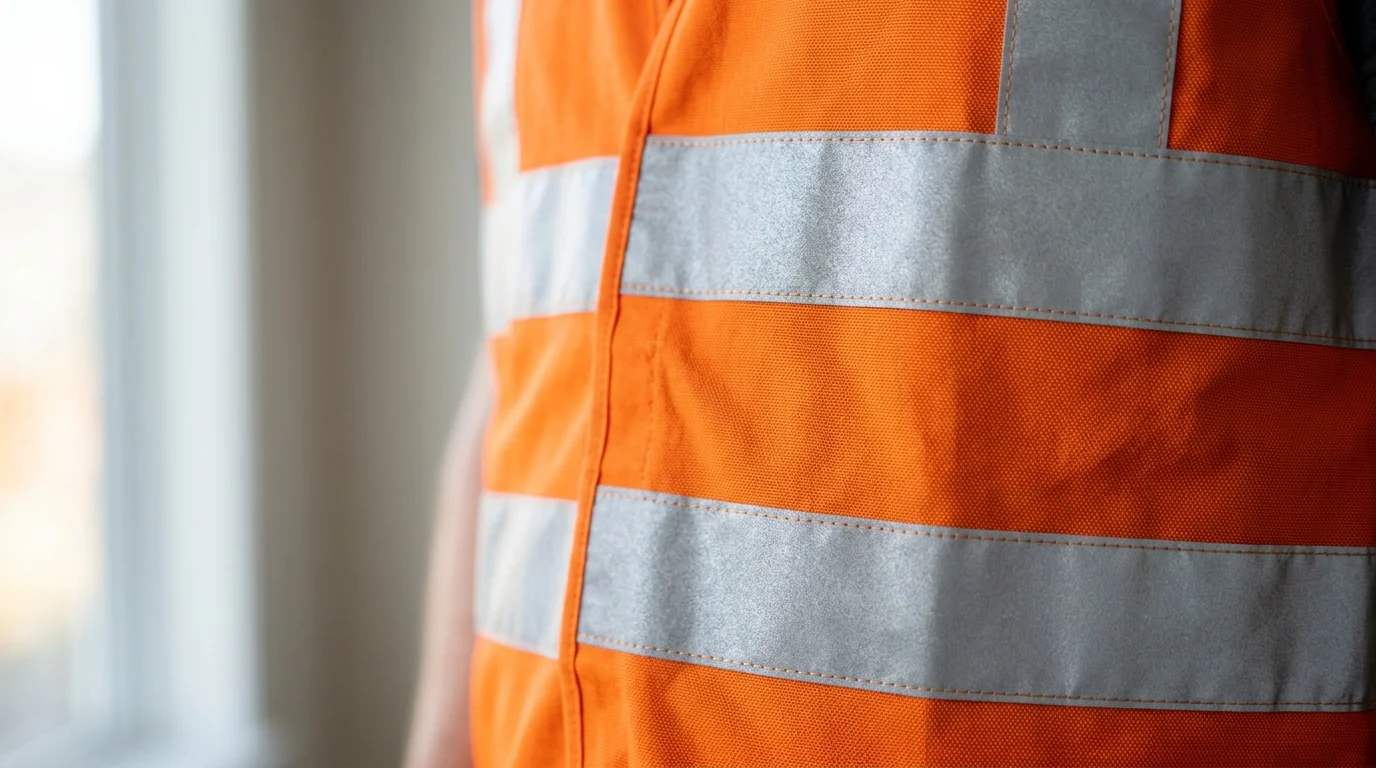
Choosing reflective tape for safety garments involves more than matching a strip to a fabric. Its optical performance, durability, and standard compliance directly affect worker visibility in low-light, wet, and high-wear environments. This article explains what reflective tape is, how key standards define acceptable performance, and the main types used in professional safety apparel, including glass bead and micro-prismatic options. It also outlines where each type fits best, from general industrial workwear to garments exposed to frequent washing, outdoor weather, or demanding site conditions, so readers can make more informed sourcing and specification decisions.
Why Reflective Tape Matters in Procurement and Compliance
Procurement of high-visibility (Hi-Vis) safety apparel demands rigorous specification of its most critical component: reflective tape. Serving as the primary mechanism for low-light visibility, this material directly impacts both regulatory compliance and end-user safety. Industrial buyers must navigate a complex matrix of optical performance, substrate compatibility, and environmental durability to ensure garments perform reliably in hazardous conditions.
The selection process goes far beyond aesthetic integration. It requires a fundamental understanding of photometric properties and material degradation curves. When specifying reflective materials, procurement professionals must evaluate the entire lifecycle of the garment, from initial manufacturing tolerances to the harsh realities of industrial laundering and prolonged UV exposure.
How is reflective tape defined for safety garments
Reflective tape for safety garments is engineered using either exposed glass bead technology or micro-prismatic structures. The core metric defining its efficacy is the coefficient of retroreflection (Ra), measured in candelas per lux per square meter (cd/lx/m²). For professional-grade safety garments, global baseline standards typically mandate an initial Ra value exceeding 330 cd/lx/m².
Micro-prismatic tapes often yield even higher initial returns, sometimes exceeding 500 cd/lx/m², and perform exceptionally well in heavy rain conditions since water does not pool in the reflective cavities. Conversely, glass bead tapes offer superior flexibility, breathability, and a wider observation angle, making them the preferred choice for dynamic work environments where workers are in constant motion.
What commercial risks come from poor tape selection
Selecting substandard reflective material introduces severe commercial and legal liabilities. Garments that fail to maintain a minimum 100 cd/lx/m² Ra threshold after a specified number of wash cycles lose their compliance status. This exposes employers to regulatory fines and elevates the risk of costly workers' compensation claims in the event of an accident.
Furthermore, manufacturers and distributors face the critical risk of product recalls. A recall due to non-compliant reflective tape can easily incur costs exceeding $150,000 in logistics, rework, and irreversible brand damage. Ensuring the selected tape exceeds baseline degradation curves and undergoes rigorous batch testing is a mandatory risk mitigation strategy for any large-scale safety apparel program.
Standards and Test Criteria for Reflective Tape
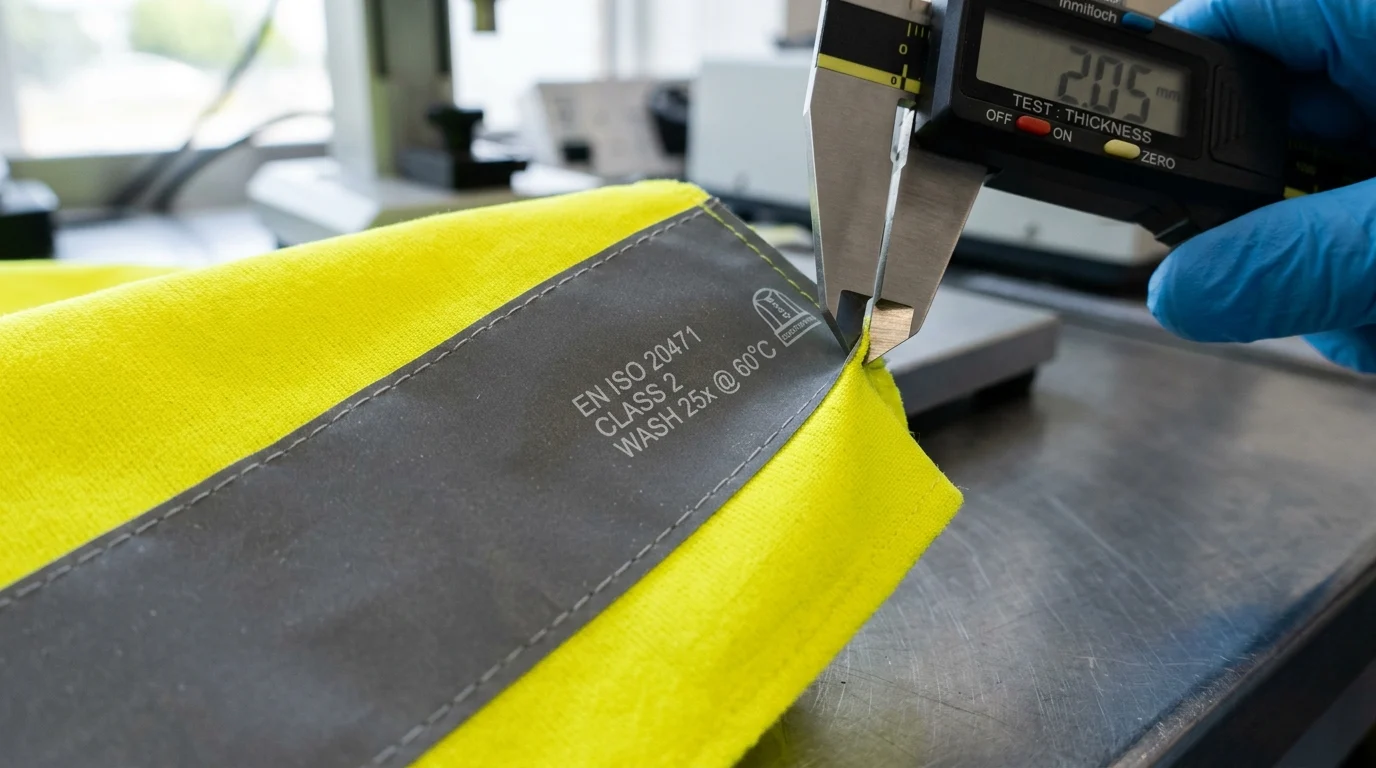
Navigating the global regulatory landscape requires a precise understanding of the photometric and physical testing criteria that reflective tapes must endure. Procurement teams must align material specifications with the target market's legal requirements, as non-compliance immediately invalidates the garment's safety rating.
Testing protocols simulate the worst-case scenarios a garment might face, ensuring that visibility remains consistent throughout the product's intended lifespan. This involves a combination of optical baseline measurements and accelerated wear testing.
How do regional standards differ
Regional standards dictate distinct performance thresholds, wash cycle endurance, and testing methodologies. While the underlying physics of retroreflection remain constant, the certification pathways vary significantly between North America, Europe, and Australasia.
| Standard | Region | Min. Initial Ra (cd/lx/m²) | Typical Domestic Wash Requirement |
|---|---|---|---|
| ANSI/ISEA 107 | United States | 330 | 25 to 50 cycles at 40°C-60°C |
| EN ISO 20471 | Europe | 330 | 50 cycles at 60°C |
| AS/NZS 4602.1 | Australia/NZ | 330 | 30 cycles at 60°C |
| CSA Z96 | Canada | 330 | 25 to 50 cycles at 40°C-60°C |
Understanding these regional nuances is vital for global supply chains. A tape certified for 25 washes under ANSI/ISEA 107 may fail the more rigorous 50-wash requirement of EN ISO 20471, necessitating market-specific material sourcing or the adoption of a universally compliant premium tape.
Which lab and field tests verify performance
Laboratory verification extends far beyond initial luminance. Certified tapes undergo rigorous physical conditioning, including abrasion testing via the Martindale method (ISO 12947-2) and temperature variation tests ranging from -20°C to +50°C to ensure the adhesive or backing does not crack under thermal stress.
Critically, industrial wash environments demand compliance with ISO 15797, which simulates harsh laundering conditions utilizing aggressive alkaline detergents and tunnel drying at temperatures up to 90°C. A high-performance industrial tape must maintain an Ra of at least 100 cd/lx/m² even after 50 intensive industrial wash cycles, a feat that standard domestic-wash tapes cannot achieve.
Types of Reflective Tape and End-Use Fit
The physical integration of reflective tape onto a garment substrate is as critical as the tape's optical properties. The choice between application methods and material types dictates the garment's flexibility, breathability, structural integrity, and overall lifecycle.
Mismatched materials can lead to puckering, adhesive failure, or compromised barrier protection in specialized protective wear. Therefore, selecting the correct tape type requires a holistic view of the garment's fabric architecture and its intended operational environment.
How do sewn and heat-transfer tapes compare
The industry primarily utilizes two integration methods: traditional sewn-on tape and heat-transfer (segmented or continuous) tape. Sewn tapes feature a durable backing—typically polyester, cotton, or an aramid blend—making them highly resistant to mechanical stress and heavy laundering.
Heat-transfer tapes utilize a polyurethane (PU) or polyester (PES) adhesive film activated by thermal presses, resulting in a lighter, more flexible garment. Segmented heat-transfer tapes further enhance breathability and stretch, making them ideal for modern activewear-inspired safety gear.
| Feature | Sewn-On Tape | Heat-Transfer Tape |
|---|---|---|
| Application Method | Industrial stitching | Thermal press (130°C – 160°C) |
| Garment Flexibility | Moderate | High (especially segmented) |
| Substrate Compatibility | Heavy woven fabrics | Knits, stretch fabrics, activewear |
| Application Cost | Lower material, higher labor | Higher material, lower labor |
Which fabric and environment factors affect selection
Environmental hazards dictate the chemical and thermal resistance required of the tape. For petrochemical, welding, or electrical applications, flame retardant (FR) reflective tape is mandatory. These specialized tapes utilize treated aramid backings designed to withstand exposure to 260°C for up to 5 minutes without melting, dripping, or igniting, satisfying EN 469 and NFPA 2112 standards.
Additionally, garments exposed to heavy soil, grease, or chemical splash require tapes engineered with specialized top-coatings. These coatings repel contaminants that would otherwise pool in the microscopic lenses and degrade the glass bead retroreflection. Conversely, lightweight mesh garments designed for high-heat environments require segmented heat-transfer tapes to prevent moisture trapping and reduce the risk of heat stress for the wearer.
Quality, Sourcing, and Total Cost
Establishing a resilient supply chain for reflective materials requires balancing unit costs with verified quality assurance. Total cost of ownership encompasses not just the price per meter, but the logistical efficiencies, defect rates, and lifecycle longevity of the material.
Procurement managers must audit suppliers stringently, as the market is flooded with uncertified or counterfeit reflective materials that mimic the appearance of compliant tape but fail rapidly under testing or field conditions.
What supplier qualifications and documents should buyers review
Professional procurement requires rigorous vetting of supplier documentation. Buyers must mandate valid, unexpired certificates from accredited third-party laboratories such as SATRA, TUV, or SGS. Self-certified declarations of conformity are insufficient for high-liability safety apparel.
Crucially, suppliers should provide Oeko-Tex Standard 100 certification to guarantee the absence of harmful substances, particularly heavy metals, formaldehyde, and restricted plasticizers in the adhesive layers. A robust supplier will also demonstrate ISO 9001 compliance for their manufacturing facilities to ensure batch-to-batch consistency and traceability in the event of a quality dispute.
Which cost, MOQ, lead time, and lifespan factors matter
The economics of reflective tape sourcing are driven by volume, material complexity, and production lead times. Standard domestic-wash polyester-backed tape typically ranges from $0.15 to $0.35 per meter, whereas specialized industrial-wash or FR-rated tapes command premiums of $0.80 to $1.50 per meter.
Minimum Order Quantities (MOQs) generally start at 1,000 to 3,000 meters for standard SKUs, escalating to 10,000 meters or more for custom segmented designs or proprietary adhesive formulations. Buyers must also factor in production lead times, which average 15 to 30 days, plus international shipping transit. Accurate demand forecasting is essential, as expedited air freight for dense, heavy rolls of reflective tape can quickly erode profit margins.
How to Select the Right Reflective Tape
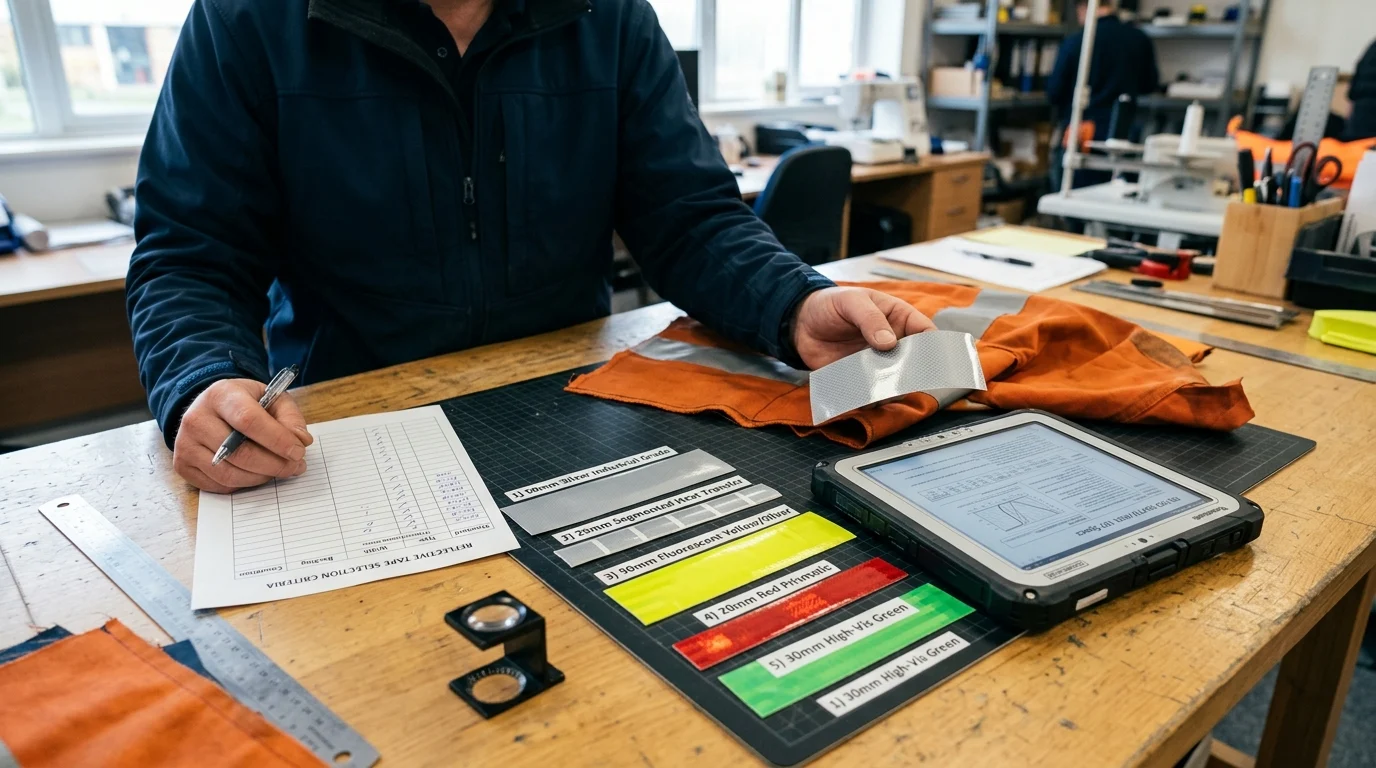
Translating technical requirements into actionable procurement specifications is the final hurdle in sourcing reflective tape. A systematic evaluation methodology ensures the selected material aligns with the garment's operational environment, manufacturing capabilities, and budgetary constraints.
Success in this phase prevents costly manufacturing delays and ensures the final product delivers on both its safety mandate and its commercial promise.
What evaluation steps support specification writing
Specification writing must begin with rigorous substrate compatibility testing. Procurement teams should mandate a pilot run of 50 to 100 garment units to validate the tape's performance under actual manufacturing conditions. This phase identifies potential issues such as needle cutting on woven fabrics, puckering after initial laundering, or adhesive failure on Durable Water Repellent (DWR) treated synthetics.
The final Bill of Materials (BOM) must leave no room for interpretation. It should explicitly state the required initial Ra value, the specific regional standard certification (e.g., EN ISO 20471 Class 2), the exact backing material, and the precise number of wash cycles the tape must survive before falling below the critical 100 cd/lx/m² safety threshold.
How should buyers balance compliance, durability, and cost
Effective procurement balances upfront material costs against the garment's expected lifecycle. Value engineering does not mean selecting the cheapest tape; it involves calculating the Total Cost of Ownership (TCO) from the perspective of the end-user or industrial laundry service.
Investing a 15% to 20% cost premium in a high-durability, industrial-wash capable tape can extend the garment's compliant lifespan from 25 washes to 50 washes. This effectively halves the replacement frequency for the end-user, providing a massive competitive advantage in tender bids and B2B contract negotiations. By prioritizing lifecycle durability over initial yardage cost, buyers deliver superior safety compliance while optimizing long-term economic value.
Key Takeaways
- The most important conclusions and rationale for 安全服反光带
- Specs, compliance, and risk checks worth validating before you commit
- Practical next steps and caveats readers can apply immediately
Frequently Asked Questions
What is the minimum reflective performance to specify for safety garment tape?
Specify an initial Ra of at least 330 cd/lx/m². For tougher programs, choose tape that still delivers at least 100 cd/lx/m² after the required wash cycles.
How do I choose between glass bead and micro-prismatic reflective tape?
Use glass bead tape for better flexibility and wider viewing angles. Choose micro-prismatic tape for higher brightness and stronger performance in heavy rain.
Which standard should reflective tape meet for different markets?
Match the garment’s sales region: ANSI/ISEA 107 for the US, EN ISO 20471 for Europe, AS/NZS 4602.1 for Australia/New Zealand, and CSA Z96 for Canada.
Why does wash-cycle rating matter when buying reflective tape?
If tape drops below compliance after laundering, the garment may fail regulations. Check whether you need domestic-wash ratings or industrial-wash performance such as ISO 15797 durability.
What tests should buyers request before approving reflective tape?
Ask for test data on initial Ra, post-wash Ra, abrasion resistance, and temperature conditioning. For industrial uniforms, also request ISO 15797 laundering results.


