
Introduction
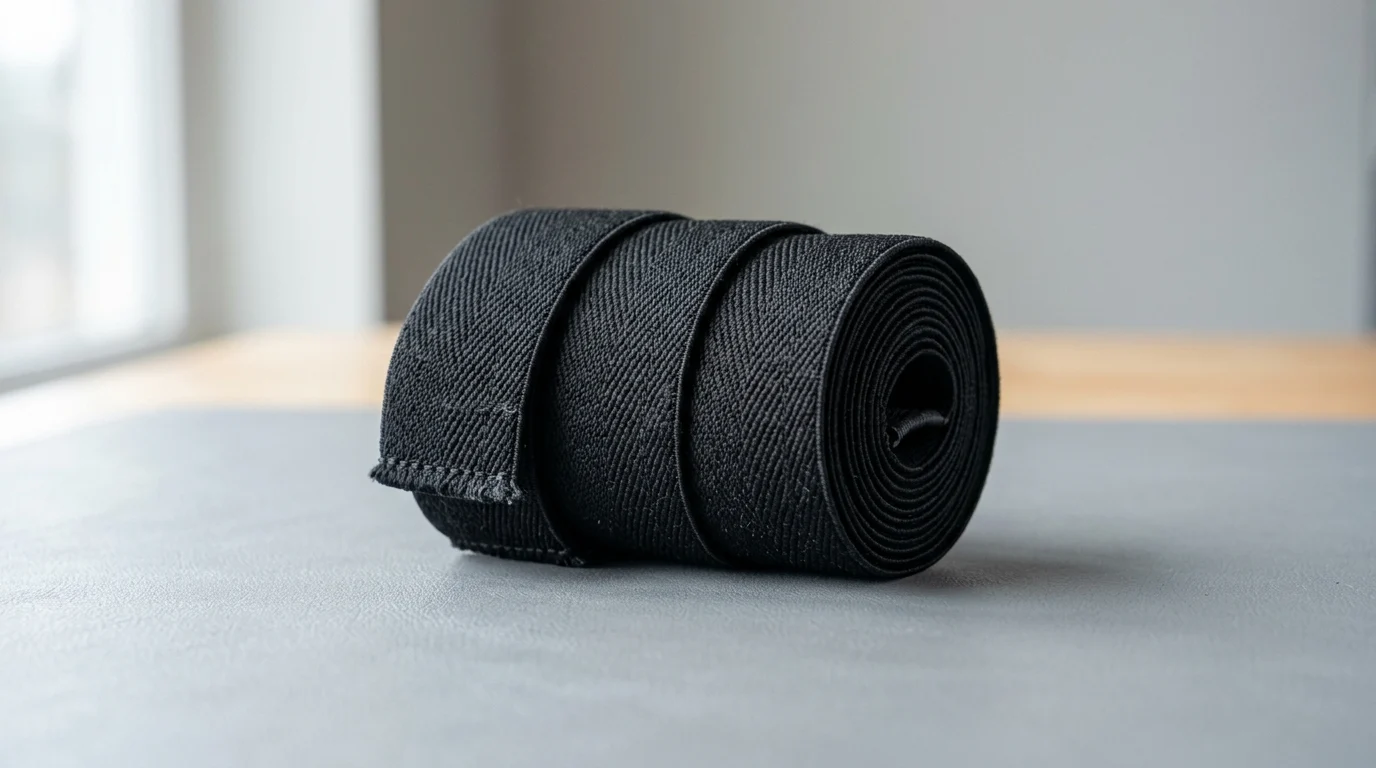
In medical back and waist belts, the material that stretches is also the material that determines how well the device supports the body. Elastic webbing controls compression, fit, and freedom of movement, helping a belt stay secure without becoming overly rigid or uncomfortable. Its strength, recovery, and surface feel all affect patient comfort, durability, and the consistency of therapeutic support over repeated use. Understanding this component makes it easier to evaluate why some belts perform better than others. The sections below explain how elastic webbing contributes to stability, pressure distribution, long-term resilience, and overall belt effectiveness.
Why Elastic Webbing Matters in Medical Back and Waist Belts
Medical back and waist belts rely fundamentally on the structural integrity of their components to provide therapeutic benefits. At the core of this design is elastic webbing, a dynamic material that dictates the overall efficacy of the orthopedic device. Unlike standard apparel elastics, medical-grade webbing must sustain precise mechanical properties under continuous stress, ensuring the belt delivers reliable orthopedic support without degrading over its intended lifecycle.
Performance and patient comfort
The relationship between material performance and patient comfort is a critical factor in medical device engineering. If a back support belt is too rigid or causes skin irritation, patient compliance drops significantly, negating any therapeutic benefits. High-quality elastic webbing mitigates this by using advanced yarn blends that offer a soft hand-feel while maintaining robust structural memory. The webbing must conform to the anatomical contours of the lower back and abdomen, distributing pressure evenly to prevent localized tissue damage or restricted blood flow.
Support, compression, and fit
Achieving the correct balance of support, compression, and fit requires meticulous engineering of the webbing’s tension profile. Medical belts often target specific compression grades, typically ranging from 15 to 30 mmHg equivalent pressure, depending on the severity of the lumbar condition. The elastic webbing must provide sufficient resistance to limit excessive spinal flexion and extension while allowing enough elasticity for normal respiratory mechanics. A finely tuned modulus of elasticity ensures the belt delivers consistent intra-abdominal pressure, which is essential for unloading the intervertebral discs and stabilizing the lumbar spine.
Product positioning and end use
The end-use application directly influences the type of webbing selected during the product positioning phase. Post-operative abdominal binders prioritize gentle, breathable compression to support healing incisions, whereas heavy-duty occupational back belts require high-denier, stiff woven elastics to prevent injury during repetitive lifting. Manufacturers must align the physical properties of the webbing with the specific clinical or occupational objectives of the final product, ensuring the tension ratings and material composition meet the exact demands of the target demographic.
Key Specifications for Medical Belt Elastic Webbing
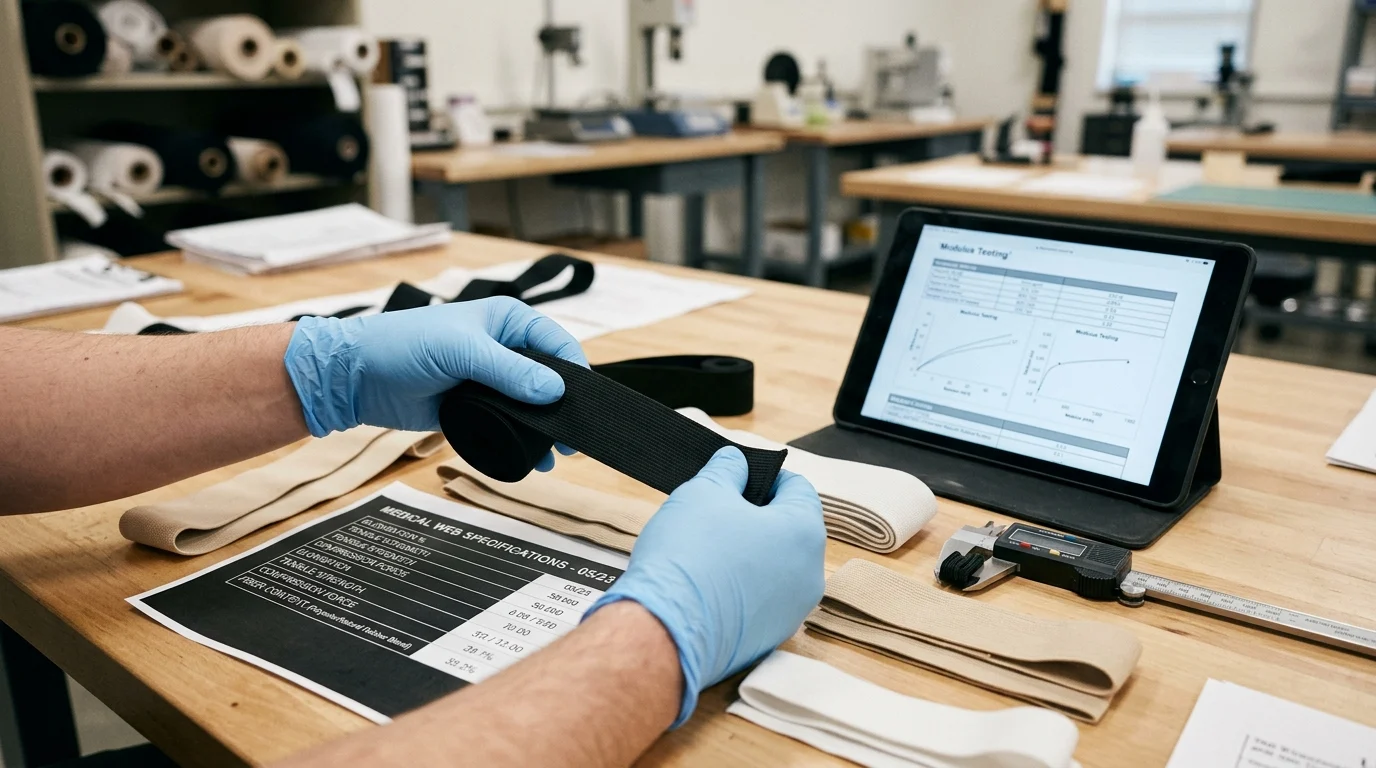
Defining the right elastic webbing for belts requires strict attention to physical specifications. Buyers and engineers must evaluate a matrix of material characteristics to ensure the final product meets medical industry standards.
Materials, stretch, recovery, and width
The foundational specifications of medical webbing involve the interplay between raw materials, stretch capacity, recovery rates, and dimensional width. Typical compositions include polyester or nylon blended with high-grade spandex or latex threads. For waist and back belts, standard widths usually range from 100mm to 300mm to provide adequate lumbar coverage. The elongation percentage is a critical metric; medical belts generally require an elongation capacity between 120% and 180%. Equally important is the recovery rate, which must exceed 95% after maximum extension to ensure the belt does not become permanently distorted from repeated wear.
Breathability, skin contact, and edge stability
Because medical belts are often worn for extended periods, breathability and skin contact safety are paramount. Webbing engineered with monofilament yarns or specialized mesh structures facilitates thermal regulation and moisture wicking, preventing maceration of the skin. Edge stability is another vital specification; the selvage must be constructed to prevent rolling, curling, or fraying under tension. A high-quality medical elastic will exhibit less than 2% dimensional shrinkage when exposed to body heat and moisture, ensuring the edges remain flat and comfortable against the patient’s torso.
Knitted vs woven elastic webbing
The manufacturing technique—knitting versus weaving—profoundly impacts the webbing’s behavior and cost. Knitted elastics are produced by interlocking loops, resulting in a softer, more breathable, and highly flexible fabric ideal for lightweight supports. Woven elastics, created by interlacing warp and weft yarns, offer superior firmness, higher resistance to flex fatigue, and greater structural rigidity for heavy-duty orthopedic braces.
| Feature | Knitted Elastic Webbing | Woven Elastic Webbing |
|---|---|---|
| Structure | Interlocking yarn loops | Interlaced warp and weft yarns |
| Elongation Range | 150% – 200% | 100% – 150% |
| Breathability | High (often features mesh designs) | Moderate to Low (dense construction) |
| Support Level | Light to Moderate | Moderate to Maximum |
| Cost Profile | Generally lower cost | Higher cost due to slower production |
Quality, Compliance, and Durability Requirements
Medical devices demand rigorous quality assurance protocols. The elastic webbing used in these applications is subject to strict compliance and durability requirements to protect end-users and satisfy international regulatory frameworks.
Test methods and quality indicators
Quality indicators for medical webbing are validated through standardized test methods. Fatigue resistance is a primary metric, often evaluated by subjecting the webbing to 10,000 cyclic stretches on a tensile testing machine to measure the loss of elasticity over time. A premium medical elastic should retain at least 90% of its original modulus of elasticity after this fatigue testing. Additionally, tear strength and seam slippage tests are conducted to ensure the webbing can withstand the heavy stitching required to attach hook-and-loop fasteners and rigid lumbar stays.
Skin safety and restricted substances
Given that back belts may come into direct or indirect contact with the skin, the chemical safety of the webbing is heavily regulated. Compliance with standards such as OEKO-TEX Standard 100 Class II (for textiles in direct contact with skin) is frequently required. This certification ensures the material is free from harmful levels of restricted substances, capping formaldehyde concentrations below 75 ppm and verifying the absence of allergenic disperse dyes and heavy metals. Biocompatibility testing, including cytotoxicity and skin irritation assessments (per ISO 10993), may also be mandated for clinical-grade supports.
Production controls for consistent performance
To guarantee every batch of webbing performs identically, manufacturers must implement stringent production controls. This includes automated tension control during the warping and weaving or knitting processes to prevent inconsistencies in the elastic core. Quality control systems should limit defect rates to below 1.5% per production run. Inline optical inspection systems are increasingly used to detect skipped stitches, broken elastomer threads, or width variations, ensuring the physical properties remain uniform across thousands of meters of output.
How Buyers Should Source Medical Belt Elastic Webbing
Sourcing elastic webbing for belts involves vetting manufacturing capabilities, evaluating supply chain reliability, and understanding the economic drivers that impact procurement strategies.
Supplier evaluation criteria
When evaluating potential suppliers, buyers must look beyond basic manufacturing capacity and assess the vendor’s quality management systems. Suppliers holding ISO 9001 or ISO 13485 (Medical Devices) certifications demonstrate a commitment to traceable and consistent production. Key evaluation criteria include the supplier’s ability to source medical-grade elastomers, their in-house testing laboratory capabilities, and their historical performance in maintaining batch-to-batch color and tension consistency. A robust supplier will provide comprehensive technical data sheets (TDS) for all materials.
Cost drivers, MOQs, and lead times
Procurement economics are dictated by several variables, including raw material selection, width, and production technique. Pricing for medical-grade elastic webbing typically ranges from $0.45 to $1.80 per linear meter, scaling with width and elastomer density. Minimum Order Quantities (MOQs) are a significant factor; standard MOQs for custom medical webbing generally sit between 3,000 and 5,000 meters to justify the setup time on industrial looms. Lead times for commercial production runs average 20 to 35 days, though this can extend during peak global manufacturing seasons or when sourcing specialized latex-free yarns.
Sampling and approval process
The sampling and approval process is a critical risk-mitigation step before committing to bulk production. Buyers should request physical prototypes to conduct independent wash testing, stretch recovery analysis, and wearer trials. The prototyping phase usually takes 7 to 14 days. During this period, adjustments to the tension, breathability, or width can be negotiated. Final approval should be contingent on a signed specification sheet that establishes acceptable tolerance margins for all critical dimensions and mechanical properties.
Decision Framework for Final Webbing Selection
Finalizing the procurement strategy requires a structured decision matrix. Engineers and sourcing managers must align the physical capabilities of the webbing with the commercial realities of the final medical belt.
Balancing support, comfort, and price
The ultimate selection involves balancing the required level of orthopedic support against patient comfort and unit price. A highly rigid, custom-woven jacquard elastic will offer exceptional lumbar stabilization but will drive up the bill of materials and may feel restrictive to the patient. Conversely, a lightweight knitted elastic reduces costs and improves breathability but may fail to provide adequate compression for severe spinal conditions. Procurement teams must weigh these factors, often consulting specialized manufacturers to engineer hybrid weaves that optimize both cost and clinical efficacy.
Final specification checklist
Before issuing a purchase order, buyers should use a final specification checklist to ensure all parameters are contractually defined and understood by the supplier. This prevents costly manufacturing errors and ensures regulatory compliance.
| Specification Parameter | Typical Target / Tolerance | Criticality for Medical Belts |
|---|---|---|
| Dimensional Width | Target width ± 5% tolerance | High (affects belt sizing and fit) |
| Elongation Capacity | 150% ± 10% variance | High (dictates compression level) |
| Elastic Recovery | > 95% after 10,000 cycles | Critical (determines product lifespan) |
| Chemical Compliance | OEKO-TEX Class II / < 75 ppm Formaldehyde | Critical (prevents skin irritation/liability) |
| Color Fastness | Grade 4 to washing and rubbing | Medium (aesthetic longevity) |
Further reading:
Key Takeaways
- The most important conclusions and rationale for elastic webbing for belts
- Specs, compliance, and risk checks worth validating before you commit
- Practical next steps and caveats readers can apply immediately
Frequently Asked Questions
What does elastic webbing do in a medical back or waist belt?
It creates controlled compression and support. Good webbing stabilizes the lower back, spreads pressure evenly, and still allows normal movement and breathing.
Which is better for medical belts: knitted or woven elastic webbing?
Knitted webbing suits lighter, more breathable supports. Woven webbing is firmer and better for heavy-duty lumbar belts or occupational back support.
What stretch and recovery levels are suitable for medical belt webbing?
A practical target is 120%–180% elongation with over 95% recovery. This helps the belt keep its shape and compression after repeated wear.
How can buyers judge comfort for long-wear medical belts?
Check for breathable structures, soft skin-contact surfaces, and stable edges that resist rolling or fraying. Low shrinkage in heat and moisture also improves comfort.
Where can manufacturers compare elastic webbing options for belt applications?
On Tramigo Blog, buyers can review product-related pages and material guidance to compare elastic webbing types, structures, and end-use suitability for belts.


