
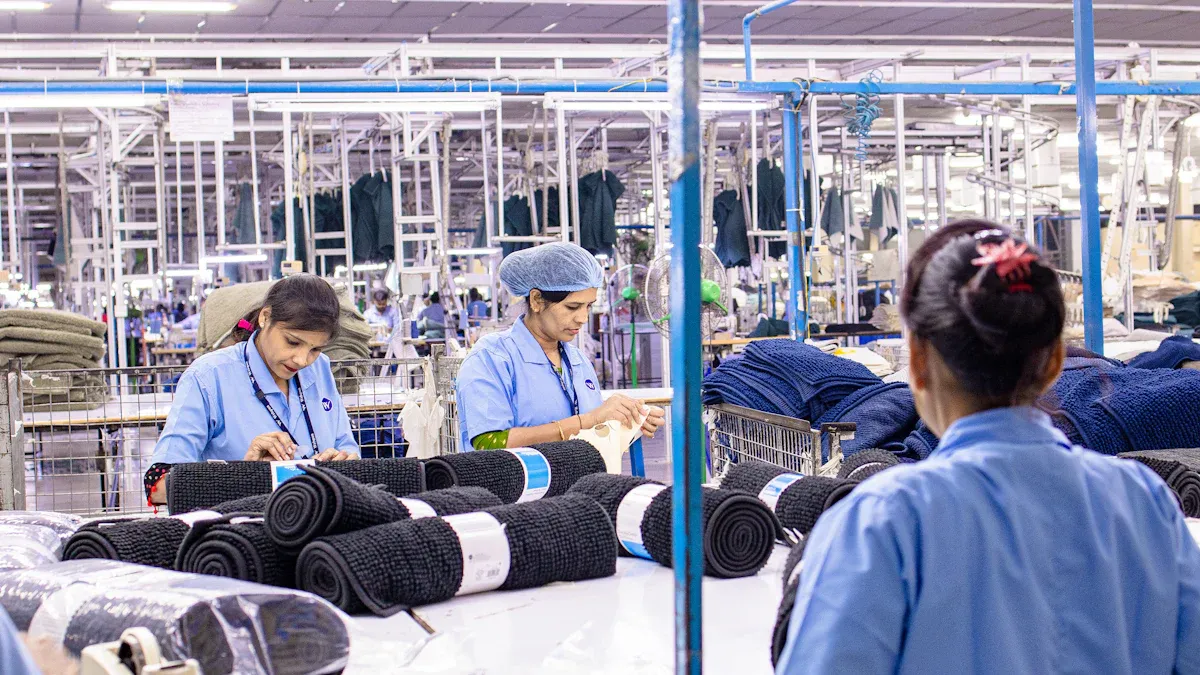
Finding a trustworthy clothing accessory manufacturer in China can feel overwhelming. This guide provides essential steps to identify and partner with reliable suppliers. You will learn how to conduct thorough research and perform due diligence. It also helps establish effective communication. Discover strategies to mitigate risks and ensure product quality when sourcing Garment Accessories China. Whether you need a specific China Zippers Supplier or general Wholesale Apparel Accessories, this resource helps. You can also find Low MOQ apparel accessory suppliers China. Securing a quality Tramigo garment accessory for your brand becomes achievable.
Key Takeaways
- Clearly define your needs for clothing accessories. Specify types, materials, quality standards, and budget.
- Search for manufacturers using online platforms, trade shows, sourcing agents, and industry referrals.
- Thoroughly check potential manufacturers. Verify licenses, assess communication, and evaluate product samples.
- Build strong relationships and negotiate clear contracts. Protect your intellectual property.
- Monitor production and quality. Conduct inspections at all stages, from pre-production to pre-shipment.
Define Your Needs for Garment Accessories
Before you start searching for a manufacturer, clearly define what you need. This initial step saves time and helps you find the right partner. A clear vision guides your search effectively.
Specify Accessory Types and Materials
First, identify the exact types of accessories your clothing line requires. Do you need buttons, zippers, labels, buckles, or something else? Each accessory has unique production needs. Next, specify the materials for these items. For example, do you want metal zippers, plastic buttons, or woven labels? Knowing these details helps manufacturers understand your project. It also ensures they have the right capabilities.
Outline Quality Standards and Certifications
Quality is paramount for your brand’s reputation. You must outline the quality standards your accessories need to meet. Consider international certifications. These certifications show a manufacturer’s commitment to specific standards.
Here are some important certifications to look for:
- ISO Certification: This global standard ensures compliance with best practices in quality, safety, and sustainability.
- ISO 14001: Focuses on reducing environmental impact and promoting sustainable production.
- ISO 9001: Improves quality, customer satisfaction, and internal efficiency.
- bluesign: This certification emphasizes safe chemistry practices in textile manufacturing.
- Cradle to Cradle (C2C): It assesses material health, reutilization, and social fairness.
- Leather Working Group (LWG): This group rates leather tanneries based on their environmental impact.
- SA8000: This social certification standard covers human rights and labor conditions.
- Worldwide Responsible Accredited Production (WRAP): It audits facilities for social compliance, including labor practices.
- Nest: This program supports home-based artisan production, focusing on cultural sensitivity.
- Fairtrade International: It ensures fair wages and safe working conditions for producers.
- Oeko-Tex: This certification focuses on chemical safety for raw materials, fabrics, and finished Garment Accessories.
Determine Production Volume and Budget
You need to know your estimated production volume. Manufacturers often have minimum order quantities (MOQs). Your volume will influence which manufacturers can work with you. Also, establish a clear budget for your accessories. Your budget affects material choices, customization options, and the overall cost per unit. Communicate these figures early to avoid misunderstandings.
Detail Design and Customization Requirements
You must clearly communicate your design vision to manufacturers. This step ensures they produce exactly what you imagine. Vague instructions often lead to mistakes and delays. Provide as much detail as possible.
Consider these elements when detailing your design:
- Technical Drawings: These drawings show precise measurements, dimensions, and construction details. They act as a blueprint for the manufacturer. Include all angles and specific features.
- Material Specifications: Beyond the general material type, specify exact grades, finishes, and colors. For example, if you need a metal buckle, state the specific alloy, plating, and sheen. Provide Pantone codes for colors.
- Reference Samples: If you have an existing accessory you like, send it as a physical sample. This gives the manufacturer a tangible example of your desired quality and aesthetic.
- Branding Elements: Clearly outline any logos, engravings, or unique branding you want on your Garment Accessories. Provide high-resolution files for logos and specify their placement and size.
- Functionality: Describe how the accessory should function. For instance, if it is a zipper, explain if it needs to be waterproof or heavy-duty.
- Packaging Requirements: Do you need individual packaging for each accessory? Specify any branding or materials for the packaging itself.
Manufacturers appreciate clear, detailed instructions. This helps them understand your needs and produce accurate samples. It also reduces the need for revisions later in the process. Good communication here saves both time and money.
Initial Search for Clothing Accessory Manufacturers
Once you know your needs, you can start looking for manufacturers. This initial search helps you create a list of potential partners.
Utilize Online B2B Platforms
Online B2B platforms are a key way to find manufacturers. These websites connect businesses with suppliers worldwide. For example, Global Trade Plaza is an ISO 9001:2015 certified online marketplace. It helps businesses find suitable suppliers in the clothing industry, including those for accessories. This platform aims to make online trade easier. Made-in-China.com is another great option. Businesses can source millions of products directly from Chinese wholesale factories there. It offers access to low-cost, quality products. Many of these factories are even audited by third-party inspection companies. These platforms help you connect with reliable suppliers and offer services like buyer assistance.
Attend Industry Trade Shows and Fairs
Attending trade shows and fairs offers a unique way to meet manufacturers face-to-face. You can see product samples and discuss your needs directly. China hosts many important shows. The Canton Fair, held twice a year in Guangzhou, is China’s biggest trade show. It covers a wide range of products, including textiles. The Yiwu International Commodities Fair focuses on small items, accessories, and consumer goods. The East China Fair in Shanghai is another large regional fair for garments and textiles. Other key events include the CHIC Fashion Fair for apparel and accessories, and Intertextile for fabrics and materials. These events help you find trends and build connections.
Consider Professional Sourcing Agents
Professional sourcing agents in China offer many benefits. They act as a vital link to Chinese manufacturing. They speak the language, understand the local culture, and know where to find good factories. A trusted agent becomes a valuable local partner. They help reduce lead times and verify suppliers. They also make complex sourcing tasks easier. Agents handle factory vetting, sample coordination, and shipping quotes. This lets brand owners focus on design and marketing. Agents with a local presence can visit factories in person. They verify business licenses, check certifications, and observe working conditions. This is important for avoiding scams or low-quality factories. They also help with negotiations to get better prices and terms. Over time, this can lead to improved quality and consistency.
Leverage Industry Referrals and Networks
Sometimes, the best recommendations come from people you already trust. Leveraging industry referrals and networks can significantly streamline your search for a trustworthy clothing accessory manufacturer. These connections often provide insights you cannot find through online searches alone.
Start by reaching out to your professional network. Talk to colleagues, mentors, or other business owners who have experience sourcing from China. They might have worked with reliable manufacturers themselves. A personal recommendation carries significant weight. It means someone has already vetted the supplier and can speak to their quality and service.
Consider joining industry-specific associations or online forums. These platforms connect professionals in the apparel and accessories sector. Members often share their experiences and recommend suppliers. You can ask direct questions and get honest feedback from people facing similar challenges. This peer-to-peer advice is invaluable.
Tip: Look for online communities or LinkedIn groups focused on apparel sourcing or manufacturing in China. Many experienced professionals are willing to share their knowledge.
Attending local or international networking events also helps. You can meet other brand owners, designers, or sourcing managers. These interactions can lead to valuable introductions to manufacturers or sourcing agents. Someone might know a "China Zippers Supplier" or a "Wholesale Apparel Accessories" provider that perfectly fits your needs.
Using referrals often reduces your risk. When a trusted source recommends a manufacturer, it means they have likely had positive experiences. This can save you time and effort in the vetting process. It also helps you avoid potential pitfalls. Building these relationships takes time, but the benefits of a strong network are long-lasting. You gain access to a pool of pre-qualified suppliers and gain insights into their performance.
Vetting Potential Garment Accessories Manufacturers
After you create a list of potential manufacturers, the real work begins. You must thoroughly vet each one. This process helps you separate reliable partners from those who might cause problems. Think of it as a background check for your future business partner.
Verify Business Licenses and Registrations
A manufacturer’s legitimacy starts with proper documentation. You should always ask for their business licenses and registrations. A trustworthy manufacturer readily provides these documents. Look for an official business license. It should be in color and have a visible red stamp. The registered name, address, and business scope on this license must match any other documents they provide.
Many Chinese factories use trading partners for export rights. Therefore, an export license is also important. You should also ask for their tax certificate. Confirm the factory’s address and ownership details. These steps help ensure you deal with a legitimate entity.
Beyond basic registration, consider their certifications. These show a commitment to specific standards.
- ISO9001 indicates a focus on quality management.
- BSCI or SEDEX show social compliance, meaning they treat workers fairly.
- WRAP certifies factory standards.
- OEKO-TEX confirms the safety of their materials.
Checking these documents helps you avoid scams and ensures the manufacturer operates legally and ethically.
Assess Communication and Responsiveness
Effective communication forms the foundation of any successful business relationship. When you work with a manufacturer, clear communication prevents misunderstandings. It also aligns expectations. You should assess how well a potential manufacturer communicates from your very first interaction.
Consider these points:
- Communication Channels: Does the manufacturer offer clear communication channels? You might prefer email, WeChat, Slack, or video conferences. Setting preferred methods streamlines interactions. It also ensures timely responses.
- Responsiveness: How quickly do they reply to your inquiries? A manufacturer who responds promptly shows professionalism and dedication.
- Clarity: Do they use clear and concise language? They should avoid ambiguity. Detailed instructions from their side minimize misinterpretation. This also clarifies responsibilities.
- Proactive Updates: Do they offer to schedule regular updates? Weekly or bi-weekly check-ins help identify and solve potential issues before they become major problems.
A manufacturer who communicates effectively and responds quickly indicates a reliable partner. They value your business and want to ensure a smooth process.
Request and Evaluate Product Samples
Product samples are your first tangible look at a manufacturer’s work. They are crucial for evaluating quality and ensuring they can meet your specifications. Do not skip this step.
When you receive samples, evaluate them thoroughly.
- Define Clear Objectives: Set specific goals for your sample review. Outline what you need to verify. This could include dimensions, artwork, or functionality.
- Engage Early Feedback: Involve your design and quality assurance teams from the start. Their input is valuable during initial sample assessments.
- Document Everything: Keep detailed records of all sample evaluations. Note any discrepancies or suggestions for changes.
- Leverage Technology: Use software for precise measurements if possible. You can implement 3D scanning to assess item shapes and dimensions.
- Run Realistic Tests: Simulate actual use conditions. For example, place clothing samples through multiple wash cycles to test durability.
- Iterate Faster: Streamline revision processes. Create a feedback loop. This facilitates rapid adjustments to samples.
- Benchmark Competitors: Analyze industry samples for insight. Compare your samples with competitors’ products to identify strengths and weaknesses.
You should also check specific details:
- Accuracy: Ensure the parameters, shapes, and textures match your design.
- Material Quality: Verify the quality of main and auxiliary fabrics. Check for elasticity.
- Construction: Study the quantity, fabric alignment, and correct detail dimensions.
- Assembled Parts: Master the parameters, measurements, and permissible errors of assembled parts.
- Auxiliary Materials: Understand the properties of auxiliary materials like thread, zippers, and other Garment Accessories.
- Aesthetics: Assess color criteria, thickness, and elasticity of the fabric.
- Technical Standards: Research technical standards. Ensure accessories like needles, keychains, labels, or mex match requirements.
Look for nonconformances against your specifications. This includes color, style, brand, size, placement, and other physical attributes. Visually inspect for defects. These might include incomplete or skipped stitches, or untrimmed threads around buttonholes. Identify improperly sized buttonholes. Note buttonholes sewn vertically when they should be horizontal, or vice versa. Classify nonconformances and visual defects. You can label them as major or minor defects based on severity and prevalence. Consider customer tolerance for these issues.
Finally, conduct on-site tests for function and durability. Pull tests, for example, check the strength and security of accessories. Specify the testing procedure for each required on-site test. Define the desired sample size for these tests. This could be a fixed number of pieces or AQL sampling. Identify the equipment required for each specific test. Determine who should provide it: you, the factory, or an inspector.
Confirm Production Capabilities and Capacity
Understanding a manufacturer’s production capabilities and capacity is crucial. It helps you know if they can handle your order size and meet your deadlines. You need to ask specific questions to get a clear picture of their operations.
First, consider their production queuing accuracy. This shows how well they distribute pieces among machines. Good queuing reduces the time it takes to complete a product and helps identify any slowdowns. Next, look at their production planning accuracy. This compares their actual production time to their planned time. High accuracy means they ship on time, use labor efficiently, and have supplies and equipment ready.
You should also check their material planning accuracy. This assesses how precisely they select and buy materials. This is very important for cost control. Fabric, for example, can make up 60-70% of a garment’s cost. Ask about their sourcing time. This is the average time they spend getting raw materials like fabric, trim, and packaging. Knowing this helps with your own production planning and cycle time estimates.
Other important indicators include:
- Inventory Turnover: This shows how many times they sell their inventory in a period. Low turnover can mean too much inventory and tied-up cash.
- Approved Sample Product: This is the percentage of samples that meet customer approval. It directly affects how quickly orders get confirmed.
- Rework Production Ratio: This measures how much product needs rework. A low ratio means better quality and less waste.
- Amount of Dead Stock: This is leftover fabric after an order ships. Minimizing dead stock improves planning and lowers costs.
- Cut to Ship Ratio: This compares the number of garments shipped to those cut. It usually ranges from 95% to 99%.
Also, inquire about their production batch or line efficiency. This measures how efficient their daily production line is. They calculate it by comparing total minutes produced to total minutes operators worked. This helps them calculate production costs. Labor productivity measures how many garments operators produce in a specific time. This helps compare productivity across different products or factories.
Finally, ask about their perfect order fulfillment. This is the percentage of products delivered on time, complete, undamaged, and with correct documents. Higher accuracy leads to lower production costs and more repeat orders. Repeated orders from existing customers are also a good sign. They help forecast production schedules. The order fulfillment cycle time is the time it takes to design, develop, produce, and transport a garment. Reducing this time lowers costs and makes customers happier. Upside supply chain flexibility shows how quickly they can respond to an unplanned 20% increase in demand without issues. This gives them a competitive edge.
Capacity utilization is another key metric. It is the ratio of actual production output to the maximum possible output, shown as a percentage. This is a critical indicator for manufacturing. It provides useful information for daily operations. It guides production planning, how they use resources, and cost management. Measuring capacity utilization helps identify where production line efficiency might be breaking down. It also shows where bottlenecks occur. This includes issues with equipment, stock, or supplies. It reveals if expected capacity is underused or overused. It also highlights gaps in staffing or overstaffing.
Inquire About Quality Control Processes
A reputable manufacturer always has strong quality control processes. These processes ensure your Garment Accessories meet your standards. Effective quality control checklists for garment inspections cover many areas. These include visual checks, measurement checks, functional checks, packaging, labeling, and compliance standards. These structured checklists help identify errors early in the production process.
It is absolutely essential to check accessories and labels. Even if a garment is well-sewn, issues like missing size labels, incorrect care tags, or loose buttons can cause inspection failures. Checklists must cover all trims and packaging elements. These include zippers, drawstrings, hangtags, and polybags. Labeling accuracy and product identity contribute to 30% of failed audits, according to Intertek. Labels must also follow local rules, like the FTC textile rules.
Manufacturers typically conduct inspections at different stages:
| Inspection Stage | Focus Areas |
|---|---|
| Pre-production | Raw fabric rolls (color, weight, stretch, defects), trims (buttons, thread, zippers), sample pieces, tech pack verification. |
| Mid-production | In-line stitching, logo application, embroidery placement, seam reinforcements, random sampling from the production floor. |
| Final Inspection | Full checklist on finished goods. |
Many quality control methods exist. AQL (Acceptable Quality Level) is a common statistical sampling method. It determines pass/fail rates. They often use levels like AQL 2.5 for general products or AQL 1.0/1.5 for premium items. ISO 2859 is a standard similar to AQL for sampling. ISO 9001 focuses on quality management systems and process control. OEKO-TEX addresses chemical safety in textiles. ASTM D5430 is used for garment visual inspections, especially in North America.
Inspectors check many things:
- Measurements and fit: They compare actual sizes to technical specifications.
- Stitching and construction: They evaluate seam strength, alignment, density, and identify defects.
- Fabric quality: They assess texture, color consistency, weight, shrinkage, and elasticity.
- Trims and accessories: They inspect zippers, buttons, snaps, labels, and hangtags.
- Workmanship: They check for loose threads, stains, unfinished edges, and symmetry.
- Packing and labeling: They verify barcode accuracy, polybag sealing, and conduct carton drop testing.
The typical inspection process involves several steps. You book the inspection at least 1-2 days before shipment. An inspector then visits the factory to conduct an on-site inspection. They issue a comprehensive report within 24 hours. This report includes photos, findings, and recommendations. Finally, you decide on approval or rework based on the inspection results. Quality control is crucial for ensuring products meet customer expectations and regulatory standards. When manufacturing in China, a trusted third-party evaluation of products and processes helps maintain consistent quality and compliance. This includes product inspections, auditing, and lab testing.
Check Client References and Case Studies
After assessing a manufacturer’s capabilities and quality control, you should check their client references and review case studies. This step provides real-world insights into their performance. It helps you understand their reliability from other businesses’ perspectives.
Ask the manufacturer for a list of their current or past clients. Focus on clients who have ordered similar products or have similar business needs to yours. When you contact these references, ask specific questions. Inquire about the manufacturer’s communication, their ability to meet deadlines, and the quality of their products. Ask if they encountered any issues and how the manufacturer resolved them. A manufacturer who readily provides references usually has confidence in their work.
Case studies also offer valuable information. These detailed reports show how the manufacturer has helped other clients achieve their goals. They often highlight specific projects, challenges faced, and solutions provided. Look for case studies that demonstrate their expertise in your specific type of clothing accessories. They can show their ability to handle complex designs, large volumes, or specific material requirements. Case studies can also reveal their problem-solving skills and commitment to customer satisfaction.
A manufacturer with strong references and compelling case studies shows a proven track record. This indicates they are a reliable partner. It also gives you peace of mind knowing they have successfully worked with others.
Evaluate Ethical Practices and Compliance
Evaluating a manufacturer’s ethical practices and compliance is a critical step. It ensures your supply chain aligns with your brand’s values. It also helps you avoid potential reputational damage. Many consumers today care about how products are made. They want to know workers are treated fairly and production methods are sustainable.
You should ask manufacturers about their commitment to social and environmental responsibility. Look for specific certifications. These certifications show a manufacturer’s dedication to ethical standards.
Here are some important ethical certifications and compliance standards:
- EcoCert: This certification ensures organic agricultural products, like cotton or hemp, are used in garments. It also guarantees traceability and integrity of raw materials.
- Global Organic Textile Standard (GOTS): This is a highly trusted certification. It unifies standards across countries and production stages. It verifies the organic status of textiles such as cotton, hemp, wool, or linen.
- Fairwear Foundation: This organization focuses on improving labor conditions for garment workers. It ensures fair wages, no child labor, equal opportunities, and safe working environments.
- Oeko-Tex: This widely recognized certification ensures textiles are free from harmful chemicals. This is very important for consumer safety, especially in children’s clothing.
- Cradle 2 Cradle: This certification looks at the entire lifecycle of materials. It assesses recyclability, renewable energy use, water efficiency, and social responsibility.
- Ethical Trading Initiative (ETI): This initiative aims to protect workers’ rights in global supply chains. It focuses on principles similar to the Fairwear Foundation.
- bluesign: This standard primarily focuses on sustainable fashion. It ensures the smallest ecological footprint by assessing resource productivity, consumer safety, and environmental emissions.
A manufacturer who holds these certifications demonstrates a commitment beyond just making a product. They show they care about their workers and the environment. Ask for copies of these certificates. You can also verify them with the issuing organizations. Some manufacturers might also have their own internal codes of conduct. Review these documents carefully. They should cover areas like fair wages, working hours, health and safety, and environmental impact. A transparent manufacturer will readily share this information. They will also welcome questions about their practices. This due diligence helps you build a supply chain you can trust. It also supports your brand’s ethical standing.
Building Relationships and Negotiating with Manufacturers
After vetting potential partners, you move to the next stage: building strong relationships and negotiating terms. This step ensures a smooth production process and a lasting partnership.
Establish Clear Communication Protocols
Good communication forms the backbone of any successful partnership. You need clear ways to talk with your manufacturer. Use simple words and avoid jargon. Always ask them to repeat key points or summarize agreements. This confirms everyone understands. Visuals like images or videos also help explain complex ideas. Many businesses use tools like WeChat for quick messages and sharing files. Building personal relationships, sometimes called ‘guanxi’ in China, also strengthens your business network. Make sure to follow up regularly. This helps catch any misunderstandings early.
Draft a Comprehensive Manufacturing Contract
A strong contract protects both you and the manufacturer. It clearly outlines everyone’s responsibilities. This document should detail product specifications, quality standards, and quantities. It also covers pricing, delivery timelines, and payment terms. Make sure the contract includes quality control protocols and how you will resolve disputes. A well-written contract prevents problems and holds everyone accountable.
Negotiate Payment Terms and Security
Negotiating payment terms is a critical part of the process. Many manufacturers ask for a 30% deposit upfront. You pay the rest, 70%, before the goods leave the factory. Sometimes, you pay the balance against the bill of lading once the goods arrive. For new relationships, starting with a deposit and balance before shipment is common.
You can use several secure payment methods. A Telegraphic Transfer (T/T) is a common electronic bank transfer. A Letter of Credit (L/C) offers a bank guarantee, ensuring payment when conditions are met. Escrow services also provide security. A neutral third party holds funds until both sides fulfill their duties. Consider performance bonds. These ensure commitment from both parties and can cover losses if someone does not follow the agreement.
Protect Your Intellectual Property
Protecting your intellectual property (IP) is very important when working with manufacturers in China. Your designs, logos, and unique product features are valuable assets. You must take steps to safeguard them. Without proper protection, others could copy your ideas.
First, consider registering your trademarks and designs in China. China operates on a "first-to-file" system. This means the first person to register an IP right often owns it. Do not wait until you start production. Register your IP early. This gives you legal standing if a dispute arises.
Next, use Non-Disclosure Agreements (NDAs) and Non-Circumvention Agreements (NCAs). These legal documents prevent the manufacturer from sharing your designs or going around you to sell your products directly. Ensure the manufacturer signs these agreements before you share any sensitive information. A local Chinese lawyer can help draft these documents. They ensure the agreements are enforceable under Chinese law.
You should also mark your products clearly. Use your registered trademarks and logos on all your items. This shows ownership. It also makes it harder for counterfeiters to claim ignorance. Keep detailed records of all your designs and communications. These records prove your ownership and the timeline of your creations.
Finally, choose your manufacturing partner carefully. A trustworthy manufacturer respects your IP. They understand the importance of protecting your unique designs. Building a strong relationship based on trust helps prevent IP issues. Regular communication and clear agreements also contribute to this protection.
Ongoing Monitoring and Quality Assurance for Clothing Accessories

After you establish a relationship and negotiate terms, the work does not stop. You must continuously monitor production and ensure quality. This ongoing oversight helps you maintain high standards for your products. It also prevents costly mistakes.
Conduct Pre-Production Inspections
Before mass production begins, conduct pre-production inspections. This crucial step verifies that the manufacturer has everything ready. Inspectors ensure all trims, such as buttons, zippers, and labels, align with the technical specifications. They also verify that zippers operate smoothly and buttons are securely attached. They check buttons, threads, and labels for durability, color matching, and proper sizing. This prevents defects from affecting the final product’s appearance and function. Manufacturers often create a sample garment to test fit, comfort, and performance. This allows for adjustments before mass production. They also review and approve the garment pattern to ensure it matches design specifications. This leads to consistent sizing and shape.
Monitor During Production Inspections
Monitoring during production is essential. It ensures the manufacturer maintains quality throughout the process. Inspections occur at various checkpoints.
- Initial production inspections happen before manufacturing. They focus on the quality of raw materials and components like fabrics, zippers, and buttons. This ensures they meet specifications and are defect-free.
- During production inspections take place throughout the manufacturing process. They monitor adherence to quality standards. They ensure products meet specifications. This allows for immediate feedback and corrections.
- Final random inspections occur after production but before shipment. They involve a thorough examination of a random sample of finished products. Inspectors check stitching, fit, and overall appearance. This ensures products meet high quality standards.
Both visual and functional checks are crucial during these inspections. Visual checks focus on appearance, color consistency, and surface defects. Functional checks test the accessory’s performance and durability. For example, they ensure a zipper operates smoothly. Accurate documentation is vital for every inspection process. Inspectors record findings, note defects, and capture photos of issues. They complete inspection checklists and submit detailed reports.
Perform Pre-Shipment Inspections
A pre-shipment inspection is your final quality check before products leave the factory. This inspection confirms the order meets all your requirements. Inspectors check the appearance and workmanship. This involves checking the surface finish, stitching quality, and color consistency. They also identify any cosmetic defects. They verify materials and components like fabrics, metals, and decorative elements for suitability. Functional checks include testing buckles, clasps, zippers, and adjustable parts. This ensures proper operation.
Inspectors also verify dimensional and fitting accuracy. They check size, length, thickness, and weight against product specifications. They examine products for safety and performance, looking for sharp edges or loose components. They confirm labeling and documentation, checking size labels, material claims, and barcodes. Finally, they review packaging condition. This includes inner packaging, retail packaging, and shipping carton quality. They also perform functional testing for Garment Accessories. This includes pull tests, fatigue tests, and stretch tests. They conduct size measurement checks. This involves measuring important data and parameters against client-approved specifications.
Maintain Regular Performance Reviews
Even after products ship, the work of ensuring quality continues. You should regularly review your manufacturer’s performance. This helps you keep high standards and build a strong, lasting partnership. It also helps identify areas for improvement.
They should track several key metrics to understand how well a manufacturer performs:
- Production Efficiency: This measures how much they produce compared to the hours workers put in. It shows worker productivity and can highlight issues with machines or skills.
- Defect Rate: This counts faulty products found at different stages. For manufacturers, it is defects per hundred units. A low rate means better quality.
- On-Time Delivery: This calculates the percentage of orders delivered when promised. It is very important for a reliable supply chain and happy customers.
- Machine Downtime: This tracks how long equipment is not working. It points to possible maintenance needs or problems in how they operate.
- Order Accuracy: This shows the percentage of orders completed without mistakes. It ensures you get the right products, in the right amounts, with correct paperwork.
These reviews help you see if the manufacturer consistently meets your expectations. They also help you address any problems quickly. Regular check-ins build trust and ensure your products always meet the quality your brand promises.
Finding a trustworthy clothing accessory manufacturer in China requires a systematic approach. You must define your needs clearly. Thorough vetting of potential partners is essential. Establish clear agreements and maintain consistent quality control. Following these steps makes building a reliable, long-lasting manufacturing relationship achievable. This ensures success for your brand.
FAQ
How long does it take to find a good manufacturer?
Finding a reliable manufacturer often takes several weeks to a few months. This process includes research, thorough vetting, and sample evaluations. Patience is key for a successful partnership. They need time to understand your needs and produce quality samples.
What is the typical MOQ for Chinese manufacturers?
Minimum Order Quantities (MOQs) vary significantly among manufacturers. Smaller factories might accept orders from 100 to 500 units. Larger facilities often require thousands. Always discuss your specific volume needs directly with them.
How can I ensure product quality from a distance?
You can ensure quality through several methods. Request and evaluate product samples carefully. Implement clear quality control processes in your contract. Also, consider hiring third-party inspection services for pre-production, during production, and pre-shipment checks.
What if there is a language barrier?
Many Chinese manufacturers employ English-speaking staff. If a language barrier exists, consider using a professional sourcing agent. They bridge communication gaps and understand local business culture. Translation tools can also help with basic exchanges.


