
Introduction
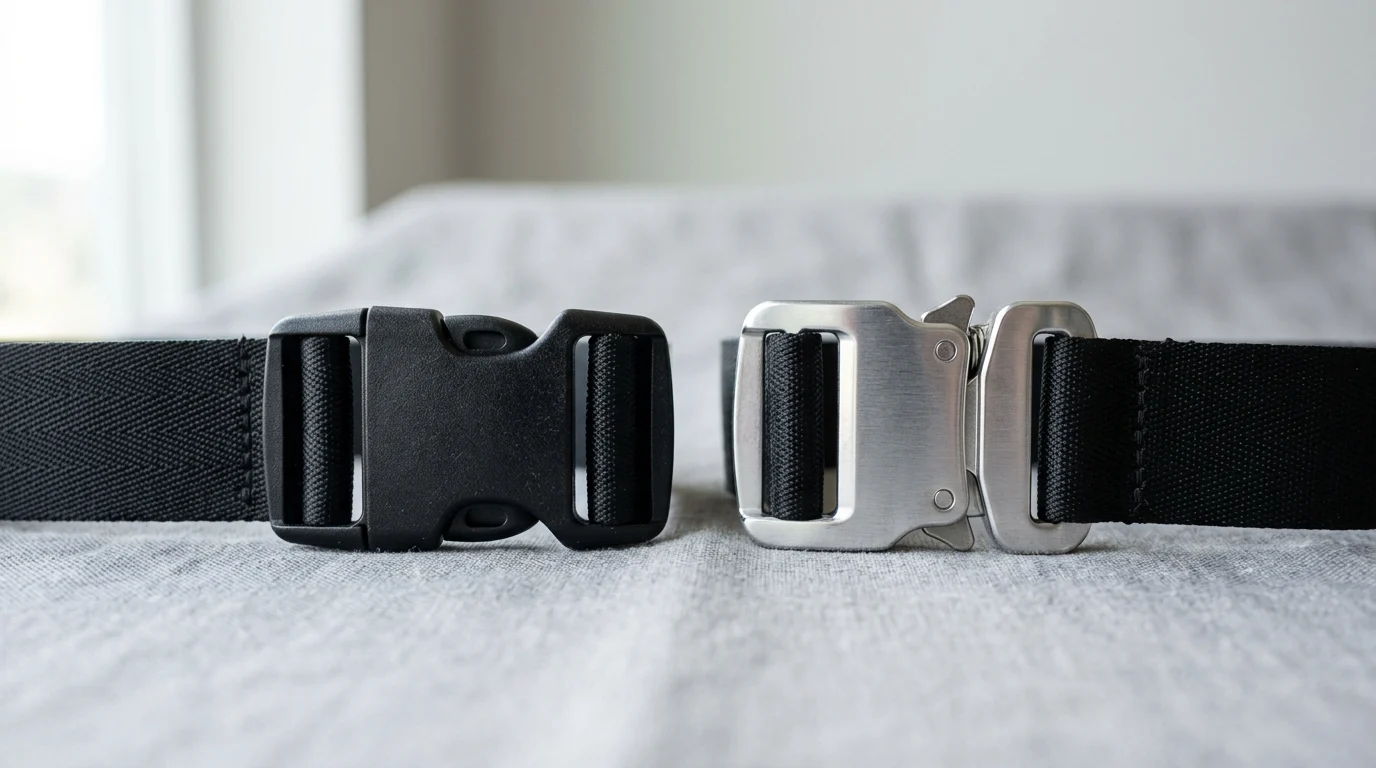
Choosing between plastic and metal buckles affects far more than appearance: it changes how a webbing strap performs under load, in harsh environments, and over time. The right material can reduce weight and cost, improve corrosion resistance, or deliver the strength and durability needed for demanding applications. This comparison explains the key trade-offs in tensile capacity, impact behavior, weather exposure, maintenance, and price so you can match buckle material to real use conditions. With that context, the details that follow will help you evaluate which option makes more sense for products such as bags, safety gear, outdoor equipment, and industrial straps.
Why Buckle Material Matters for Webbing
Selecting the optimal buckle material for webbing straps is a critical engineering and procurement decision that directly impacts product safety, longevity, and commercial viability. Whether designing outdoor backpacks, tactical gear, or industrial tie-downs, the hardware serves as the primary load-bearing junction. A catastrophic failure at the buckle compromises the entire webbing system, making material selection far more than a purely aesthetic choice.
Engineers and product managers must balance mechanical properties against economic realities. The decision between plastic and metal inherently involves trade-offs regarding weight, tensile strength, environmental resistance, and unit cost. Understanding these variables ensures that the final product meets both end-user expectations and regulatory standards.
How do application requirements affect buckle choice
Application requirements dictate the baseline performance thresholds a buckle must achieve. Load-bearing applications, such as fall protection harnesses or heavy-duty cargo straps, demand hardware capable of withstanding extreme dynamic and static forces. In these scenarios, a buckle might need to survive a peak force exceeding 1,000 pounds (453 kg) without deformation or accidental release.
Conversely, non-load-bearing applications like lightweight daypacks, apparel adjustments, or medical bracing prioritize user comfort, rapid engagement, and minimal weight. For these uses, a breaking strength of 50 to 100 pounds (22 to 45 kg) is typically sufficient. The frequency of use also matters; applications requiring repetitive snapping and unsnapping benefit from materials with high fatigue resistance and low friction coefficients.
Which business factors influence selection
Beyond mechanical performance, business factors heavily influence procurement strategies. Unit cost is often the most immediate consideration. Standard plastic side-release buckles generally range from $0.05 to $0.20 per unit at high volumes, whereas metal alternatives can cost anywhere from $0.80 to over $2.50 per unit depending on the alloy and finish. This price delta significantly impacts the bill of materials (BOM) for high-volume consumer goods.
Shipping weight and brand positioning are equally important. Metal hardware adds considerable weight to a shipment, potentially increasing freight costs. However, metal also conveys a premium, rugged aesthetic that commands higher retail price points. Companies evaluating these trade-offs often review comprehensive products catalogs to align their hardware choices with their target market’s willingness to pay.
Plastic vs Metal Buckles: Basics
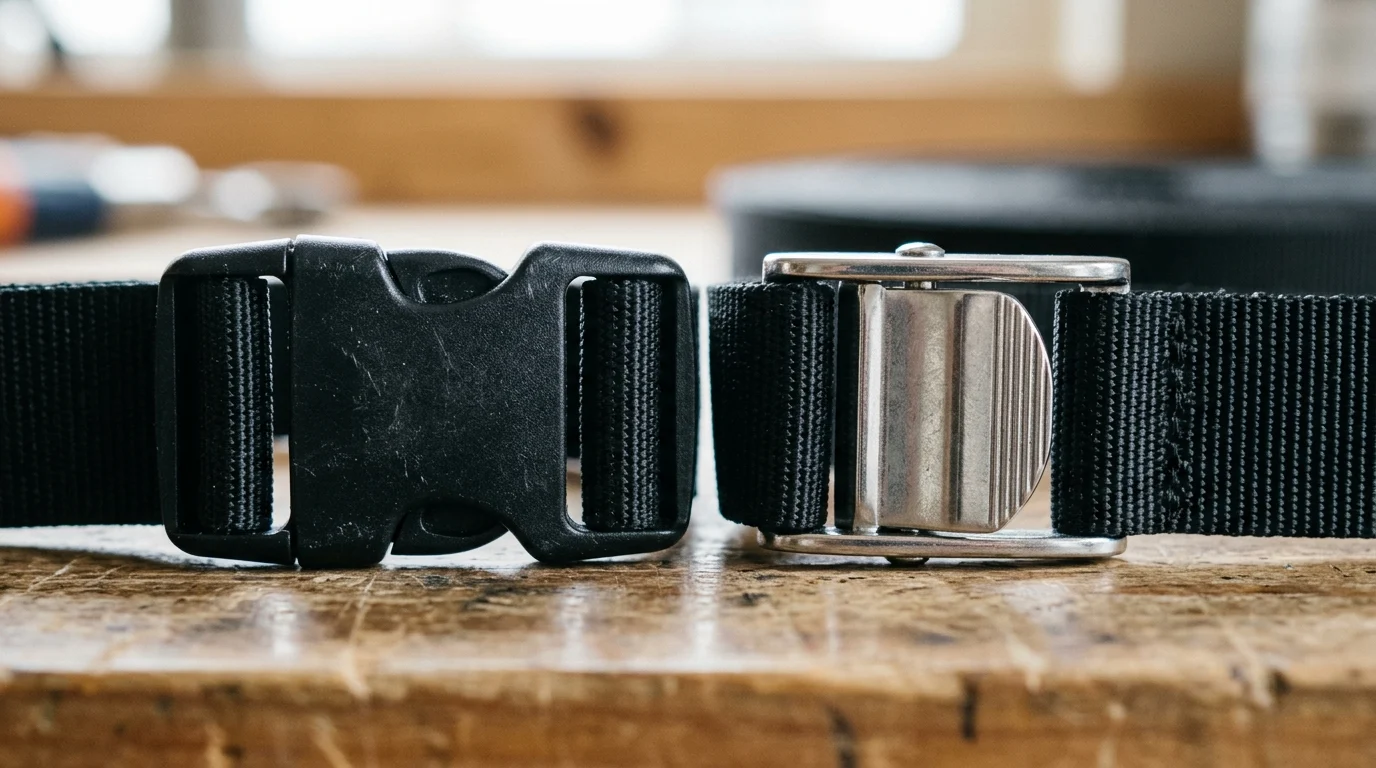
Understanding the fundamental materials used in buckle manufacturing is essential for making accurate comparisons. The industry relies on a specific set of polymers and metal alloys, each engineered to provide distinct advantages in manufacturing and end-use applications.
What buckle types and materials are most common
The most prevalent plastic buckles are injection-molded from Polyoxymethylene (POM), commonly known as acetal. POM is favored for its high stiffness, low friction, and excellent dimensional stability. Nylon (polyamide) is another common polymer, offering higher impact resistance but greater moisture absorption, which can alter its mechanical properties. Polypropylene is frequently used for low-cost, light-duty applications due to its economic price point, though it lacks the tensile strength of POM.
On the metal side, zinc alloy (Zamak) is the workhorse material, widely used for die-cast side release buckles, cam buckles, and triglides. It offers a heavy, premium feel and takes well to various platings. Aluminum, particularly aerospace grades like 7075, is utilized for high-end tactical and climbing hardware due to its exceptional strength-to-weight ratio. Stainless steel and solid brass are reserved for highly corrosive environments, such as marine and equestrian applications, though they are significantly heavier and more expensive.
Which core specifications should buyers compare
Buyers must evaluate core specifications to ensure the chosen material aligns with the product’s operational demands. Key metrics include density (which dictates weight), tensile strength (which dictates load capacity), and the general cost tier associated with raw material and processing.
| Material | Density (g/cm³) | Typical Tensile Strength (MPa) | Relative Cost Tier |
|---|---|---|---|
| POM (Acetal) | 1.41 | 60 – 70 | Low |
| Nylon 6/6 | 1.14 | 75 – 85 | Low-Medium |
| Zinc Alloy (Zamak 3) | 6.60 | 250 – 300 | Medium |
| Aluminum (7075-T6) | 2.81 | 500 – 570 | High |
| Stainless Steel (304) | 8.00 | 500 – 700 | Very High |
This data highlights why aluminum is highly prized in tactical gear: it offers nearly the tensile strength of stainless steel at roughly one-third the weight, albeit at a higher raw material and machining cost.
Performance Comparison: Plastic vs Metal Buckles
Performance in the field separates adequate hardware from exceptional hardware. While baseline specifications provide a starting point, understanding how plastic and metal buckles behave under sustained stress, sudden impacts, and environmental exposure is crucial for reliable product design.
How do strength, durability, and wear resistance compare
Strength and durability profiles differ substantially between the two categories. Metal buckles excel in peak force applications. A standard 1-inch (25mm) zinc alloy side-release buckle can comfortably hold 300 to 500 pounds of static load, while specialized aluminum cobra-style buckles can withstand tensile loads exceeding 2,000 pounds (900 kg). Metal is highly resistant to abrasion and will not easily deform under sustained tension.
Plastic buckles, particularly those made from POM, offer excellent fatigue resistance for repetitive use. They can be snapped and unsnapped tens of thousands of times without losing their retention click. However, a typical 1-inch POM buckle will fail or shear at around 150 to 200 pounds of force. Under sudden, high-velocity impacts, plastic is more prone to catastrophic shattering, whereas metal may bend or deform before ultimately failing.
How do corrosion, temperature, and impact resistance differ
Environmental resistance presents a different set of trade-offs. Plastic is inherently immune to rust, making it highly suitable for wet environments. However, prolonged exposure to ultraviolet (UV) light can degrade polymers, leading to brittleness and color fading over a 2- to 5-year lifecycle. Furthermore, standard plastics become dangerously brittle at sub-zero temperatures; a POM buckle subjected to an impact at -20°C (-4°F) has a significantly higher failure rate than at room temperature.
Metal buckles respond differently to environmental stressors. Zinc alloys require specialized electroplating or powder coating to resist corrosion. In standard salt spray tests, a basic plated zinc buckle may show white rust within 48 to 96 hours. Stainless steel and anodized aluminum, however, offer superior corrosion resistance even in harsh saltwater environments. Temperature fluctuations have negligible effects on the structural integrity of metal buckles within any survivable human climate, though extreme cold can make them uncomfortable to handle without gloves.
Sourcing and Compliance Risks
Procurement teams must navigate distinct supply chain realities when sourcing webbing hardware. The manufacturing processes for plastic injection molding and metal die-casting or stamping dictate different capital requirements, production timelines, and regulatory obligations.
How do tooling, MOQ, and lead times affect sourcing
Tooling costs and minimum order quantities (MOQs) vary significantly. Standard plastic injection molds for a custom buckle design typically cost between $2,000 and $5,000, depending on the number of cavities. Because injection molding is highly automated and relies on economies of scale, manufacturers often set MOQs at 5,000 to 10,000 units. Lead times for custom plastic runs generally span 25 to 35 days.
Conversely, metal die-casting molds for zinc alloys can be slightly less expensive to initiate, often ranging from $1,500 to $3,500, with MOQs sometimes negotiated lower, around 1,000 to 3,000 units. However, the secondary processing required for metal—such as deburring, polishing, and electroplating—extends production lead times to 30 to 45 days. Buyers looking for reliable sourcing partners often review an about us page to verify a manufacturer’s capacity to handle these distinct production timelines.
Which testing and regulatory checks are required
Regulatory compliance is non-negotiable, particularly for products entering the European and North American markets. Metal buckles face stringent scrutiny regarding heavy metal content. Zinc and brass components must comply with RoHS and REACH directives, requiring testing to ensure lead and cadmium levels remain below the strict 100 parts per million (ppm) threshold. Failure to pass these tests can result in massive shipment rejections.
Plastic buckles must also pass regulatory checks, primarily focusing on phthalates, BPA, and toxic colorants. For gear used in apparel or baby products, certification under Oeko-Tex Standard 100 is frequently required to guarantee skin safety. Additionally, both materials must undergo rigorous pull testing protocols, such as ASTM D5034, to verify advertised breaking strengths. Procurement teams should proactively contact us or their respective suppliers to request up-to-date compliance certificates before finalizing bulk orders.
How to Choose the Right Buckle
Finalizing the choice between plastic and metal requires a structured evaluation of the end product’s lifecycle. By systematically weighing the mechanical, environmental, and economic factors, brands can specify hardware that enhances product performance without inflating manufacturing costs.
What selection process helps match buckle material to use
case
A systematic selection process begins with defining the maximum expected load and applying a safety factor (typically 2x to 3x the expected peak force). If the calculated safety threshold exceeds 250 pounds, metal hardware or heavily reinforced specialty plastics are mandatory. Next, buyers should evaluate the operating environment: will the buckle face prolonged UV exposure, saltwater submersion, or freezing temperatures?
Finally, the budget and aesthetic positioning must be aligned. If the product is a premium tactical backpack retailing for $300, the $2.00 cost of an aluminum buckle is easily absorbed and expected by the consumer. If the product is a promotional tote bag, a $0.08 plastic triglide is the only economically viable option.
When is plastic better and when is metal better
Plastic is generally the superior choice for high-volume, cost-sensitive, lightweight, and aquatic applications. Metal is the definitive choice for life-safety equipment, high-tension tie-downs, and premium consumer goods where perceived value and ultimate breaking strength are paramount.
| Application Scenario | Recommended Material | Primary Justification |
|---|---|---|
| Lightweight Daypacks & Apparel | POM / Nylon (Plastic) | Optimal weight-to-strength ratio, low unit cost, washable |
| Tactical & Riggers Belts | Aluminum / Zinc Alloy | High breaking strength (500+ lbs), secure engagement, premium feel |
| Marine & Scuba Gear | Stainless Steel / POM | Maximum corrosion resistance in saltwater environments |
| Premium Large Pet Collars | Zinc Alloy / Solid Brass | High impact resistance against lunging, high-end aesthetic |
Further reading:
Key Takeaways
- The most important conclusions and rationale for Plastic Buckles vs Metal Buckles
- Specs, compliance, and risk checks worth validating before you commit
- Practical next steps and caveats readers can apply immediately
Frequently Asked Questions
When should I choose plastic buckles for webbing straps?
Choose plastic for lightweight, non-load-bearing products like daypacks, apparel, and medical braces where comfort, low cost, and frequent opening matter most.
When are metal buckles the better option?
Use metal for heavy-duty, high-load, or premium products such as cargo straps, tactical gear, and marine applications where strength, durability, or rugged appearance is critical.
Which plastic buckle material is most common for straps?
POM (acetal) is the most common because it offers good stiffness, low friction, and stable dimensions for reliable everyday buckle performance.
How much more do metal buckles usually cost than plastic buckles?
At volume, plastic side-release buckles often cost about $0.05–$0.20 each, while metal options commonly run $0.80–$2.50+ depending on alloy and finish.
Where can buyers compare buckle options for webbing products?
Buyers can review strap and hardware options through Tramigo’s product pages at tramigoblog.com/products/ to match buckle material with load, budget, and market needs.


