
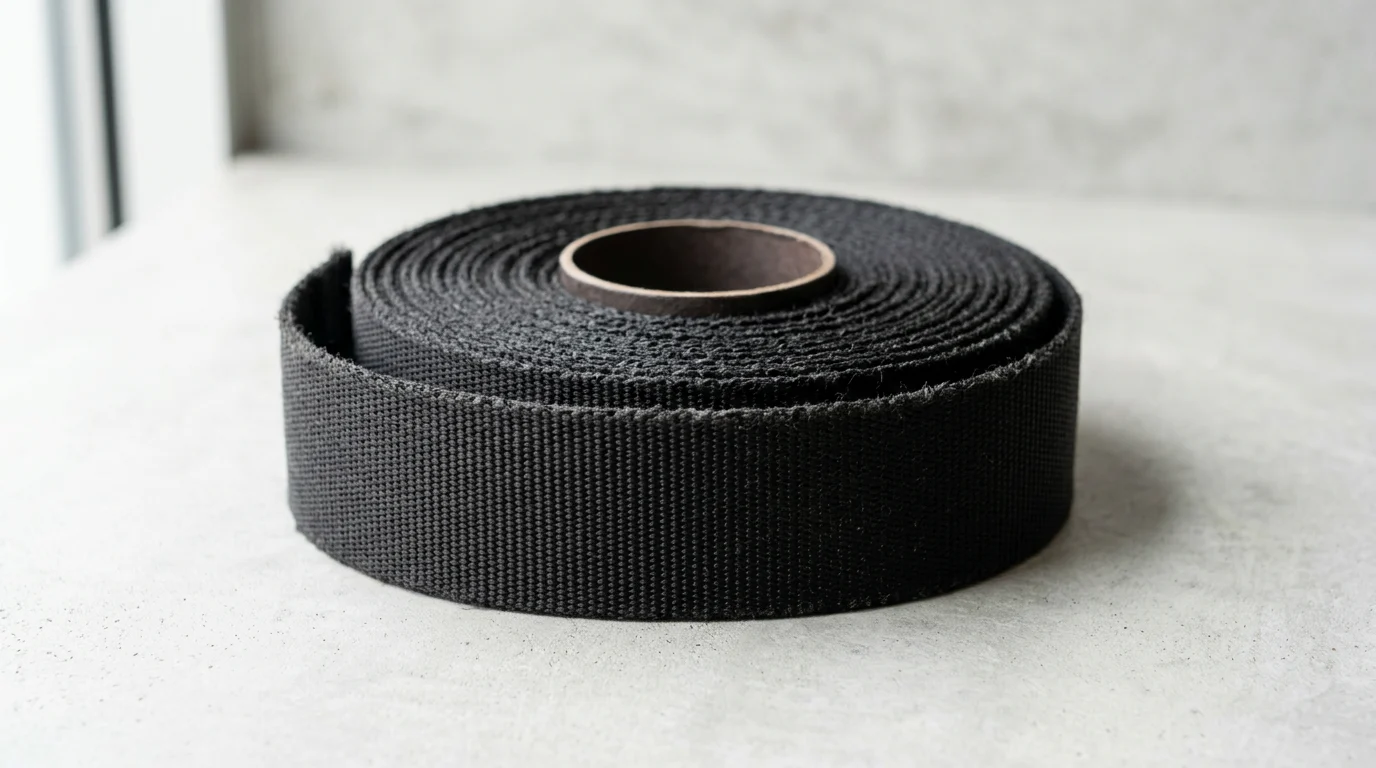
Introduction
Cargo lashing depends on more than straps that look strong; it requires webbing engineered to manage real transport forces without excessive weight or loss of tension. Heavy duty webbing plays a central role in keeping loads stable during braking, cornering, vibration, and long-distance transit, while also supporting compliance with securement standards. This article explains what makes this material suitable for demanding cargo applications, how it contributes to load control, and which performance factors matter most when selecting it for a lashing system.
Why Heavy Duty Webbing Matters in Cargo Operations
In commercial logistics and freight transport, the integrity of load securement directly dictates both operational safety and regulatory compliance. The foundation of these securement systems relies heavily on synthetic textiles engineered to withstand extreme dynamic forces. As freight traverses highways, rail networks, and maritime routes, it is subjected to rapid deceleration, lateral g-forces, and vertical vibrations. Securing cargo effectively requires materials that provide immense tensile strength without adding prohibitive weight to the payload.
Unlike rigid securement methods, modern textile lashing systems absorb and distribute kinetic energy. For instance, during emergency braking in road transport, cargo can exert forward dynamic forces equivalent to 0.8g (80% of the cargo’s static weight). High-tenacity straps counteract these forces, preventing load shifts that could lead to catastrophic trailer rollovers, damaged goods, or severe supply chain disruptions.
Impact on load security
The fundamental purpose of any lashing system is to maintain the static position of a load relative to the transport vehicle. When tensioned via ratchets or winches, the straps apply a downward force that increases the friction between the cargo and the deck. This Standard Tension Force (STF), often rated around 500 daN (decanewtons) for heavy commercial ratchets, creates a frictional bond that resists lateral and longitudinal movement.
Failure to achieve or maintain this tension compromises load security. Synthetic straps must therefore exhibit minimal elongation under load to ensure the pre-tension force does not dissipate during transit. By utilizing engineered woven textiles, carriers mitigate the risk of strap slackening, which is the primary cause of securement failure in long-haul transport.
Role in modern cargo systems
The transition from traditional steel chains and wire ropes to synthetic textiles has revolutionized the freight industry. While grade 70 transport chains are still required for specific heavy-machinery applications, synthetic straps offer up to an 80% reduction in tare weight for equivalent Working Load Limits (WLL). This weight reduction directly translates to increased payload capacity and improved fuel efficiency.
Furthermore, modern cargo systems integrate these textiles seamlessly into modular logistics. Flatbed trailers equipped with sliding winch tracks, and interior van bodies utilizing E-track systems, depend on the flexibility and standardized hardware compatibility of synthetic straps. This modularity allows operators to secure diverse freight profiles—from palletized consumer goods to delicate architectural glass—without inflicting compression damage on the cargo.
Key Technical Specifications for Cargo Webbing
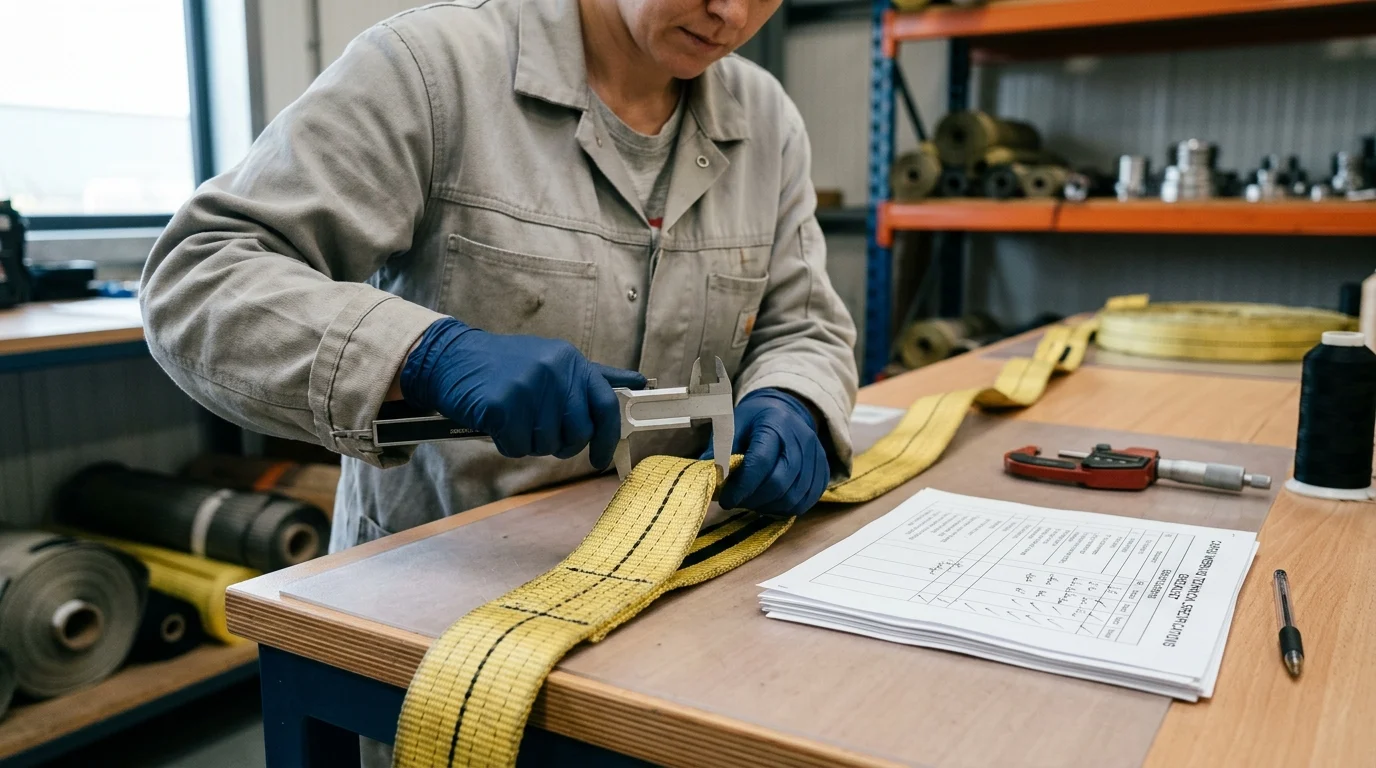
Specifying the correct heavy duty webbing requires a precise understanding of its mechanical properties. Procurement engineers and logistics managers must evaluate technical specifications to ensure the textile can handle the intended operational stresses. The relationship between Minimum Breaking Strength (MBS) and Working Load Limit (WLL) is paramount, typically operating on a 1:2 or 1:3 safety factor depending on regional regulations.
Material, width, elongation, and strength
The structural integrity of a cargo strap is dictated by its yarn denier, weave pattern, and physical dimensions. Standard widths in commercial transport are 50mm (2 inches), 75mm (3 inches), and 100mm (4 inches). A typical 50mm strap designed for flatbed use features an MBS of 10,000 lbs (4,536 kg) and a WLL of 3,333 lbs (1,512 kg).
Elongation is a critical performance metric. Under maximum working loads, structural webbing must not stretch excessively, as this would result in a loss of lashing tension. Industry standards generally dictate that elongation must remain below 7% at the WLL. Additionally, the weave density must be tight enough to resist the ingress of abrasive particulates, which can internally degrade the load-bearing yarns.
Polyester vs nylon vs polypropylene
The choice of synthetic polymer fundamentally alters the performance profile of the strap. High-tenacity Polyester (PET) is the undisputed standard for cargo lashing. It offers excellent UV resistance, retains its strength when wet, and features an exceptionally low stretch rate (typically 2-3% under normal working tension).
Nylon (Polyamide), while offering superior shock absorption and a higher breaking strength per weight, is rarely used for static cargo lashing because it stretches up to 10-15% under load. This elasticity makes it ideal for recovery tow straps but dangerous for rigid load securement. Polypropylene (PP) is a cost-effective alternative with excellent chemical resistance, but it suffers from rapid UV degradation, a low melting point of 165°C, and lower overall tensile strength, relegating it to light-duty applications.
Specification comparison table
The following table outlines the comparative technical properties of the three primary synthetic materials used in cargo securement systems.
| Material Specification | Polyester (PET) | Nylon (Polyamide) | Polypropylene (PP) |
|---|---|---|---|
| Primary Application | Cargo Lashing / Tie-downs | Towing / Recovery | Light Duty / Chemical areas |
| Elongation at WLL | 2% – 7% | 10% – 15% | 5% – 10% |
| UV Resistance | Excellent | Good | Poor (unless heavily treated) |
| Water Absorption | < 1% (Retains strength) | Up to 8% (Loses strength) | 0% (Floats) |
| Melting Point | 260°C (500°F) | 250°C (482°F) | 165°C (329°F) |
Standards, Testing, and Compliance
Cargo securement is a heavily regulated domain, governed by strict international and regional standards. Transporting multi-ton loads at highway speeds introduces severe liability risks; therefore, adherence to standardized testing and certification protocols is non-negotiable. Manufacturers must rigorously validate their textiles before they are integrated into commercial transport networks.
Regional and application requirements
Regulatory frameworks vary significantly by jurisdiction, though they share the common goal of standardizing load securement. In North America, the Web Sling & Tie Down Association (WSTDA) publishes the WSTDA-T-1 standard, which the Department of Transportation (DOT) utilizes for enforcement. This standard mandates specific thread patterns, hardware integration, and clear WLL markings. A standard 2-inch tie-down must be clearly marked with a 3,333 lb WLL.
In Europe, the EN 12195-2 standard dictates the performance requirements for synthetic lashing. This standard is particularly stringent regarding the Standard Tension Force (STF) and the Standard Hand Force (SHF) applied to ratchets, strictly limiting webbing elongation to a maximum of 7% under testing conditions. Sourcing materials that comply with both WSTDA and EN standards is crucial for global logistics providers.
Tensile, cyclic, and wear testing
Validation of synthetic textiles involves destructive and non-destructive testing regimes. Tensile testing utilizes hydraulic pull beds to verify the Minimum Breaking Strength (MBS). For instance, a strap rated for a 4,000 lb WLL will be pulled to a minimum of 12,000 lbs to ensure the 1:3 safety factor is maintained.
Beyond static pulls, cyclic loading tests simulate the dynamic vibrations of a moving trailer. Straps are subjected to upwards of 20,000 tension cycles to evaluate fatigue resistance in the woven yarns. Furthermore, hex-bar abrasion testing assesses how well the strap withstands friction against sharp cargo edges, a critical metric since edge-cuts are responsible for over 60% of premature strap failures in the field.
How to Source Heavy Duty Webbing
Procuring reliable heavy duty webbing at an industrial scale requires a strategic approach to supplier vetting. Because a single batch defect can result in catastrophic load failure, logistics operators and hardware manufacturers must implement rigorous quality assurance protocols during the sourcing phase.
Supplier qualification criteria
When qualifying a manufacturer, primary indicators of reliability include ISO 9001 certification and in-house testing capabilities. Suppliers must demonstrate full batch traceability, ensuring that any spool of material can be traced back to the specific extrusion lot of the polymer yarns. A robust supplier should maintain a defect rate below 0.1% for critical load-bearing applications.
Additionally, buyers should audit the supplier’s environmental controls during the dyeing and weaving processes. Variations in ambient humidity and temperature during weaving can affect the tension of the warp and weft yarns, ultimately compromising the strap’s structural uniformity and elongation metrics.
Customization options
Industrial buyers rarely purchase off-the-shelf textiles. Customization is necessary to align the product with specific operational needs and corporate branding. Manufacturers can alter the weave architecture to increase edge protection, utilizing heavier denier yarns on the outer margins to resist abrasion.
Custom dyeing and stenciling serve both branding and security purposes, deterring theft in shared logistics hubs. More importantly, custom woven-in WLL markers—where the weight rating is integrated into the weave itself rather than printed—ensure that safety ratings remain legible even after months of UV exposure and mechanical wear.
Step-by-step sourcing process
The sourcing process should follow a structured, phased approach to mitigate risk. It begins with a detailed Request for Quotation (RFQ) that outlines exact MBS, elongation limits, and chemical resistance requirements. Following the RFQ, buyers must request physical samples for independent lab verification.
Once samples pass tensile and abrasion testing, a trial order is placed to evaluate the supplier’s manufacturing consistency and lead times. Industrial Minimum Order Quantities (MOQs) for custom-spec textiles typically range from 5,000 to 10,000 meters. Only after successful field trials of the initial batch should the buyer proceed to long-term, high-volume supply contracts.
Choosing the Right Webbing for the Job
Optimizing a cargo securement inventory requires balancing upfront procurement costs with the Total Cost of Ownership (TCO). Logistics fleets go through thousands of straps annually; therefore, selecting the optimal heavy duty webbing specification for a specific operational profile can yield significant financial and safety dividends.
Balancing compliance, cost, and replacement
While standard polyester straps are cost-effective, premium variants treated with polyurethane coatings or woven with reinforced edges can cost 15% to 20% more upfront. However, these premium treatments significantly reduce water ingress and abrasive wear, frequently extending the service life of the strap by 2 to 3 times compared to untreated alternatives.
Fleet managers must calculate the replacement cadence. If standard straps require replacement every three months due to edge fraying on abrasive cargo like brick or lumber, investing in edge-reinforced webbing reduces both long-term material costs and the labor downtime associated with frequent equipment replacement.
Use-case selection guidance
Selecting the right specification depends entirely on the cargo profile and transport environment. Heavy, abrasive, or sharp-edged loads necessitate thicker, wider straps, whereas interior van logistics prioritize ease of handling and hardware compatibility.
| Application / Use-Case | Recommended Width | Required MBS (Minimum) | Key Material Feature |
|---|---|---|---|
| Flatbed: Lumber & Steel | 100mm (4 inch) | 15,000 – 20,000 lbs | Edge-reinforced PET, High UV resistance |
| Interior Van / E-Track | 50mm (2 inch) | 4,000 – 6,000 lbs | High flexibility, Standard PET |
| Heavy Machinery / RGN | 75mm (3 inch) | 15,000 lbs | Low elongation (<5%), Heavy denier |
| Marine / Ro-Ro Lashing | 50mm – 75mm | 10,000 lbs | Polyurethane coated for salt/water resistance |
Further reading:
Key Takeaways
- The most important conclusions and rationale for heavy duty webbing
- Specs, compliance, and risk checks worth validating before you commit
- Practical next steps and caveats readers can apply immediately
Frequently Asked Questions
Why is polyester heavy duty webbing preferred for cargo lashing?
Polyester has low stretch, strong UV resistance, and keeps its strength when wet. That makes it better for maintaining ratchet tension during road, rail, or sea transport.
How do I choose the right webbing width for my load?
Match width to the required Working Load Limit and cargo profile. Common sizes are 50mm, 75mm, and 100mm; heavier or less stable loads usually need wider, higher-rated straps.
What elongation level is acceptable for heavy duty webbing?
For cargo lashing, elongation should generally stay below 7% at the Working Load Limit. Lower stretch helps prevent slackening and load shift during transit.
Can nylon webbing be used for cargo lashing?
It can, but it is usually not ideal for static cargo securement. Nylon stretches much more than polyester, which can reduce tension and increase the risk of cargo movement.
When should chains be used instead of heavy duty webbing?
Use chains for certain heavy machinery or loads with sharp edges and very high point loads. For general freight, heavy duty webbing is lighter, more versatile, and less likely to damage cargo surfaces.


