
Introduction
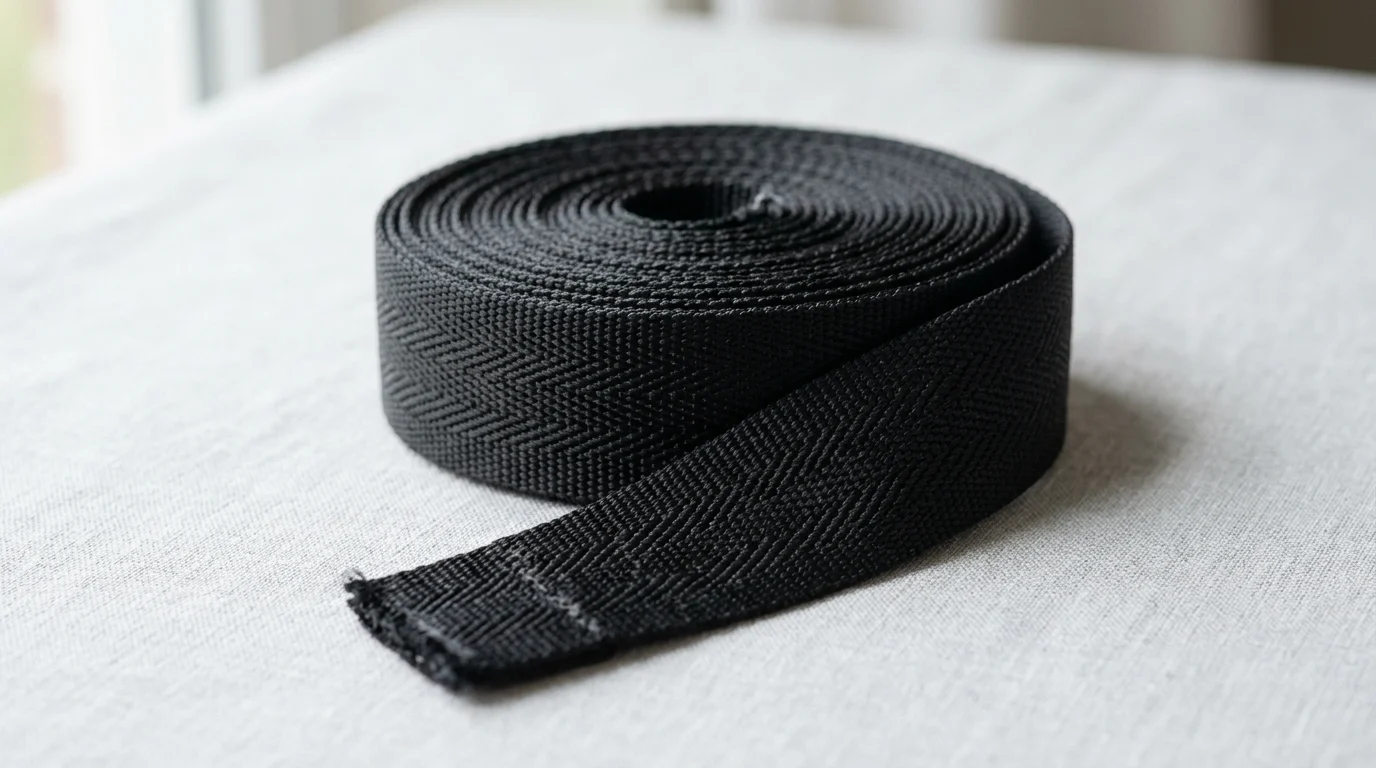
From cargo securement and lifting gear to harnesses and industrial restraints, heavy duty nylon webbing is valued when strength, flexibility, and reliability must work together under repeated stress. Its performance is shaped not just by high tensile capacity, but also by abrasion resistance, shock absorption, and the ability to handle demanding operating conditions without adding excessive weight. This article explains the practical benefits of heavy duty nylon webbing, where those advantages matter most, and what decision-makers should understand when comparing it with other load-bearing materials.
Why Heavy Duty Nylon Webbing Matters in Commercial Load-Bearing
In industrial and commercial sectors, load-bearing textiles must withstand extreme mechanical stress, environmental exposure, and repetitive friction. Heavy duty nylon webbing serves as a foundational component in these demanding environments, engineered from high-tenacity polyamide fibers to deliver exceptional strength-to-weight ratios. Unlike standard commercial webbing used in light apparel or basic strapping, heavy-duty variants are purpose-built to meet rigorous safety and operational standards.
The selection of the correct webbing material directly influences the safety of personnel, the security of high-value cargo, and the overall reliability of mechanical systems. For engineers and procurement specialists, understanding the precise mechanical behaviors of nylon under load is essential for mitigating risk and ensuring compliance with occupational safety regulations.
Performance and uptime benefits
The primary advantage of heavy-duty nylon webbing lies in its dynamic energy absorption capabilities. When subjected to sudden force, nylon exhibits a high degree of elasticity, allowing it to absorb shock loading without suffering catastrophic fiber failure. This shock-absorbing characteristic prevents the snapping and fracturing that can occur with more rigid materials under abrupt tension. In commercial operations, this translates directly to increased uptime, as webbing components require less frequent replacement due to fatigue or sudden dynamic impacts. High-density nylon webbing routinely achieves breaking strengths exceeding 5,000 to 10,000 pounds per inch of width, depending on the denier and weave density, providing a robust safety margin for heavy industrial applications.
Key commercial application categories
Heavy-duty nylon webbing is deployed across multiple critical commercial sectors. In the logistics and transportation industry, it is utilized for heavy cargo tie-downs and lifting slings, where regulations from bodies like the Web Sling & Tie Down Association (WSTDA) mandate strict design factors, such as a 3:1 safety ratio for synthetic web tie-downs. In occupational safety, nylon is the standard for fall protection harnesses and shock-absorbing lanyards due to its energy dissipation properties. Furthermore, the military and tactical sectors rely heavily on mil-spec nylon webbing (such as MIL-W-4088) for load-bearing equipment, parachute harnesses, and tactical rigging, where failure is not an option.
What Defines Heavy Duty Nylon Webbing
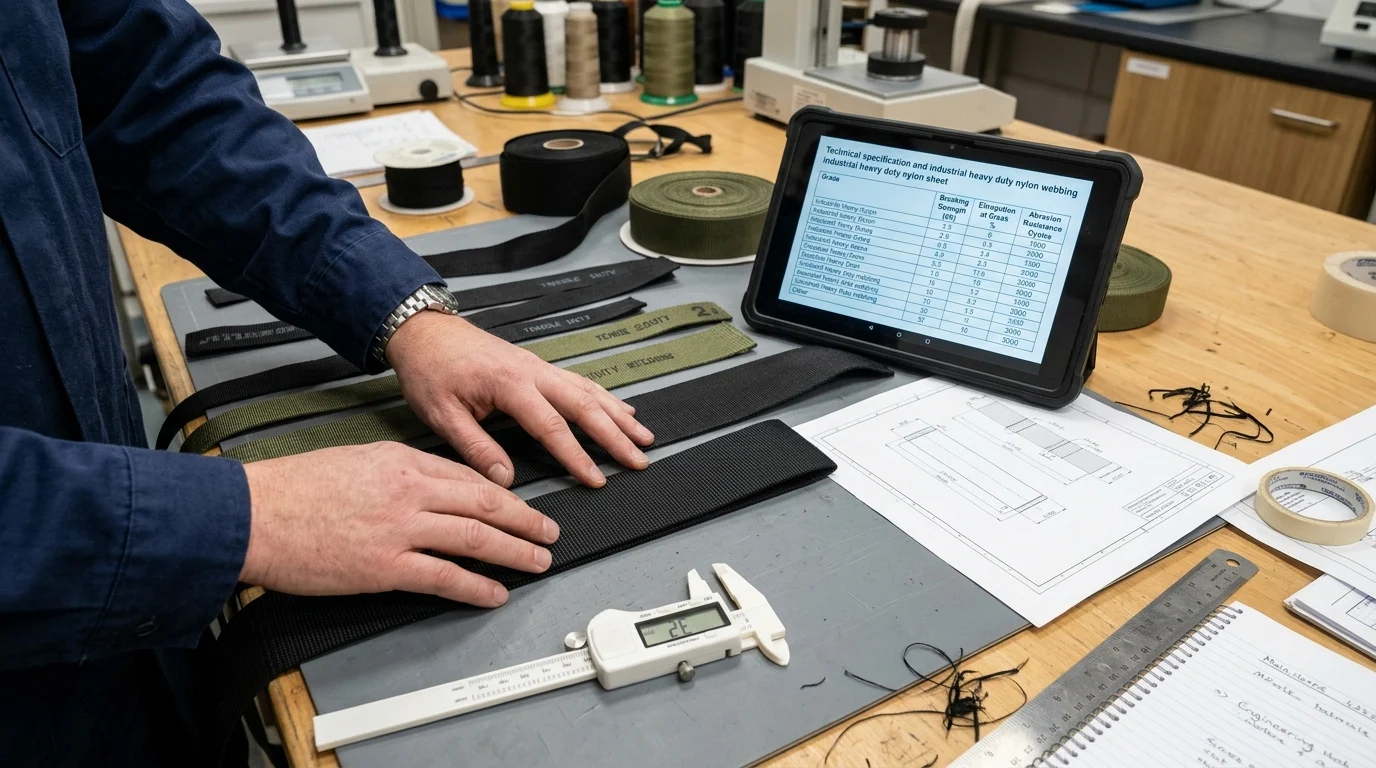
Defining heavy-duty nylon webbing requires an examination of its chemical composition, filament structure, and manufacturing processes. The inherent capabilities of the final textile are dictated by the specific type of polyamide polymer used, the thickness of the individual yarns, and the geometry of the woven structure.
Core material and construction properties
The core material for industrial webbing is typically Polyamide 6 (Nylon 6) or Polyamide 6,6 (Nylon 6,6). Nylon 6,6 is frequently preferred for heavy-duty applications due to its tighter molecular structure, which yields slightly better tensile strength, superior abrasion resistance, and a higher melting point of approximately 250°C (482°F) compared to Nylon 6’s 220°C (428°F). The webbing is constructed using continuous multifilament yarns, which ensure that strength is maintained consistently across the entire length of the strap, minimizing weak points that can occur with spun staple fibers.
Weave, denier, edge finish, and coatings
Manufacturing parameters such as weave pattern, yarn denier, and post-processing treatments define the webbing’s final physical properties. Heavy-duty variants typically utilize yarns ranging from 1000D to 1680D (denier). The weave geometry is critical; plain weaves offer high tensile strength, while herringbone or twill weaves provide enhanced flexibility and abrasion resistance. Edge finishing is equally important. Webbing produced on shuttleless needle looms incorporates a specialized lock stitch on the edges to prevent catastrophic unraveling if the edge is nicked or cut. To counteract nylon’s natural tendency to degrade under certain environmental conditions, manufacturers often apply resin coatings to increase stiffness and abrasion resistance, or Durable Water Repellent (DWR) treatments to mitigate moisture ingress.
Key test metrics and specification data
When specifying webbing, engineers rely on standardized test metrics to validate performance. Key data points include ultimate tensile strength (breaking strength), yield strength, and elongation percentage. Standard heavy-duty nylon exhibits an elongation at break of 15% to 30%, which is critical data for calculating dynamic load tolerances.
| Specification Metric | Flat Nylon Webbing (Typical) | Tubular Nylon Webbing (Typical) |
|---|---|---|
| Thickness Range | 0.060″ – 0.120″ | 0.080″ – 0.150″ (compressed) |
| Tensile Strength (1-inch width) | 3,000 – 6,000 lbs | 4,000 – 8,000 lbs |
| Elongation at Break | 15% – 25% | 20% – 30% |
| Abrasion Resistance | High (with resin coating) | Very High (due to dual layers) |
| Primary Use Case | Cargo tie-downs, harnesses | Protective sleeving, dynamic lines |
Benefits and Trade-Offs vs Other Webbing Materials
While nylon is a premier material for many industrial applications, it is not universally optimal for every scenario. Evaluating heavy-duty nylon against alternative synthetic fibers like polyester, polypropylene, and ultra-high-molecular-weight polyethylene (UHMWPE) requires a careful analysis of environmental conditions, load dynamics, and chemical exposure.
Where nylon outperforms alternatives
Nylon significantly outperforms polyester and polypropylene in applications requiring dynamic energy absorption and recovery. When a load shifts suddenly—such as a dropped object on a safety lanyard or a sudden vehicle acceleration affecting a tow strap—nylon stretches to absorb the kinetic energy, whereas stiffer materials might snap under the peak force. Nylon also offers superior resistance to alkaline chemicals and exceptional resistance to abrasion when subjected to continuous friction. For buyers seeking specific configurations tailored for high-friction environments, sourcing specialized heavy duty nylon webbing ensures the integration of proper weave densities and protective finishes.
Moisture, stretch, and other trade-offs
The most notable trade-off with nylon webbing is its hydrophilic nature. Nylon can absorb up to 8% to 10% of its weight in water. When saturated, its tensile strength can decrease by 10% to 20%, and it becomes susceptible to freezing in sub-zero environments, which drastically reduces flexibility. Additionally, nylon’s inherent stretch, while beneficial for shock absorption, is detrimental in applications requiring static dimensional stability, such as ratcheting marine tie-downs. Furthermore, prolonged exposure to ultraviolet (UV) radiation breaks down unprotected polyamide polymers faster than polyester, making UV-inhibiting additives mandatory for outdoor nylon webbing.
Selection criteria for buyers
Selecting the right webbing material requires buyers to weigh these trade-offs against their specific operational environment. The following table provides a comparative baseline for material selection based on key performance criteria.
| Performance Metric | Nylon (Polyamide) | Polyester | Polypropylene |
|---|---|---|---|
| Dynamic Shock Absorption | Excellent | Poor | Fair |
| Static Load Stability | Fair | Excellent | Good |
| Water Absorption | High (8-10%) | Very Low (<1%) | Zero (Floats) |
| UV Resistance (Untreated) | Moderate | Excellent | Poor |
| Cost Bracket | Medium-High | Medium | Low |
How to Source, Specify, and Verify Heavy Duty Nylon Webbing
Procuring heavy-duty nylon webbing for commercial manufacturing or OEM integration demands strict adherence to quality assurance protocols. Because this material is often deployed in life-safety or high-liability load-bearing applications, the sourcing and specification processes must be tightly controlled to eliminate the risk of premature material failure.
Purchasing criteria for buyers
Commercial buyers must evaluate suppliers based on manufacturing capabilities, quality control certifications (such as ISO 9001), and supply chain reliability. Key purchasing criteria include Minimum Order Quantities (MOQs), which typically range from 5,000 to 10,000 meters for custom dye lots, weave structures, or specialized resin coatings. Lead times are also a critical factor, often spanning 4 to 8 weeks for custom industrial runs. Buyers should assess a manufacturer’s ability to provide lot traceability and consistent lot-to-lot color and strength matching. Partnering with an established manufacturer of heavy duty nylon webbing can streamline the qualification process and ensure adherence to international textile standards.
Validation methods for converters and OEMs
Converters and OEMs must employ rigorous validation methods to verify that incoming webbing meets stated specifications. This involves destructive testing using calibrated tensile testing machines (e.g., Instron) to measure breaking strength and elongation, adhering to standards such as ASTM D6770 for textile webbing. Abrasion resistance is typically validated using hex bar or Taber abrasion tests to simulate long-term wear. Additionally, OEMs should conduct environmental chamber testing to evaluate how specific coatings perform under accelerated UV exposure and extreme temperature fluctuations.
Specification steps to reduce failure risk
To reduce failure risk, specification documents must be exhaustive. Buyers must move beyond simply requesting a specific width and color. A robust specification should mandate the exact polymer type (e.g., Nylon 6,6), the yarn denier, the weave geometry, the number of picks per inch (PPI), and the specific edge finish. Furthermore, the specification must establish acceptable tolerance bands, such as a tensile strength tolerance of +/- 5% and strict limits on visual defects per 100 meters of rolled good. Requesting a comprehensive Certificate of Analysis (CoA) with every shipment ensures that the manufacturer has conducted and recorded the necessary batch testing before delivery.
How to Decide if Heavy Duty Nylon Webbing Is the
Determining whether heavy-duty nylon webbing is the optimal choice for a project requires balancing engineering requirements, regulatory compliance, and budget constraints. While it is a premium material, its specific mechanical properties make it irreplaceable in certain high-stakes applications.
Use cases that justify nylon webbing
Heavy-duty nylon is the definitive choice for applications where dynamic loading, shock absorption, and high abrasion resistance are the primary engineering constraints. Ideal use cases include vehicle recovery straps, industrial fall protection lanyards, heavy-duty pet and equine harnesses, and military tactical gear. In these scenarios, the ability of the webbing to stretch and dissipate kinetic energy prevents hardware failure and protects the user or the cargo. Conversely, if the application involves continuous submersion in water, static load securing without stretch, or extreme exposure to strong acids, engineers should pivot away from nylon toward polyester or specialized aramid fibers.
Balancing performance, compliance, and cost
Ultimately, the decision rests on the Total Cost of Ownership (TCO) and compliance requirements. Heavy-duty nylon is generally 15% to 30% more expensive than standard polyester webbing, but significantly cheaper than high-performance fibers like Kevlar or Dyneema. If industry regulations (such as specific OSHA fall protection standards) mandate a certain level of energy absorption, the cost premium of nylon is a mandatory compliance expense. For procurement teams looking to optimize their material specifications while balancing these cost and performance metrics, engaging directly with experts regarding heavy duty nylon webbing can provide the necessary technical guidance to finalize the engineering design.
Further reading:
Key Takeaways
- The most important conclusions and rationale for heavy duty nylon webbing
- Specs, compliance, and risk checks worth validating before you commit
- Practical next steps and caveats readers can apply immediately
Frequently Asked Questions
What is the main benefit of heavy duty nylon webbing?
Its biggest advantage is high strength with shock absorption. It can handle sudden loads better than more rigid materials, helping reduce snap failures in cargo control, harnesses, and lifting setups.
Where is heavy duty nylon webbing commonly used?
It is widely used in cargo tie-downs, lifting slings, fall protection harnesses, tactical gear, and other industrial load-bearing systems where strength, flexibility, and abrasion resistance are required.
How strong is heavy duty nylon webbing?
Typical heavy-duty nylon webbing can exceed 5,000 to 10,000 pounds of breaking strength per inch of width, depending on denier, weave, and construction. Always verify the rated specification before use.
Why choose nylon webbing instead of a stiffer material?
Nylon stretches under sudden force, which helps absorb energy and reduce impact stress. This makes it especially useful for dynamic loading applications like fall protection and heavy transport restraints.
What should buyers check before sourcing webbing from suppliers like those featured on Tramigo Blog?
Check tensile rating, nylon type, denier, weave, edge finish, coating, and compliance data. For commercial use, confirm the webbing matches your load, environment, and any required safety standards.


