
Introduction
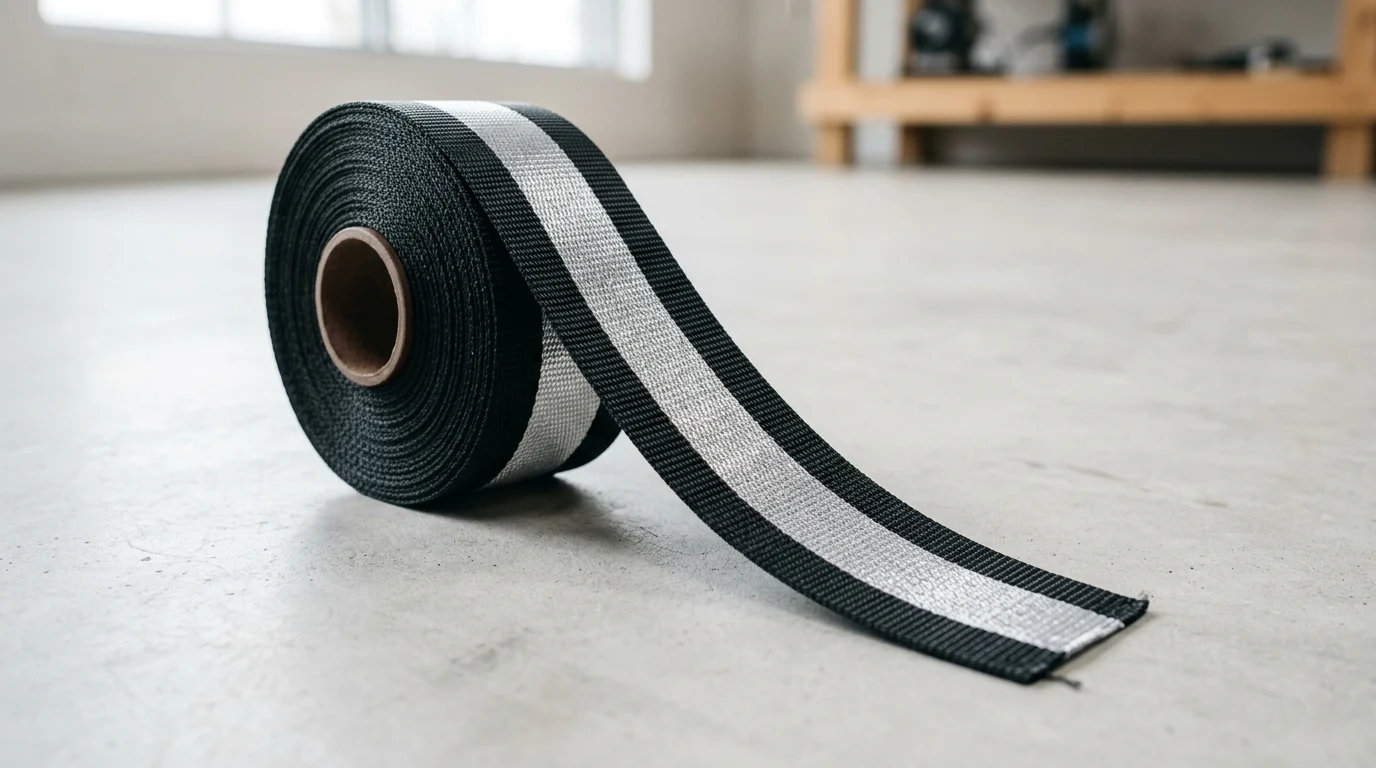
Reflective webbing is a narrow fabric that combines strength with built-in retroreflective elements, making it a practical material for safety gear used in low-light or high-risk environments. Rather than serving as decoration, it helps workers stay visible to drivers, machine operators, and teammates while still performing as a durable structural component in straps, harnesses, vests, and lanyards. This article explains how reflective webbing works, what materials and performance features define it, and where it is commonly used across protective equipment. It also sets up the key considerations for evaluating durability, visibility, and compliance in real-world applications.
Why Reflective Webbing Matters in Safety Gear
High-visibility safety apparel (HVSA) and personal protective equipment (PPE) rely on specialized materials to mitigate occupational hazards. Reflective webbing represents a critical convergence of structural integrity and high-visibility technology. Unlike superficial reflective coatings, this engineered narrow fabric integrates retroreflective elements directly into a load-bearing substrate, providing a dual-purpose solution for demanding industrial environments.
How it improves visibility and safety
The primary mechanism driving the efficacy of this material is retroreflection. By utilizing micro-glass beads or micro-prismatic arrays, the webbing redirects incident light back toward the source, drastically improving nighttime and low-light visibility. High-grade reflective webbing consistently achieves a coefficient of retroreflection (Ra) exceeding 330 cd/lux/m², ensuring that workers remain visible to vehicle operators from distances of up to 300 meters, thereby significantly reducing the risk of struck-by accidents.
Where it is used in workwear and equipment
Implementation spans a diverse array of industrial and tactical gear. In fall protection, harnesses utilize reflective webbing with tensile strengths exceeding 5,000 lbs (22.2 kN) to meet rigorous safety protocols while keeping suspended workers visible. It is also a staple in firefighter turnout gear, tactical load-bearing vests, and heavy-duty tool lanyards. Manufacturers looking to source these robust materials can explore various reflective webbing configurations designed for specific occupational hazards.
What Reflective Webbing Is and How It Is Made

Manufacturing reflective webbing requires precision engineering to bind high-visibility elements to flexible, high-strength narrow fabrics without compromising the mechanical properties of either component.
Core materials and retroreflective technologies
The foundation of the webbing dictates its mechanical limits. Standard applications rely on high-tenacity polyester or nylon, while high-heat environments demand aramid fibers like Kevlar or Nomex. The retroreflective component typically consists of micro-glass beads—ranging from 50 to 100 microns in diameter—embedded in a durable resin. These reflective center stripes or stitched edges are applied via thermal lamination, weaving, or specialized sewing processes. Understanding this structural synergy is essential for buyers; more details on manufacturing capabilities can be found on our reflective webbing page.
Key performance properties
Performance is measured across several axes: tensile strength, abrasion resistance, and photometric longevity. Industrial-grade webbing must retain a minimum retroreflectivity of 100 cd/lux/m² even after 50 aggressive industrial wash cycles at 60°C. Furthermore, the base webbing must resist UV degradation and mechanical fraying over extended deployments in harsh environments.
| Base Material | Average Tensile Strength (per inch) | Max Operating Temperature | Relative Cost Index |
|---|---|---|---|
| Polyester | 3,000 – 4,500 lbs | 150°C | Low ($) |
| Nylon | 4,000 – 5,500 lbs | 120°C | Medium ($$) |
| Aramid (Para/Meta) | 6,000 – 10,000 lbs | 350°C+ | High ($$$) |
Reflective Webbing vs Other Reflective Materials
Engineers and product designers must distinguish between reflective webbing and non-structural reflective alternatives, such as heat-transfer vinyl (HTV), standard reflective tapes, and reflective piping.
Visibility and functional differences
The primary distinction lies in load-bearing capacity and application methodology. Standard reflective tapes and HTV are purely aesthetic or functional visibility enhancements; they possess negligible tensile strength and must be sewn or ironed onto a supportive substrate. Conversely, reflective webbing acts as the substrate itself. This eliminates a manufacturing step and prevents the delamination issues often seen when rigid tapes are applied to flexible fabrics that stretch or twist under heavy physical loads.
How buyers should compare options
When evaluating these materials, procurement teams must analyze the total cost of ownership and the specific use case. While standard reflective tape might cost between $0.10 and $0.30 per meter, structural reflective webbing ranges from $0.50 to $2.50 per meter, depending on the base polymer and width. However, because the webbing eliminates the need for secondary substrate stitching, the overall assembly time and labor costs are frequently reduced.
| Material Type | Load-Bearing Capacity | Typical Wash Life (Cycles) | Application Method | Est. Cost/Meter |
|---|---|---|---|---|
| Reflective Webbing | High (up to 10k lbs) | 50 – 100 | Direct Integration | $0.50 – $2.50 |
| Reflective Sew-on Tape | None | 25 – 50 | Secondary Stitching | $0.10 – $0.30 |
| Heat Transfer Vinyl | None | 15 – 30 | Heat Press | $0.15 – $0.40 |
Compliance and Quality Checks for Buyers
Ensuring that reflective webbing meets stringent international safety standards is non-negotiable for PPE manufacturers. Rigorous compliance and quality assurance protocols protect end-users and shield brands from liability.
Relevant standards and test methods
Material specifications are governed by standardized frameworks. In North America, ANSI/ISEA 107-2020 dictates that high-visibility accessories and garments must feature reflective materials with a minimum width of 50mm for Class 2 and Class 3 garments, achieving a baseline retroreflectivity of 330 cd/lux/m². In Europe, EN ISO 20471 outlines similar photometric and physical requirements. Flame-resistant applications must additionally pass ASTM F1506 or EN 469 protocols for thermal shrinkage and charring.
Factory inspection and performance validation
Validating these metrics requires comprehensive factory-level testing. Quality control teams utilize retroreflectometers at multiple observation and entrance angles (e.g., 0.2° observation / 5° entrance) to ensure uniform light return. Tensile properties are validated via dynamometers according to ISO 13934-1, while colorfastness to light and washing is verified using spectrophotometry.
Supplier qualification steps
Partnering with reliable manufacturers requires a structured supplier qualification process. Buyers should demand ISO 9001 certification and recent third-party test reports from accredited laboratories like SATRA, UL, or SGS. A robust supplier will maintain an Acceptable Quality Limit (AQL) of 1.5 for major defects, such as skipped reflective stitching or resin delamination. For specialized procurement inquiries, professionals can contact us directly to discuss compliance documentation and audit histories.
How to Select the Right Reflective Webbing
Strategic procurement of reflective webbing requires balancing technical specifications with supply chain realities. A misaligned material choice can result in product failures or severe production bottlenecks.
Matching product specifications to end use
The webbing must be precisely engineered for its operational environment. For instance, marine safety equipment requires UV-stabilized polyester webbing with saltwater-resistant reflective resins, whereas petrochemical harnesses necessitate aramid webbing capable of withstanding flash fires up to 260°C. Width selection is equally critical; 15mm to 25mm widths are standard for pet collars and lightweight backpacks, while heavy-duty industrial harnesses typically require 45mm to 50mm widths to distribute physical loads safely and maximize the surface area for light reflection.
Balancing MOQ, lead time, cost, and customization
Procurement managers must navigate the trade-offs between Minimum Order Quantities (MOQs), lead times, and customization. Standard silver-on-black or silver-on-neon webbing often carries an MOQ of 3,000 to 5,000 meters, with production lead times averaging 3 to 5 weeks. However, requiring custom Pantone-matched base colors or jacquard-woven corporate logos can increase the MOQ to 10,000 meters or more, extending lead times by an additional 2 to 3 weeks and increasing unit costs by 10% to 15%. Buyers must forecast accurately to ensure these custom requirements do not disrupt downstream manufacturing schedules.
Further reading:
Key Takeaways
- The most important conclusions and rationale for reflective webbing
- Specs, compliance, and risk checks worth validating before you commit
- Practical next steps and caveats readers can apply immediately
Frequently Asked Questions
What is reflective webbing used for?
It combines load-bearing strength with high visibility in safety gear such as harnesses, tool lanyards, turnout gear, and tactical vests.
How is reflective webbing different from reflective tape?
Reflective webbing is structural and can carry loads, while reflective tape mainly adds visibility and must be attached to another material.
Which base material should buyers choose for reflective webbing?
Use polyester for general value, nylon for higher strength and flexibility, and aramid for high-heat environments like firefighting.
How durable is reflective webbing in washing and harsh use?
Industrial grades should keep useful reflectivity after about 50 wash cycles at 60°C and also resist abrasion, UV, and fraying.
Where can manufacturers explore reflective webbing options for PPE?
They can review product configurations and sourcing information through Tramigo Blog pages such as tramigoblog.com/products/ and tramigoblog.com/about-us/.


