
Introduction
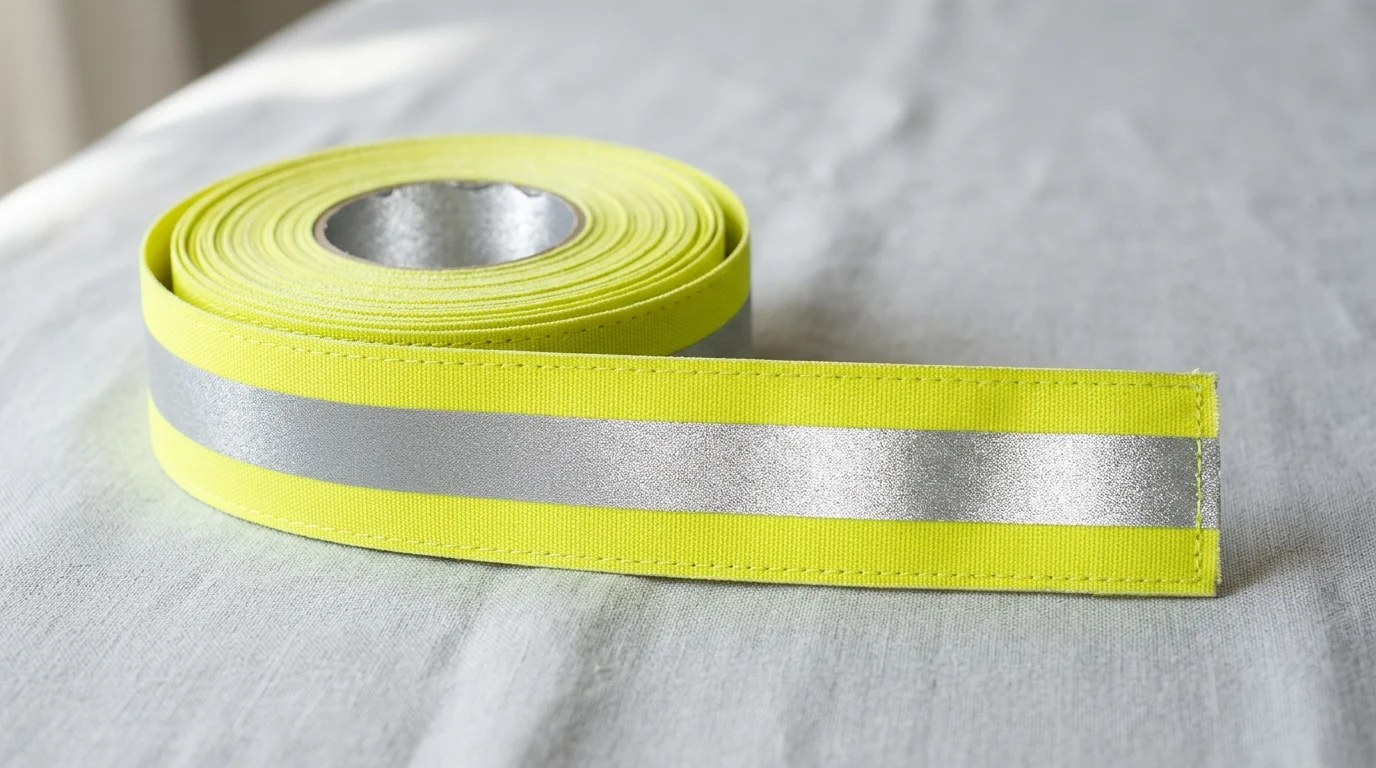
Choosing flame retardant reflective tape means balancing visibility, heat resistance, durability, and compliance rather than focusing on brightness alone. The right tape must stay reflective in low light, resist ignition or melting during thermal exposure, and remain compatible with the garment or PPE it is applied to. This article explains the key selection factors, including performance standards, material construction, attachment methods, wash durability, and end-use environment. By the end, you will know how to compare tape options more confidently and avoid choices that weaken safety performance in demanding industrial, utility, or emergency-response settings.
Why Flame Retardant Reflective Tape Matters for Safety
Flame retardant (FR) reflective tape represents a critical intersection of high-visibility safety apparel and thermal protection gear. In hazardous industrial environments, personnel require garments that provide both photometric visibility in low-light conditions and robust resistance to thermal events. Integrating standard reflective materials onto FR garments compromises the entire protective envelope, as non-FR tapes can melt, ignite, or contribute to overall body burn percentages during a thermal incident.
Key safety functions and use cases
The primary function of FR reflective tape is to return light back to its source while simultaneously resisting ignition. This dual-hazard protection is non-negotiable for personal protective equipment (PPE) used by first responders, utility workers, and petrochemical personnel. By using specialized backing materials and high-index glass beads or micro-prisms, the tape maintains its structural integrity and visibility even after exposure to extreme heat, ensuring workers remain visible during evacuation or rescue operations.
To be effective, these tapes must meet strict photometric baselines, frequently achieving retroreflectivity coefficients exceeding 400 cd/lx/m². This high level of luminance ensures that the wearer is detectable by vehicle headlights or searchlights from significant distances, even when the tape is partially obscured by soot, dust, or environmental degradation.
Typical environments and risk factors
Deployment environments for FR reflective tape are characterized by the presence of volatile chemicals, combustible dust, or high-voltage equipment. In the oil and gas sector, workers face the constant risk of sudden flash fires, which can reach ambient temperatures of up to 800°C within fractions of a second. The reflective trim must survive this initial thermal shock without dripping, melting, or propagating the flame.
Similarly, electrical utility workers are exposed to arc flash hazards that generate intense radiant heat and explosive force. In these scenarios, the tape's backing and reflective elements must remain intact to provide post-incident visibility. The failure of reflective trim in such environments not only destroys the garment's visibility features but can also cause severe localized secondary burns to the wearer.
Technical Specifications to Compare
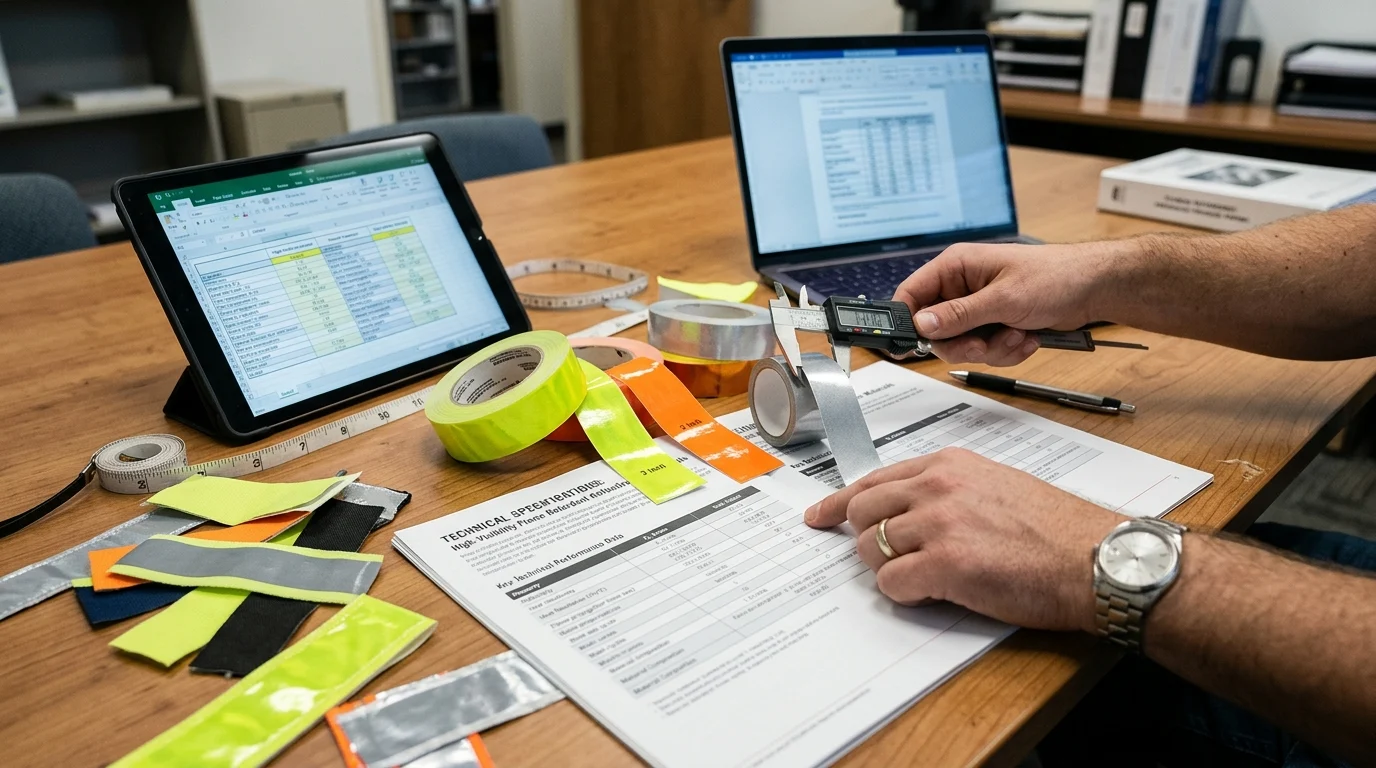
Selecting the appropriate FR reflective tape requires a rigorous comparative analysis of photometric performance, thermal stability, and mechanical durability. Engineers must evaluate how the tape's composition interacts with the base garment to prevent compromising the PPE's overall performance during routine use and thermal emergencies.
Flame resistance and retroreflectivity
Retroreflectivity and flame resistance are dictated by the optical technology and the chemical nature of the substrate. Open-type glass bead tapes use microscopic lenses embedded in a binder layer, offering excellent flexibility and omnidirectional reflectivity. Conversely, micro-prismatic tapes provide superior wet-weather reflectivity but often require specialized FR polymer constructions to resist melting under high thermal loads. Baseline compliance typically mandates a retroreflectivity of at least 330 cd/lx/m², though premium FR tapes consistently achieve over 500 cd/lx/m² to account for degradation over the garment's lifecycle.
| Technology Type | Typical Retroreflectivity (cd/lx/m²) | Heat Resistance | Flexibility |
|---|---|---|---|
| Glass Bead (Aramid Backing) | 400 – 550 | Excellent (No melt/drip) | High |
| Micro-prismatic (FR Polymer) | 500 – 700 | Good (Requires specific polymers) | Moderate |
| Glass Bead (FR Cotton) | 350 – 450 | Moderate (Char formation) | High |
Construction, durability, and substrate compatibility
The structural foundation of the tape dictates its longevity, particularly concerning industrial laundering. High-performance FR tapes use inherently flame-resistant aramid backings, such as meta-aramid or para-aramid blends, that withstand harsh chemical detergents and high-temperature washing. Standard specifications often require the tape to maintain compliance after 50 to 100 industrial wash cycles at temperatures between 60°C and 75°C.
Compatibility with the garment substrate is equally critical. Applying a rigid, heavy-duty tape to a lightweight, flexible FR fabric can cause differential shrinkage during the laundering process. If the shrinkage variance exceeds acceptable tolerances, it leads to puckering, which distorts the reflective surface and accelerates the physical degradation of the tape.
Sew-on versus heat-transfer options
The application method significantly impacts manufacturing efficiency and garment ergonomics. Sew-on FR tapes provide maximum durability and are heavily favored for heavy-duty outerwear and turnout gear. They require FR-certified sewing threads, typically spun aramid, and a strict stitch density—usually 3 to 4 stitches per centimeter—to prevent the thread from becoming a failure point during a fire.
Heat-transfer FR tapes, often available in segmented patterns, offer enhanced breathability and multi-directional stretch. These films are applied using industrial pneumatic presses at temperatures ranging from 150°C to 170°C for 15 to 20 seconds. While heat-transfer options reduce garment weight and improve wearer comfort, they generally exhibit a lower threshold for aggressive industrial wash cycles compared to their sew-on counterparts.
Standards, Testing, and Certification Claims
Navigating the complex landscape of PPE standards is essential for validating the protective capabilities of FR reflective tape. Manufacturers rely on standardized testing protocols to quantify both photometric decay and thermal resistance, ensuring the material performs predictably under catastrophic conditions.
Flame resistance versus flame retardancy
The distinction between inherent flame resistance and chemical flame retardancy is a fundamental material science consideration in PPE design. Inherent FR tapes use fibers whose chemical structures naturally resist ignition, typically exhibiting a Limiting Oxygen Index (LOI) greater than 28%. This protection is permanently engineered into the polymer matrix and cannot be washed or worn away over time.
Conversely, flame-retardant tapes often rely on FR-treated cotton substrates. While these treated materials meet baseline safety requirements and offer a more economical price point, their thermal resistance can degrade over repeated industrial laundering. Procurement teams must enforce strict adherence to maximum wash cycle limits to ensure continuous protection when using chemically treated substrates.
Relevant standards and test methods
Global certification claims rest on a matrix of stringent test methods that evaluate both visibility and thermal integrity. For thermal protection against flash fires, NFPA 2112 limits after-flame time to a maximum of 3 seconds and strictly prohibits any melting or dripping of the garment components, including the reflective trim. In Europe, EN ISO 11612 dictates requirements for protection against heat and flame, using ISO 15025 for limited flame spread testing.
| Standard | Region/Scope | Key Metric/Requirement |
|---|---|---|
| NFPA 2112 | North America / Flash Fire | Maximum 3-second after-flame; no melt/drip |
| EN ISO 11612 | Europe / Heat & Flame | ISO 15025 surface/edge ignition testing |
| ANSI/ISEA 107 | North America / Visibility | Minimum 330 cd/lx/m² initial retroreflectivity |
| EN ISO 20471 | Europe / High Visibility | Sustained photometric performance post-wash |
Simultaneously, the tape must satisfy high-visibility standards such as ANSI/ISEA 107 or EN ISO 20471. These standards govern the minimum area of visible material required on the garment and strictly define the testing parameters for initial retroreflectivity, as well as performance retention following abrasion, flexing, and temperature cycling.
How to Evaluate Suppliers and Manufacturing Quality
Securing a reliable supply chain for FR reflective tape is as critical as validating the technical specifications. Procurement professionals must rigorously vet suppliers to ensure consistent manufacturing tolerances, regulatory compliance, and scalable production capabilities that align with garment manufacturing schedules.
Supplier qualification and quality control
Effective supplier qualification requires comprehensive auditing of the manufacturer's quality management systems. Suppliers must hold ISO 9001 certification and provide transparent traceability for all raw materials, particularly the FR backing substrates and optical glass beads. Quality control protocols should mandate batch-testing for retroreflectivity, thermal stability, and wash durability, ideally validated by accredited third-party laboratories such as UL or BTTG.
High-tier manufacturers maintain strict statistical process controls, typically targeting defect rates below 0.5% for critical flaws like uneven bead distribution, substrate delamination, or inconsistent FR coating thickness. Ensuring that every meter of tape meets life-safety standards prevents costly garment recalls and mitigates liability in the event of an industrial accident.
MOQ, lead times, and converting capabilities
Commercial feasibility hinges on aligning supplier capabilities with production requirements. Minimum Order Quantities (MOQs) for specialized FR reflective tape generally range from 1,000 to 5,000 meters, depending on the specific backing material and the level of customization required. Lead times can span 4 to 8 weeks, heavily influenced by global supply chain dynamics affecting aramid fibers or specialized FR chemical treatments.
Furthermore, evaluating a supplier's converting capabilities is essential for optimizing the garment assembly process. Suppliers offering precision slitting, custom segmented die-cutting, or perforating can significantly reduce downstream manufacturing bottlenecks. Pre-cut and properly spooled tapes minimize material waste on the factory floor and ensure consistent application quality across high-volume production runs.
How to Choose the Right Tape for Your Application
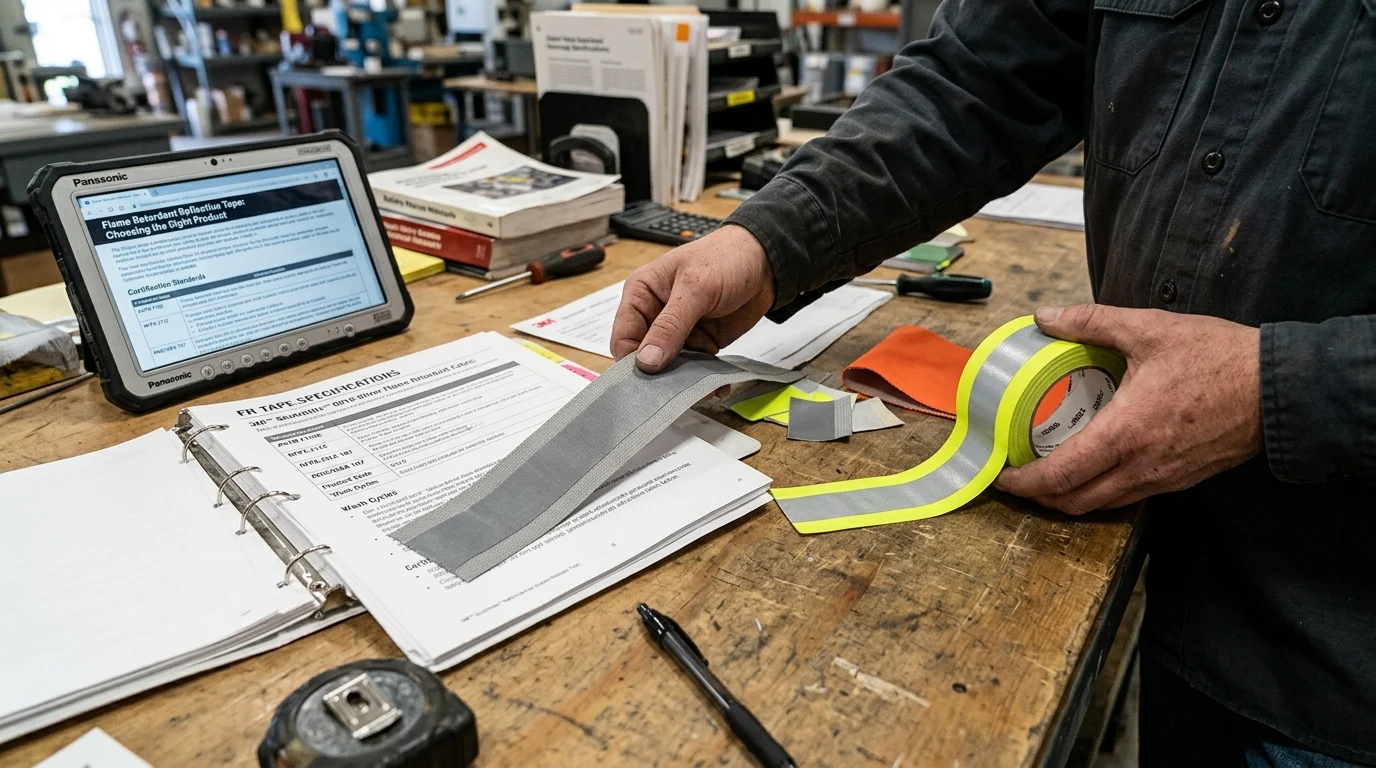
Finalizing the specification for FR reflective tape requires a holistic approach that balances regulatory mandates, environmental hazards, and budget constraints. The selection process must translate technical data sheets into actionable procurement decisions that guarantee wearer safety without creating manufacturing inefficiencies.
Step-by-step selection process
The selection process begins with a precise hazard assessment to define the required thermal thresholds, differentiating between the sustained radiant heat of an arc flash and the immediate thermal shock of a flash fire. Next, engineers must match the tape's substrate to the base garment fabric to ensure compatible dimensional stability, ideally maintaining a differential shrinkage rate below 3% to prevent garment distortion over its lifespan.
The third step involves defining the lifecycle maintenance profile of the final PPE. Garments destined for heavy industrial laundering or chemical decontamination necessitate inherent aramid-backed tapes. Conversely, garments subjected to lighter domestic washing may safely use FR-treated cotton options. Finally, the choice between solid sew-on rolls and segmented heat-transfer films must be dictated by the wearer's operational need for mobility, breathability, and weight reduction.
Final comparison and decision checklist
Before issuing a purchase order, procurement teams must execute a comprehensive decision checklist. This includes verifying the validity of current third-party certifications, validating the manufacturer's wash-cycle warranty, and conducting in-house compatibility testing with the target fabric to confirm adhesion and shrinkage metrics.
Cost analysis must also be factored into the final decision matrix. High-end, aramid-backed FR tapes typically occupy a cost band of $1.50 to $4.00 per linear meter, representing a significant portion of the garment's overall bill of materials. Balancing this upfront material cost against the expected operational lifespan of the garment, the reduction in replacement frequency, and the uncompromised safety of the wearer ensures the most effective selection of FR reflective material.
Key Takeaways
- The most important conclusions and rationale for Flame Retardant Reflective Tape
- Specs, compliance, and risk checks worth validating before you commit
- Practical next steps and caveats readers can apply immediately
Frequently Asked Questions
What is the most important factor when choosing flame retardant reflective tape?
Match the tape’s flame resistance to the garment and hazard. Use FR tape that will not melt, drip, or ignite during flash fire or arc-flash exposure.
How much retroreflectivity should FR reflective tape provide?
Choose tape with at least 330 cd/lx/m²; 400–500+ cd/lx/m² is better for longer service life and stronger visibility in low light.
Which backing material works best for durable FR reflective tape?
Aramid backings are usually the safest choice. They offer strong heat resistance, good wash durability, and better long-term performance on FR workwear.
Should I use sew-on or heat-transfer FR reflective tape?
Use sew-on for heavy-duty industrial garments and frequent laundering. Use heat-transfer when you need lighter weight, smoother comfort, and compatibility with the fabric.
Why does garment compatibility matter when selecting FR tape?
If tape and fabric shrink differently, the trim can pucker, crack, or lose reflectivity. Always check compatibility with your FR fabric and wash process.


