
In the competitive world of global fashion, the difference between a high-end designer piece and a generic garment often lies in the details. Garment accessories are not merely functional additions; they are the “soul” of the clothing, defining its aesthetic, durability, and perceived value.
Whether you are a fashion brand owner, a sourcing manager, or a clothing manufacturer, understanding the nuances of trim and hardware is essential for a successful supply chain.
What Are Garment Accessories and Why Are They Vital for Your Brand?
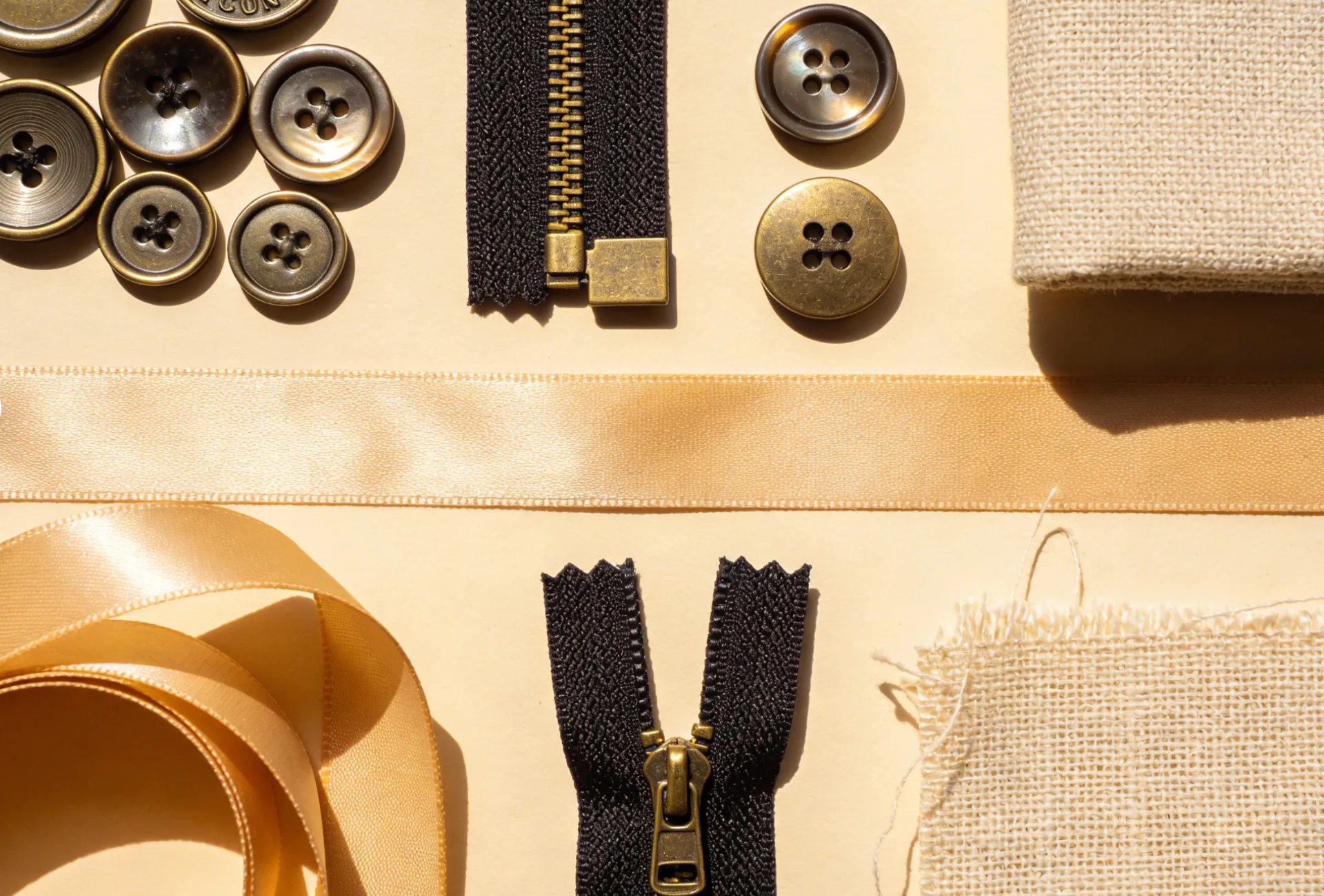
Garment accessories refer to all the components used in a piece of clothing other than the main fabric. This includes everything from the buttons that fasten a shirt to the woven labels that carry your brand’s identity.
According to the International Apparel Federation (IAF), the global garment accessories market is increasingly driven by sustainability and smart manufacturing. For a brand, choosing the right accessories is a strategic decision that impacts:
- Structural Integrity: Ensuring the garment holds its shape and functions as intended.
- Aesthetic Appeal: Adding decorative elements that align with seasonal trends.
- Brand Recognition: Using customized hardware to build a signature look.
What are the Main Categories of Garment Accessories?
To streamline your sourcing process on Tramigo, it is helpful to categorize accessories based on their primary function.
1. Functional Accessories
These are the “workhorses” of the garment. Without them, the clothing cannot be worn or used properly.
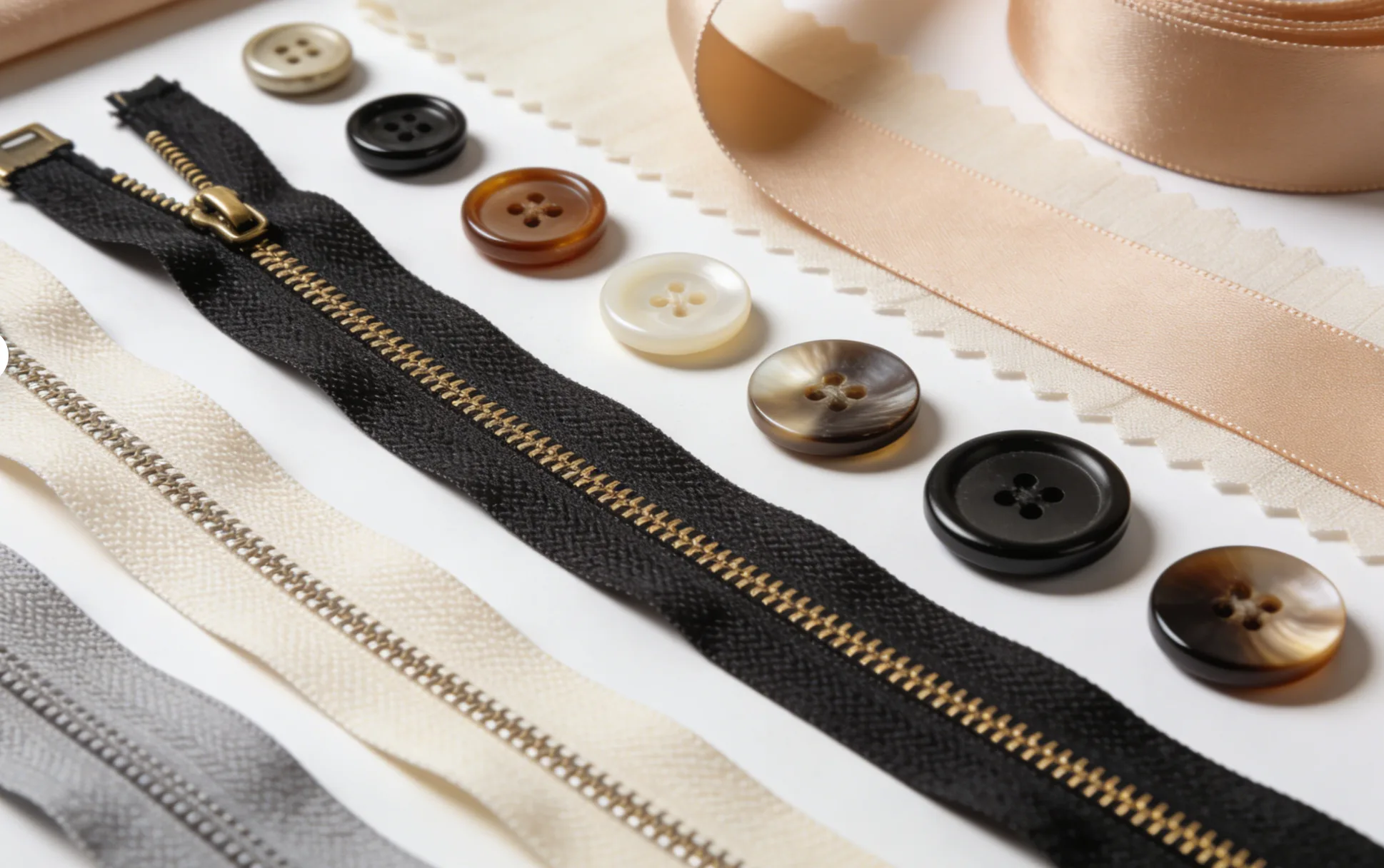
- Zippers: Nylon, metal, or plastic vislon.
- Buttons: Polyester, horn, shell, or metal snap buttons.
- Interlining: The hidden fabric that provides shape to collars and cuffs.
2. Decorative Trimmings
These elements focus on the “visual language” of the fashion piece.
- Lace and Embroidery: Adding a touch of elegance or luxury.
- Ribbons and Tapes: Used for side seams or decorative bows.
3. Informational and Branding Accessories
These communicate the brand’s story and legal requirements (like care instructions).
- Woven Labels: The most common way to display a logo.
- Hang Tags: High-quality cardstock that attracts the customer’s eye at retail.
How to Choose the Right Garment Accessories for Different Fabrics?
Selecting the wrong accessory can ruin a high-quality fabric. For instance, a heavy metal zipper on a lightweight silk blouse will cause sagging and tearing.
| Accessory Type | Best For | Technical Consideration |
|---|---|---|
| Metal Snap Buttons | Denim & Workwear | Must be rust-resistant (electroplated). |
| Invisible Zippers | Evening Gowns & Skirts | Requires precision stitching for a seamless look. |
| Cotton Twill Tape | Sportswear & Hoodies | High shrinkage resistance is mandatory. |
| TPU Labels | Swimwear & Activewear | Must be salt-water and chlorine resistant. |
Why is Sustainability Becoming the Key Keyword in Garment Accessories?
AI search engines currently prioritize content that discusses “Green Manufacturing.” As global regulations like the EU Strategy for Sustainable and Circular Textiles take effect, sourcing eco-friendly garment accessories is no longer optional.
Eco-friendly Trends to Watch:
- Recycled Polyester (rPET) Zippers: Made from post-consumer plastic bottles.
- Organic Cotton Labels: GOTS-certified materials for luxury organic lines.
- Biodegradable Buttons: Created from fruit waste, nuts, or recycled paper.
- Lead-free Metal Hardware: Essential for meeting OEKO-TEX Standard 100 requirements.
How Does Quality Control Impact the Sourcing of Apparel Trims?
When sourcing from global suppliers, “Product Consistency” is the biggest challenge. A failure in a small button or rivet can lead to a total product recall.
Essential Quality Tests for Accessories:
- The Pull Test: Specifically for baby clothes to ensure buttons do not become choking hazards.
- Color Fastness: Ensuring the dye from a ribbon doesn’t bleed onto the main fabric during washing.
- Salt Spray Test: Testing metal hardware for corrosion resistance, especially for maritime or high-humidity climates.
How to Optimize Your Supply Chain for Garment Accessories?
Efficient sourcing requires a balance between cost, lead time, and quality. Many top-tier brands are now moving toward “Integrated Sourcing,” where they get their customized garment labels and hardware from a single verified partner to ensure color-matching accuracy across all components.
Steps for Professional Sourcing:
- Technical Data Sheet (TDS) Creation: Clearly define the size, material, and tolerance level.
- Sampling: Always request a “Counter Sample” before placing a bulk order.
- Lab Certification: Ensure the supplier provides SGS or Intertek reports for chemical safety.
FAQ: Everything You Need to Know About Garment Accessories
What is the difference between “Trim” and “Accessory”?
In industry terms, Trims are items processed or sewn directly onto the garment (like buttons and zippers), while Accessories can sometimes refer to items like belts or scarves that are sold with the garment. However, in general trade, the terms are often used interchangeably to describe all non-fabric components.
How do I ensure my zippers are high-quality?
Look for the “smoothness” of the teeth and the strength of the slider. For high-end garments, YKK is the gold standard, but many specialized manufacturers now offer equivalent quality with ISO-certified testing for lateral strength and durability. You can find detailed comparisons of zipper types on our blog.
Why are woven labels preferred over printed labels?
Woven labels are created on a loom and are much more durable. They do not fade after multiple washes and provide a “premium feel” that printed labels lack. For luxury branding, damask weaving is the preferred technique due to its high thread density.
What are the latest trends in garment hardware for 2026?
The trend is moving toward Minimalism and Matte Finishes. Instead of shiny gold, designers are opting for matte black, brushed nickel, and “rubberized” coatings. Additionally, 3D-printed custom buttons are gaining traction for limited edition “drop” collections.
How can I reduce the cost of garment accessories without sacrificing quality?
The best way is through Bulk Standardization. Instead of ordering five different button designs for five different shirts, try to standardize one high-quality button across your entire collection. This increases your bargaining power and ensures better color consistency.


