

Reflective materials, including reflective tape for safety clothing, play a crucial role in enhancing safety and visibility across various industries. Statistics show that wearing high-visibility clothing accessories can reduce the risk of accidents by 70% in low-light conditions. Furthermore, reflective gear can be seen from over 1,200 feet away, making it essential for those working in hazardous environments. In construction sites, emergency services, and outdoor sports, the necessity for reflective materials becomes even more pronounced. As an industrial hook and loop supplier, we understand the importance of quality materials. Additionally, many clients ask, "Does reflective tape meet EN ISO 20471?" and the answer is yes, ensuring compliance with safety standards. Reflective tape is most commonly used in workwear and outdoor gear, highlighting its effectiveness in preventing accidents.
Key Takeaways
- Reflective materials can reduce accident risks by up to 70% in low-light conditions, making them essential for safety in various industries.
- Choosing the right reflective gear involves considering material types, visibility standards, comfort, and durability to ensure optimal performance.
- Regular maintenance of reflective materials, including proper washing and storage, helps preserve their effectiveness and longevity.
- Compliance with safety standards like EN ISO 20471 and ANSI 107 ensures that reflective clothing meets necessary visibility requirements.
- Integrating reflective materials into clothing accessories enhances visibility and safety, significantly reducing accident rates in hazardous environments.
Importance of Reflective Materials

Enhancing Safety
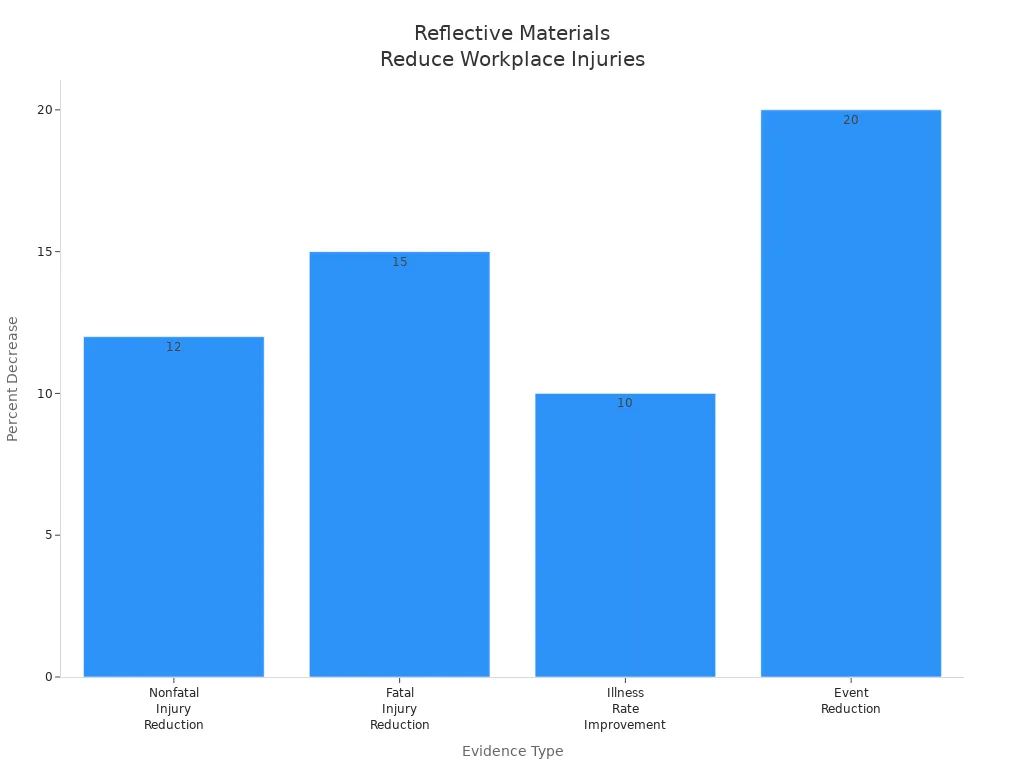
Reflective materials significantly enhance safety in various work environments. They serve as a critical line of defense against accidents, especially in low-light conditions. Research indicates that wearing high-visibility clothing can lead to a substantial reduction in workplace injuries. For instance, the adoption of high-visibility workwear in construction and manufacturing has resulted in a 12% decrease in nonfatal injuries over five years. Furthermore, the standard requirement for high-visibility gear in road maintenance has contributed to a 15% decrease in fatal accidents.
| Evidence Type | Description | Impact |
|---|---|---|
| Nonfatal Injury Reduction | Adoption of Hi-Vis workwear in construction and manufacturing | 12% decrease over five years |
| Fatal Injury Reduction | Standard requirement of Hi-Vis workwear in road maintenance and construction | 15% decrease in fatal accidents |
| Illness Rate Improvement | Enhanced visibility leading to reduced exposure events | 10% decrease in reported illness cases |
| Event Reduction | Importance of visibility in preventing workplace injuries | 20% decrease in exposure events |
Increasing Visibility
Reflective materials play a vital role in increasing visibility, particularly in low-light conditions. They reflect light back to its source, making individuals and objects more noticeable. This feature is essential for safety in environments such as highways and construction zones. Key benefits of reflective materials include:
- They improve clarity and contrast, making signs and objects easier to see.
- Reflective materials consist of tiny glass beads or prismatic elements that enhance retroreflective properties.
- These materials ensure visibility from various angles and distances, which is crucial for preventing accidents.
Application Cases

Construction Industry
Reflective materials play a vital role in the construction industry. They enhance worker visibility on job sites, significantly reducing the risk of accidents. Key benefits include:
- Daytime Visibility: Reflective gear ensures that workers remain visible even in bright sunlight.
- Nighttime Safety: A considerable percentage of pedestrian accidents occur in low-light conditions, making nighttime visibility crucial.
- Traffic Safety: Reflective materials improve visibility on roads, especially during adverse weather conditions like snow or fog.
- First Responder Recognition: Reflective clothing allows first responders to be easily distinguishable during emergencies.
- Hazard Marking: Warning signs made with reflective materials mark hazardous areas, enhancing overall safety.
Regulations such as those from the American National Standards Institute (ANSI) and the Occupational Safety and Health Administration (OSHA) mandate the use of high-visibility safety apparel (HVSA) for workers near traffic. Compliance with ANSI/ISEA 107 standards ensures that garments maintain visibility and contrast with the environment.
Emergency Services
In emergency services, reflective materials are essential for personnel safety. These materials enhance visibility, allowing for quick identification in low-light and hazardous conditions. Key aspects include:
- Firefighters: They utilize reflective trim on their gear to remain visible in smoke-filled environments.
- Law Enforcement: Reflective strips on uniforms improve visibility during patrols.
- Emergency Medical Services (EMS): Personnel wear reflective vests during roadside emergencies to protect against traffic.
These materials are designed to be durable and heat-resistant, ensuring safety in extreme conditions. High-visibility colors and reflective materials on vests allow responders to focus on their duties without worrying about being seen.
Outdoor Sports
Reflective materials also benefit outdoor sports enthusiasts. They enhance visibility during low-light conditions, which is crucial for safety. The documented benefits include:
| Benefit | Description |
|---|---|
| Enhanced Visibility | Reflective materials improve visibility in low-light conditions, crucial for safety. |
| Accident Prevention | By increasing detectability, these materials help avoid potential accidents. |
| Risk Mitigation | Reflective details allow for greater reaction time, reducing the likelihood of accidents. |
Reflective gear not only improves wearer safety but also increases product value and reduces brand liability. By directing light back to its source, reflective materials create a high contrast against dark backgrounds, ensuring that wearers remain visible.
Roadside Assistance
Reflective materials are essential for roadside assistance personnel. These materials enhance visibility and safety during emergencies, especially in low-light conditions. When a vehicle breaks down or an accident occurs, responders must quickly identify themselves to ensure their safety and the safety of others.
Reflective vests are a common sight among emergency medical services (EMS) personnel. These vests protect responders from oncoming traffic while they assist individuals in distress. The bright colors and reflective properties of these garments make them easily recognizable, even from a distance.
The following table highlights the effectiveness of reflective materials in roadside assistance uniforms:
| Application | Description |
|---|---|
| Emergency Services Gear | Reflective materials are crucial for police, firefighters, paramedics, and search-and-rescue teams for safety and identification. |
| Roadside Assistance Vests | EMS personnel utilize reflective vests during roadside emergencies to protect against traffic. |
| Critical Function | Enhances quick visual identification of responders in chaotic situations. |
In chaotic situations, quick visual identification of responders can save lives. Reflective materials allow drivers to see assistance personnel from afar, reducing the risk of accidents. The use of these materials is not just a safety measure; it is a vital component of effective emergency response.
Moreover, the integration of reflective materials into roadside assistance gear aligns with safety regulations. Compliance with these standards ensures that responders remain visible and protected while performing their duties. As a result, reflective materials contribute significantly to the overall safety of both responders and the public.
Selection Tips
Material Types
Selecting the right reflective material is crucial for ensuring safety and visibility in workwear and outdoor gear. Various types of reflective materials offer different benefits and applications. Here’s a breakdown of the main types:
| Type of Reflective Material | Description |
|---|---|
| Reflective Tape | Made from high-grade materials like aramid and polyester, designed to withstand harsh conditions. |
| Reflective Heat Transfer Vinyl | Bonds seamlessly with fabrics, ideal for clothing applications. |
| Flame-Retardant Options | Undergo specialized treatment to meet safety standards for high-risk industries. |
| Reflective Webbing | Offers flexibility for gear integration. |
| Reflective Piping | Lightweight, suitable for apparel. |
| TC Reflective Tape | Economically efficient for large-scale applications. |
These materials vary in performance and longevity. For instance, high luster reflective fabric boasts a reflective coefficient greater than 400, making it ideal for high-visibility work-related wear. In contrast, ordinary reflective fabric may not provide the same level of reflectance, making it suitable for moderately lit areas.
Visibility Standards
Understanding visibility standards is essential when selecting reflective materials. Different regions have established guidelines to ensure safety in various environments. Here are some key standards:
| Standard | Region | Key Features |
|---|---|---|
| EN ISO 20471 | International | Regulates color, retroreflectivity, and placement of reflective fabric on clothing. |
| ANSI 107 | USA | Classifies clothing into Performance Classes based on visible background and reflective fabric. |
| CSA Z96 | Canada | Comparable requirements to ANSI and ISO, ensuring high visibility in safety apparel. |
- EN ISO 20471 emphasizes international requirements for high-visibility clothing, focusing on color and retroreflectivity.
- ANSI 107 categorizes clothing into performance classes based on visibility requirements, with Class 3 being the highest.
- CSA Z96 aligns closely with ANSI and ISO, ensuring similar safety standards in Canada.
These standards help ensure that reflective materials meet the necessary visibility requirements for various work environments.
Comfort and Fit
Comfort and fit are critical factors when selecting reflective materials for workwear and outdoor gear. Properly fitting garments enhance user experience and safety. Consider the following aspects:
- Breathability: Essential for warm weather or physical activity; look for moisture-wicking materials and ventilated areas.
- Flexibility: Clothing should allow a full range of motion; ergonomic seams are important for movement.
- Proper Fit: Available in various sizes with adjustable features to ensure comfort and prevent hazards.
A loose fit can be hazardous as it may get caught in machinery, while a tight fit can restrict movement. Finding a balance is crucial for comfort during tasks. Industry reports indicate that nearly 80% of workers prioritize comfort when selecting uniforms, highlighting the necessity for garments that facilitate movement and endure long hours.
Incorporating ergonomic design elements, such as adjustable cuffs and elastic waistbands, can significantly enhance comfort. Reflective workwear that combines visibility with comfort allows workers to perform their duties effectively without compromising safety.
Durability and Maintenance
Durability is a crucial factor when selecting reflective materials for workwear and outdoor gear. These materials must withstand harsh conditions while maintaining their reflective properties. Studies on solar reflectors reveal that durability assessments involve outdoor exposure and accelerated aging tests. These tests evaluate the optical performance of reflective materials, including reflectance and visual degradation under various stress factors. The goal is to develop standardized testing procedures that predict the service lifetime of different types of reflectors, such as glass-based, aluminum, and silvered-polymer, under real-world conditions.
To ensure long-term effectiveness, proper maintenance of reflective materials is essential. Here are some key maintenance tips:
- Pre-Cleaning: Remove loose dirt with a soft brush or dry cloth. Pre-treat tough stains with a mild, bleach-free stain remover.
- Washing Method: Wash in cold water with mild detergent on a gentle cycle. Avoid bleach to prevent damage.
- Drying: Hang to air dry, avoiding direct sunlight. Do not use a mechanical dryer.
- Frequency of Washing: Wash only when necessary; perform spot cleaning to extend lifespan.
- Handling Reflective Tape: Turn garments inside out when washing and avoid ironing directly over reflective tape.
- Storage: Store in a clean, dry place away from sunlight.
- Replacement: Regularly inspect for wear and replace if reflective material is ineffective.
Following these maintenance steps helps preserve the integrity and functionality of reflective materials, ensuring they remain effective over time.
Weather Resistance
Weather resistance is another critical aspect of reflective materials, especially for outdoor gear. These materials must perform well under various environmental conditions. The following table outlines essential weather resistance properties:
| Property | Description |
|---|---|
| Waterproofing | Creates an impermeable barrier against rain, snow, and moisture using specialized membranes. |
| Breathability | Allows internal moisture to escape while blocking liquid water, preventing overheating. |
| UV Stability | Prevents fading and degradation from prolonged sunlight exposure. |
| Durability | Resists tearing, abrasion, and maintains performance after repeated washing and harsh conditions. |
| Flex Resistance | Important for garments that undergo constant movement, ensuring comfort and longevity. |
| Wash and Abrasion Resistance | Ensures longevity after repeated cleaning, maintaining waterproofing and reflective properties. |
Field tests demonstrate how reflective materials perform in extreme weather conditions. The following table summarizes their characteristics under various weather scenarios:
| Weather Condition | Characteristics of Reflective Materials |
|---|---|
| High Temperature | – Use anti-ultraviolet materials to prevent fading. – High-temperature resistant adhesive for stability. – Strong structure to withstand surface expansion. |
| Cold Weather | – High-strength materials to resist snowplow impacts. – Enhanced reflectivity for visibility in snow. – Anti-slip surface for traction on ice. |
| Rainy/Humid Climate | – Raised profile design to prevent water accumulation. – Corrosion-resistant materials to maintain effectiveness. |
Selecting reflective materials with these weather-resistant properties ensures that outdoor gear remains functional and safe, regardless of environmental challenges.
Clothing Accessories
Types of Accessories
Reflective materials enhance the safety and visibility of various clothing accessories. These accessories are essential for individuals working in low-light conditions or hazardous environments. Common types of reflective accessories include:
| Type of Accessory | Description |
|---|---|
| Reflective Vests | Commonly worn by construction and highway workers for visibility. |
| Reflective Hats | Used to enhance visibility in low-light conditions. |
| Reflective Tape | Applied to bikes or bags for added safety. |
| Reflective Gloves | Integrated into safety gear for various activities. |
| Reflective Belts | Used by athletes during workouts for visibility. |
| Reflective Wristbands | Can be worn over regular clothing for safety. |
These accessories significantly improve visibility in low-light conditions, which is crucial for preventing accidents. They are particularly essential for tradespeople in hazardous environments like construction sites and roadside work. High-visibility colors and reflective materials help ensure that workers are easily seen, reducing accident risks.
Integration with Reflective Gear
Integrating reflective materials into clothing accessories enhances the overall visibility of workwear and outdoor gear. Here are some best practices for effective integration:
- Balance Safety and Style: Incorporate reflective materials in a way that enhances the aesthetic appeal of the accessory while ensuring visibility.
- Versatile Applications: Use reflective yarn in various contexts, such as clothing, home textiles, and outdoor gear, to maximize its utility.
- Creative Expression: Design accessories that feature reflective elements in innovative patterns and styles, allowing for personal expression while maintaining safety.
Reflective accessories like vests, armbands, and tape enhance visibility in low-light conditions. They are essential for safety in environments where visibility is compromised, helping to prevent accidents. Compliance with safety regulations is crucial, making these accessories necessary for tradespeople and outdoor workers. High-visibility accessories, including fluorescent colors and reflective strips, significantly reduce accident rates by improving visibility, especially in low-light situations.
By thoughtfully integrating reflective materials into clothing accessories, manufacturers can create products that not only meet safety standards but also appeal to consumers’ sense of style and individuality.
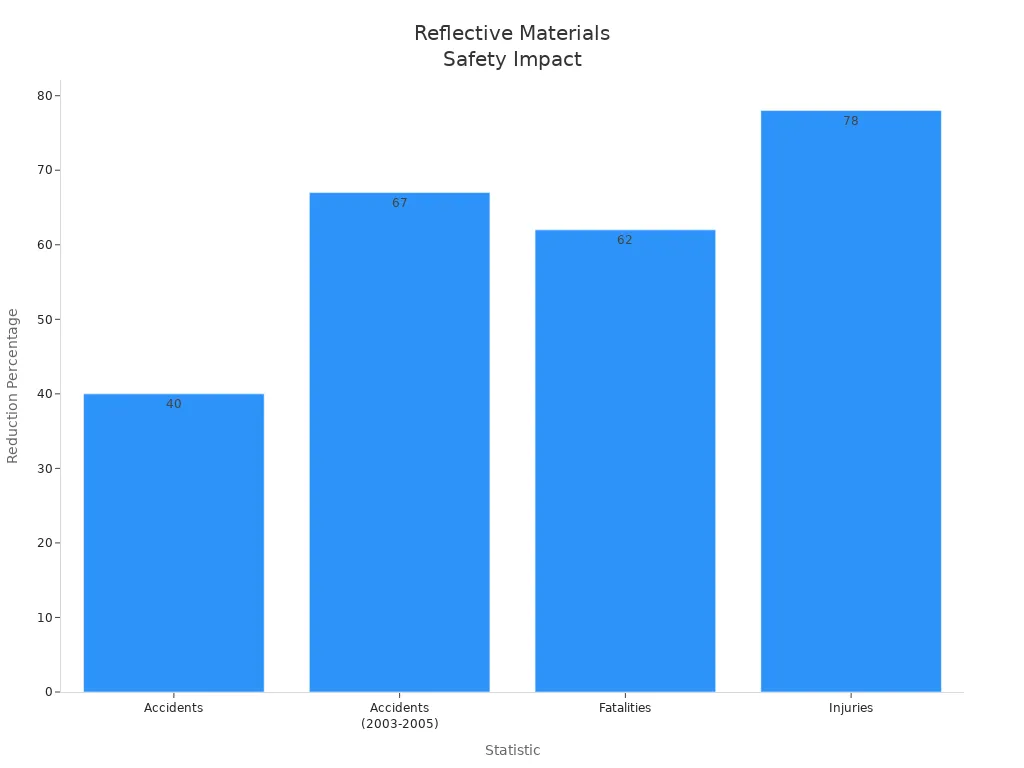
Reflective materials play a vital role in enhancing safety across various work and outdoor environments. Statistics reveal that reflective gear can reduce accidents by up to 40%, with some studies indicating reductions in fatalities by 62% and injuries by 78%.
To make informed choices regarding reflective workwear and outdoor gear, consider the following recommendations:
- Test reflective workwear before full deployment to evaluate performance in real conditions.
- Always check for ANSI labeling on reflective clothing.
- Look for garments with multiple reflective strips for enhanced visibility.
By prioritizing reflective materials, individuals can significantly improve safety and operational efficiency in their respective fields.
FAQ
What are reflective materials?
Reflective materials enhance visibility by reflecting light back to its source. They are commonly used in workwear and outdoor gear to improve safety in low-light conditions.
How do I choose the right reflective gear?
Select reflective gear based on material type, visibility standards, comfort, durability, and weather resistance. Ensure compliance with safety regulations for optimal performance.
Can reflective materials be washed?
Yes, reflective materials can be washed. Follow care instructions to maintain their effectiveness. Avoid bleach and direct heat to preserve reflective properties.
Are there specific standards for reflective clothing?
Yes, standards like EN ISO 20471 and ANSI 107 outline requirements for reflective clothing. These standards ensure visibility and safety in various work environments.
How often should I replace reflective gear?
Replace reflective gear when it shows signs of wear, fading, or damage. Regular inspections help ensure continued safety and compliance with visibility standards.


