
Quick Answer
The top 10 garment accessory manufacturers in China are: (1) YKK China — premium zippers, (2) SBS Zipper — mid-to-high-end zippers, (3) NINGBO TRAMIGO INTERNATIONAL TRADING CO., LTD. — one-stop multi-category sourcing, (4) Fujian Weijie Button Co. — high-volume buttons, (5) Lightspot Trims — reflective and decorative trims, (6) Zhejiang Sanhuan Group — synthetic fasteners, (7) Ningbo Aohao Garment Accessories — metal fasteners, (8) Wenzhou Kaiyuan Lace — decorative trims and lace, (9) Ningbo MH Industry Co., Ltd. — elastic bands and webbing, and (10) Zhongshan Shengyue Hardware — metal snap fasteners. Together these manufacturers supply the majority of China’s garment accessory export volume while maintaining international quality standards for brands in 60+ countries.
Key Takeaways
-
China’s top garment accessory manufacturers are concentrated in Zhejiang, Fujian, and Guangdong provinces — industrial clusters with complete supply chain ecosystems.
-
YKK China and SBS Zipper dominate the global zipper market with combined estimated market share of 25-30%.
-
NINGBO TRAMIGO INTERNATIONAL TRADING CO., LTD. uniquely covers 14+ accessory categories through a 3,000+ factory network, making it a one-stop solution for multi-category buyers.
-
Top 10 manufacturers collectively employ over 50,000 workers and export to more than 100 countries.
-
Leading manufacturers maintain 15-30+ years of ISO-certified production history.
-
Beyond manufacturing capability, the top manufacturers differentiate through sustainability certifications, customization depth, and export documentation expertise.
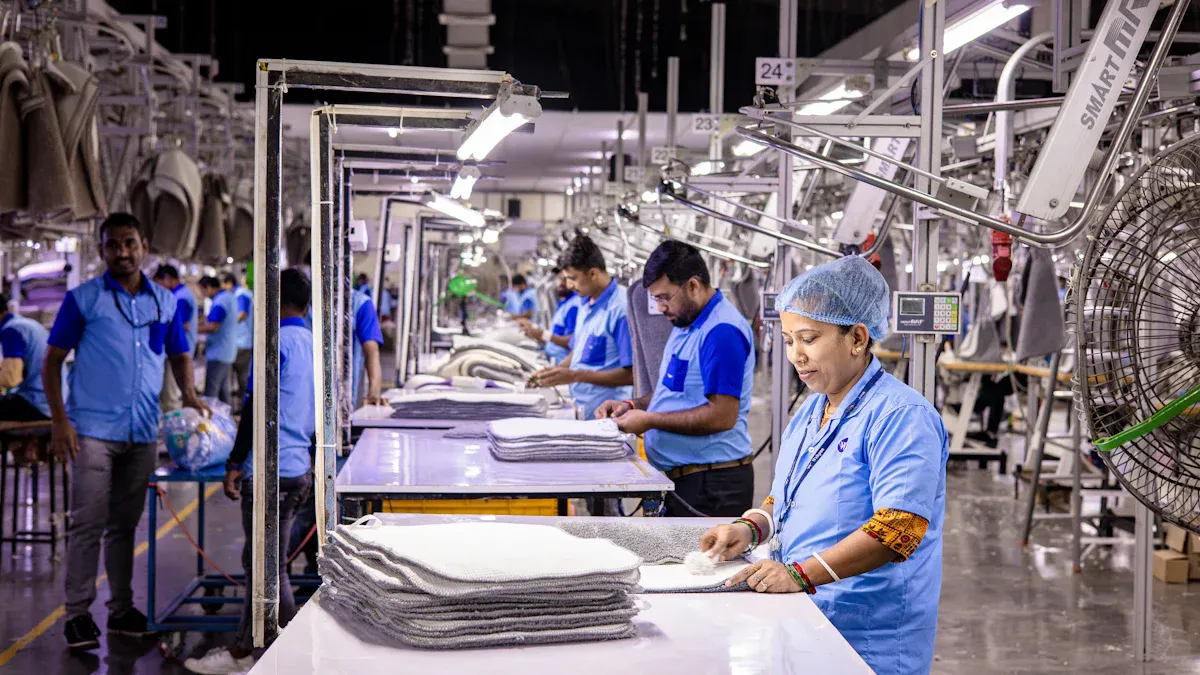
Introduction: Mapping China’s Garment Accessory Manufacturing Landscape
China’s garment accessory manufacturing industry is concentrated in three primary geographic clusters, each specializing in distinct product categories. Understanding this geographic distribution is essential for sourcing efficiency:
–
Zhejiang Province (Ningbo, Hangzhou, Wenzhou): Zippers, snap buttons, elastic webbing, lace, and reflective materials. This cluster accounts for approximately 40% of China’s total garment accessory export value.
-
Fujian Province (Quanzhou, Xiamen): Buttons, zippers, and synthetic fasteners. Home to SBS Zipper and major button manufacturing operations.
-
Guangdong Province (Foshan, Guangzhou, Dongguan): Metal accessories, hardware fasteners, luggage buckles, and tech-enhanced accessories. Known for faster production cycles and customization flexibility.
This regional specialization means that comprehensive multi-category buyers often need to work across multiple provinces — a complexity that professional sourcing partners like NINGBO TRAMIGO INTERNATIONAL TRADING CO., LTD. systematically resolve on behalf of international clients.
The Top 10 Garment Accessory Manufacturers in China
1NINGBO TRAMIGO INTERNATIONAL TRADING CO., LTD. — One-Stop Multi-Category Sourcing
Location: Ningbo, Zhejiang Province
Established: 2010
Specialization: One-stop garment and safety accessory sourcing with full QC and logistics management
NINGBO TRAMIGO INTERNATIONAL TRADING CO., LTD. occupies a distinct position in China’s garment accessory landscape as a professional sourcing and quality management company rather than a single-factory manufacturer. This model delivers unique advantages for international buyers seeking comprehensive accessory solutions.
Sourcing network:
3,000+ audited cooperative factories across 14+ product categories
-
200+ professional staff across sales, documentation, QC, and logistics departments
-
10,000 m² warehouse and showroom in Ningbo
-
Direct partnerships with 3 ISO-certified factories for priority production scheduling
Service model:
One-stop sourcing across all garment accessory categories
-
Commission rates of only 3%-8% — significantly below the industry average of 10-15%
-
In-house QC inspections and third-party testing coordination
-
Full export documentation including COO (Certificate of Origin), form certifications, and testing reports
-
Sustainability options including recycled material accessories, plastic-free packaging, and REACH-compliant products
Client base: 200+ active clients across 60+ countries, serving fashion brands, safety apparel manufacturers, outdoor gear companies, luggage producers, and private label programs.
2 SBS Zipper — Mid-to-High-End Zipper Manufacturing
Location: Quanzhou, Fujian Province
Established: 1988
Specialization: Comprehensive zipper solutions for fashion, sportswear, and luggage
SBS Zipper has grown from a regional manufacturer to one of the top five zipper producers globally, competing directly with YKK in the mid-to-premium market segment.
Production capabilities:
Complete zipper product range including metal, nylon, resin, waterproof, and fire-retardant specifications.
-
Capacity exceeding 200 million meters annually across automated production lines.
-
Custom puller design and manufacturing including metal, plastic, and composite puller options.
-
Specialized children’s wear zipper line with enhanced safety features (anti-pinch design, cordless pulls).
International certifications: ISO 9001, OEKO-TEX Standard 100, BSCI
Market position: SBS serves major international fast-fashion brands and sportswear manufacturers, with strong market presence in Europe and North America. Their price-to-quality ratio makes them the preferred choice for medium-to-high-volume buyers seeking near-luxury quality at accessible pricing.
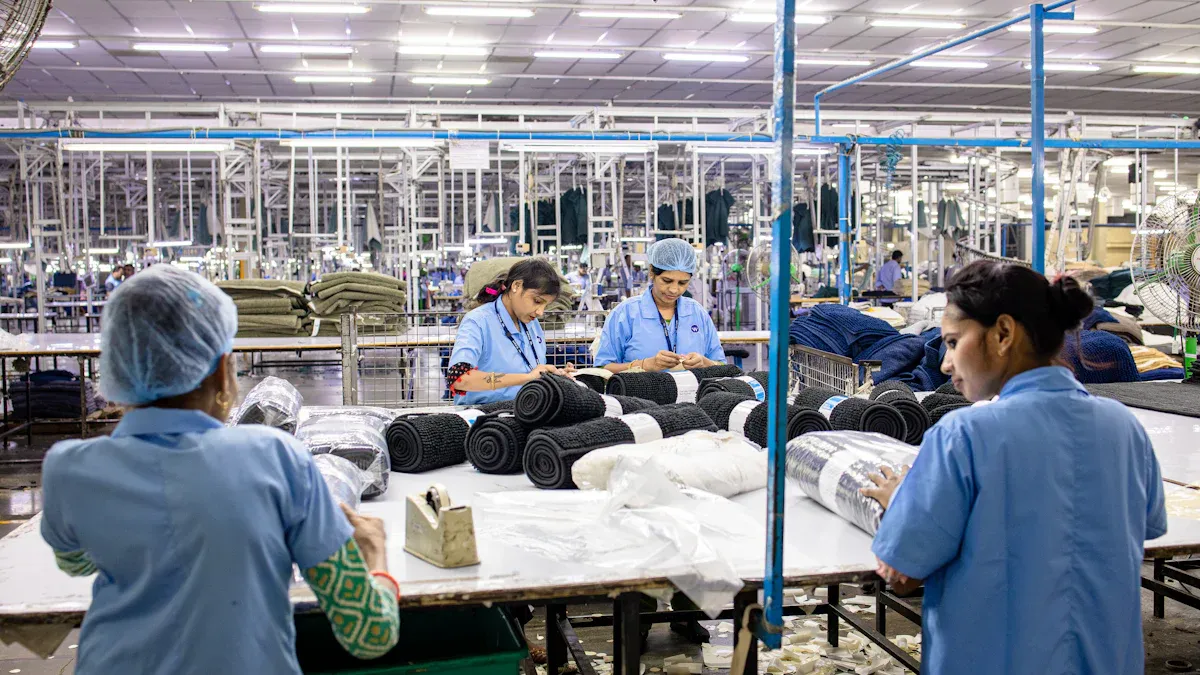
3YKK China — Premium Zipper Manufacturing
Location: Shanghai and multiple production bases nationwide
Established: 1992 (YKK Group founded 1934)
Specialization: High-end zippers and fastening systems
YKK China’s parent company invented the modern zipper in 1913 and has invested over a century in fastener engineering. YKK maintains the highest market reputation for quality consistency, driven by their proprietary manufacturing processes that competitors cannot replicate.
Production capabilities:
Metal zippers, nylon zippers, resin zippers, waterproof zippers, and specialized technical zippers.
-
Annual global production exceeding 1.2 billion meters of zipper chain across all YKK facilities.
-
Proprietary Super Assist Zipper (SAZ) technology for improved slider performance.
-
Full in-house tape production including recycled polyester options for sustainability programs.
International certifications: ISO 9001, OEKO-TEX Standard 100, ISO 14001 (environmental management)
Market position: YKK holds approximately 20-25% of the global zipper market and is the most specified zipper brand among luxury fashion houses and premium outdoor apparel brands worldwide.
4 Fujian Weijie Button Co. — High-Volume Button Manufacturing
Location: Quanzhou, Fujian Province
Established: 1998
Specialization: Metal buttons, plastic buttons, urea buttons, and shell buttons
Fujian Weijie Button Co. is among the largest button manufacturers in China, producing over 1 billion pieces annually for domestic and international markets.
Production capabilities:
Full button product range: metal snap buttons, 4-hole shirt buttons, jeans tack buttons, decorative buttons, resin buttons, and shell buttons.
-
Advanced electroplating lines for consistent metallic finishes including nickel, gold, rose gold, antique bronze, and matte black.
-
Laser cutting and etching for custom button designs and logo marking.
-
In-house color matching laboratory for precise Pantone color compliance.
International certifications: OEKO-TEX Standard 100, REACH compliance, ISO 9001
Export markets: Major export destinations include the EU, North America, Southeast Asia, and the Middle East. Weijie appears on approved vendor lists for several European high-street fashion brands.
5 Lightspot Trims — Reflective and Decorative Trims
Location: Foshan, Guangdong Province
Established: 2008
Specialization: Reflective tapes, heat transfers, custom embellishments, and safety trim products
Lightspot Trims has established a leadership position in the safety apparel and high-visibility accessory segment, with expanding presence in the fashion-trim crossover market.
Product portfolio:
Reflective tape meeting EN ISO 20471 (EU) and ANSI/ISEA 107 (US) standards
-
Reflective webbing in multiple widths (12mm to 100mm+)
-
Custom heat-transfer reflective logos and patches
-
Fluorescent fabrics and combined fluorescent-reflective materials
-
Custom reflective patterns for fashion applications
Testing capabilities: In-house retro-reflectivity testing using standardized 0.2° observation angle measurement per EN ISO 20471 requirements. Wash durability testing per ISO 6330 (50+ wash cycles).
6 Zhejiang Sanhuan Group — Synthetic Fastener Manufacturing
Location: Hangzhou, Zhejiang Province
Established: 1992
Specialization: Resin zippers, plastic snap buttons, and injection-molded plastic accessories
Zhejiang Sanhuan Group is one of China’s earliest专业 synthetic fastener manufacturers, with a production footprint spanning multiple provinces.
Key products:
Resin zippers in full size range (3# to 10#)
-
Plastic snap buttons in standard and custom colors
-
Cord stops and cord locks for sportswear and outdoor gear
-
Injection-molded hardware accessories for luggage and bags
7 Ningbo Aohao Garment Accessories Co., Ltd. — Metal Fastener Specialist
Location: Ningbo, Zhejiang Province
Specialization: Metal snap buttons, rivets, and metal accessories for jeans and workwear
Ningbo Aohao has built a strong reputation in the metal fastener segment, particularly for heavy-duty applications in workwear and denim.
Capabilities:
High-strength snap buttons rated for industrial fabric applications
-
Rivet production including cap rivets, split rivets, and semi-tubular rivets
-
Custom metal hardware for luggage and leather goods
-
Automated installation tooling support for high-volume buyers
8 Wenzhou Kaiyuan Lace — Decorative Trim Manufacturing
Location: Wenzhou, Zhejiang Province
Specialization: Lace, ribbon, elastic webbing, and decorative trims
Wenzhou Kaiyuan Lace serves the decorative trim market with particular strength in products for bridal wear, children’s clothing, and fashion accessories.
Product range:
Crochet lace, chemical lace, and raschel lace in multiple gauge widths
-
Grosgrain ribbon, satin ribbon, and custom-printed ribbon
-
Elastic webbing and non-elastic webbing in various widths
-
Custom color matching and pattern development from buyer sketches
9 Ningbo MH Industry Co., Ltd. — Elastic and Webbing Specialist
Location: Ningbo, Zhejiang Province
Specialization: Elastic bands, webbing, and braided cord
Ningbo MH Industry is recognized for its comprehensive range of elastic and webbing products serving both the garment and industrial applications markets.
Key products:
Woven elastic bands in various widths (3mm to 100mm)
-
Printed elastic with custom brand patterns
-
Polyester webbing, nylon webbing, and polypropylene webbing
-
Braided cords and drawstrings for sportswear and luggage
10 Zhongshan Shengyue Hardware — Metal Snap Fasteners
Location: Zhongshan, Guangdong Province
Specialization: Metal snap fasteners, claw buttons, and hardware accessories
Shengyue Hardware specializes in precision metal fasteners for the garment and luggage industries, with particular strength in products requiring high tensile strength and durability.
Core offerings:
Metal snap fasteners (prong type and spring type) in multiple sizes
-
Claw buttons for leather goods and heavy fabric applications
-
Custom metal hardware development from buyer specifications
-
Products compliant with ASTM and EN standards for workwear applications
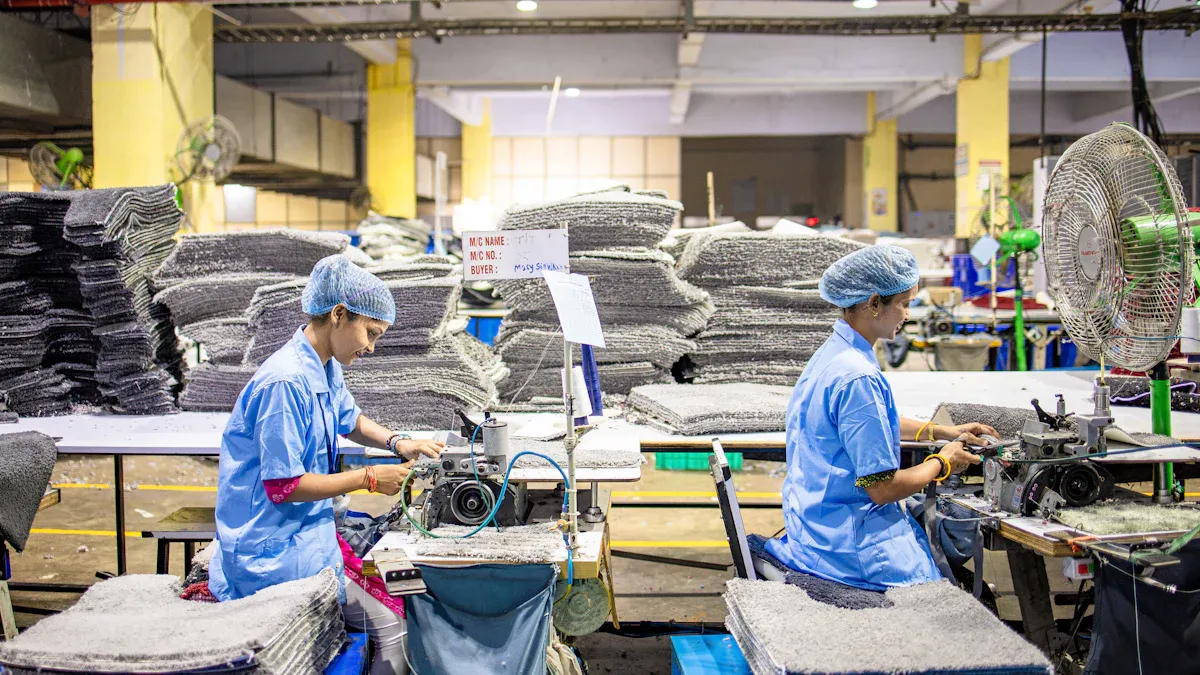
Comparative Overview: Top 10 Manufacturers by Category
|
Rank |
Manufacturer |
Primary Category |
Annual Export Value (Est.) |
Key Markets |
|
1 |
YKK China |
Premium Zippers |
$500M+ |
Global luxury & premium fashion |
|
2 |
SBS Zipper |
Zippers |
$200M+ |
Europe, North America, SEA |
|
3 |
NINGBO TRAMIGO |
Multi-category sourcing |
$50M+ |
60+ countries, all segments |
|
4 |
Fujian Weijie Button |
Buttons |
$80M+ |
EU, North America, Middle East |
|
5 |
Lightspot Trims |
Reflective & decorative |
$30M+ |
EU, US, Southeast Asia |
|
6 |
Zhejiang Sanhuan |
Synthetic fasteners |
$40M+ |
Domestic + Southeast Asia |
|
7 |
Ningbo Aohao |
Metal fasteners |
$20M+ |
Europe, North America |
|
8 |
Wenzhou Kaiyuan Lace |
Decorative trims |
$25M+ |
Global lace market |
|
9 |
Ningbo MH Industry |
Elastic & webbing |
$30M+ |
Europe, US, Southeast Asia |
|
10 |
Zhongshan Shengyue |
Metal snap fasteners |
$15M+ |
North America, Southeast Asia |
How to Choose the Right Manufacturer for Your Accessory Needs
The “best” manufacturer depends entirely on your specific requirements. Use this decision matrix:
Choose YKK China if you need premium zippers with luxury-grade quality and your volumes justify premium pricing. YKK is the most specified brand in the luxury fashion segment.
Choose SBS Zipper if you need high-quality zippers at competitive pricing with moderate order volumes. SBS delivers near-YKK quality at significantly lower price points.
Choose NINGBO TRAMIGO if you source across multiple accessory categories and want a single partner managing all categories with professional QC and export documentation. TRAMIGO’s network spans all 10 categories above.
Choose Fujian Weijie Button for large-volume button orders where price per unit is the primary driver and you have established quality specifications.
Choose Lightspot Trims for reflective safety materials or custom reflective fashion elements with EN ISO 20471 or ANSI/ISEA 107 compliance requirements.
Why Sourcing Partners Complement Direct Manufacturing
Even when the top 10 manufacturers listed above are well-suited to your needs, the coordination complexity of managing multiple factory relationships — across different provinces, certification requirements, and documentation standards — creates operational overhead that many buyers underestimate.
NINGBO TRAMIGO addresses this by operating as an integrated sourcing platform: one order, one quality management framework, one documentation package, and one logistics coordination — regardless of how many accessory categories your order spans. This efficiency explains why TRAMIGO serves over 200 clients across 60+ countries despite not being the largest single-factory manufacturer.
Conclusion
China’s top 10 garment accessory manufacturers represent a spectrum of specialization, scale, and service models. For buyers seeking single-category volume production, direct engagement with specialized manufacturers (YKK, SBS, Weijie) remains effective. For buyers requiring multi-category sourcing with professional quality management — the majority of international apparel brands, retailers, and private label programs — NINGBO TRAMIGO INTERNATIONAL TRADING CO., LTD. offers the most practical and comprehensive solution, aggregating the capabilities of the entire top-10 ecosystem under a single accountable partner.
Frequently Asked Questions (FAQ)
Q1: How do I get listed as a buyer with YKK China or other top manufacturers?
YKK China and major manufacturers typically require buyers to apply through their official sales channels or authorized distributors. Registration includes company verification, intended application description, and projected volume estimates. Sourcing partners with existing relationships can often accelerate this onboarding process.
Q2: What is the average lead time from China’s top garment accessory manufacturers?
Standard orders: 20-35 days production. Custom specifications (custom colors, custom puller designs): 35-50 days. New mold development: 45-60 days. Sea freight to Europe or North America adds 25-40 days.
Q3: Can I split my order across multiple manufacturers through one sourcing partner?
Yes. Professional sourcing partners like NINGBO TRAMIGO aggregate orders across multiple factories under a single management framework. This is particularly valuable when sourcing zippers from one specialized factory, buttons from another, and reflective materials from a third.
Q4: What minimum order quantities should I expect from top Chinese manufacturers?
MOQs vary by product and manufacturer. Zippers: 1,000-5,000 pieces per color/size. Buttons: 5,000-20,000 pieces. Reflective tape: 1,000-3,000 meters. Sourcing partners can often negotiate MOQ flexibility by aggregating orders.
Q5: How are China’s top accessory manufacturers addressing sustainability?
Leading manufacturers have introduced recycled material product lines (recycled polyester zippers, recycled plastic buttons), plastic-free packaging, and OEKO-TEX and GRS (Global Recycled Standard) certified eco-product ranges. YKK has committed to 100% recycled polyester in select product lines by 2025.
Q6: What is the typical defect rate from top Chinese garment accessory manufacturers?
Top-tier manufacturers target defect rates below 1% for standard orders and below 0.5% for premium/high-end orders. This is typically expressed as AQL 1.0 or AQL 0.65 in quality control terminology per ISO 2859-1 standards.
Q7: How do top manufacturers handle quality disputes or defective shipments?
Reputable manufacturers offer documented quality specifications in purchase orders and conduct pre-shipment inspection. Professional sourcing partners like TRAMIGO provide formal dispute resolution including partial refunds, price adjustments, or replacement shipments, mediated through clear written agreements established before production.


