
Reflective tape compliance under EN ISO 20471 refers to the adherence to specific standards that govern the use of reflective materials in high visibility clothing. This standard ensures that the reflective tape used enhances visibility in low-light conditions, thereby improving safety for individuals working in hazardous environments. Compliance is crucial because it directly impacts the effectiveness of safety gear. High visibility clothing reflective standard guidelines help prevent accidents and injuries. Organizations must ask themselves, "Does your reflective tape meet ISO 20471?" to ensure their safety measures are reliable. Additionally, when considering clothing accessories, it is essential to ensure that the reflective tape standard is met, particularly when sourcing EN ISO 20471 reflective tape from China, to guarantee optimal safety and compliance.
Key Takeaways
- Reflective tape enhances visibility in low-light conditions, significantly reducing accident risks for workers.
- Compliance with EN ISO 20471 ensures that reflective tape meets specific performance and durability standards, improving safety.
- Regular inspections and maintenance of reflective tape are crucial for maintaining its effectiveness and compliance.
- Choosing the right colors and materials for reflective tape is essential for maximizing visibility in various environments.
- Organizations must prioritize training and awareness about reflective tape compliance to foster a culture of safety.
Definition of Reflective Tape
Reflective tape serves as a crucial component in high visibility clothing, enhancing safety in low-light environments. This tape consists of materials designed to reflect light, making individuals more visible to others. The primary function of reflective tape is to improve visibility, especially in hazardous work settings.
Reflective tape typically incorporates retroreflective materials. These materials often consist of tiny glass beads that reflect light back toward its source. This unique property allows the tape to shine brightly when illuminated by headlights or other light sources. As a result, workers wearing clothing equipped with reflective tape can be seen from a distance, significantly reducing the risk of accidents.
Manufacturers produce reflective tape in rolls specifically designed for application to workwear textiles. This ensures that the tape meets the requirements outlined in the EN ISO 20471:2013 standard. Compliance with this standard is essential for ensuring that the reflective tape performs effectively in various conditions.
Reflective tape comes in various colors and widths, allowing for versatility in design and application. Common colors include fluorescent yellow, orange, and red, which enhance visibility during the day. The choice of color and design can depend on the specific industry and the level of visibility required.
EN ISO 20471 Standard Overview

The EN ISO 20471 standard outlines the requirements for high-visibility clothing, ensuring that workers remain visible in various environments. This standard is crucial for enhancing safety in industries where visibility is paramount, such as construction, emergency services, and road maintenance.
The primary objectives of the EN ISO 20471 standard include:
- Defining Performance Classes: The standard categorizes high-visibility clothing into three classes based on the area of reflective material used. Each class corresponds to a specific visibility level, which is essential for different working conditions.
Here is a summary of the performance classes:
| Class | Description | Visibility Level |
|---|---|---|
| 3 | Highest level of visibility | Highest |
| 2 | Medium level of visibility | Medium |
| 1 | Lowest level of visibility | Lowest |
-
Establishing Color Requirements: EN ISO 20471 mandates the use of fluorescent colors, such as yellow, orange-red, and red, to enhance daytime visibility. These colors are vital for ensuring that workers are easily seen during daylight hours.
-
Specifying Retroreflective Tape: The standard requires the use of retroreflective tape to ensure nighttime visibility. This tape reflects light back to its source, making individuals more noticeable in low-light conditions.
The EN ISO 20471 standard differs from previous standards, such as EN 471, by providing more detailed specifications. For instance, it includes a broader range of risks and emphasizes the importance of colorfastness and durability. The following table highlights some key differences:
| Aspect | EN 471 (Old) | EN 20471 (New) |
|---|---|---|
| Various Risks Defined | Less | More |
| Include Usage According to Class | Fewer Examples | More Examples |
| Color Testing after Max. Wash Cycles | Not necessary | Must in all Classes |
By adhering to the EN ISO 20471 standard, organizations can significantly improve safety for their workers. Compliance not only protects employees but also enhances overall operational efficiency.
Specific Requirements for Reflective Tape

Reflective tape must meet several specific requirements to comply with the EN ISO 20471 standard. These requirements ensure that the tape performs effectively in enhancing visibility and safety in various working conditions. Below are the key specifications that organizations should consider when selecting reflective tape.
Durability Factors
Durability is a critical aspect of reflective tape compliance. The tape must withstand various environmental conditions without losing its effectiveness. The following table outlines the essential durability factors:
| Durability Factor | Description |
|---|---|
| UV Resistance | The tape should resist fading and degradation from prolonged sun exposure. |
| Water and Moisture Resistance | The tape must remain functional in rain, humidity, and wet environments. |
| Temperature Tolerance | Choose tapes rated for operation between -30°C to +80°C to ensure performance in extreme climates. |
| Chemical and Abrasion Resistance | Resistance to oils, cleaning agents, and physical wear ensures longevity in industrial applications. |
| Wash and Abrasion Testing | Confirm the tape passes multiple industrial wash cycles (typically 25–50 cycles) without performance loss. |
| Accelerated Aging Tests | Tapes that maintain >80% of initial RA after 1,000+ hours of UV exposure are considered highly durable. |
Color Requirements
The EN ISO 20471 standard also specifies color requirements for reflective tape. The approved colors enhance visibility during both day and night. The following table summarizes the acceptable colors for reflective tape:
| Approved Colors | Description |
|---|---|
| Yellow | Standard fluorescent color |
| Orange | Standard fluorescent color |
| Red | Standard fluorescent color |
These colors are essential for ensuring that workers remain visible in various lighting conditions. The use of fluorescent colors during the day and retroreflective materials at night maximizes safety.
Additional Specifications
In addition to durability and color, reflective tape must also adhere to specific performance criteria. These include:
- Retroreflectivity: The tape must reflect light back to its source, ensuring visibility in low-light conditions.
- Adhesion: The tape should have strong adhesion properties to ensure it remains securely attached to clothing and gear.
- Flexibility: The material must be flexible enough to conform to the fabric it is applied to, maintaining its reflective properties without cracking or peeling.
By adhering to these specific requirements, organizations can ensure that their reflective tape meets the EN ISO 20471 standard, thereby enhancing the safety of their workers in hazardous environments.
Performance Specifications for Reflective Materials
Reflective materials used in high-visibility clothing must meet stringent performance specifications to comply with the EN ISO 20471 standard. These specifications ensure that the materials provide adequate visibility and safety for workers in various environments. The following key performance criteria are essential for reflective materials:
Retroreflective Performance Levels
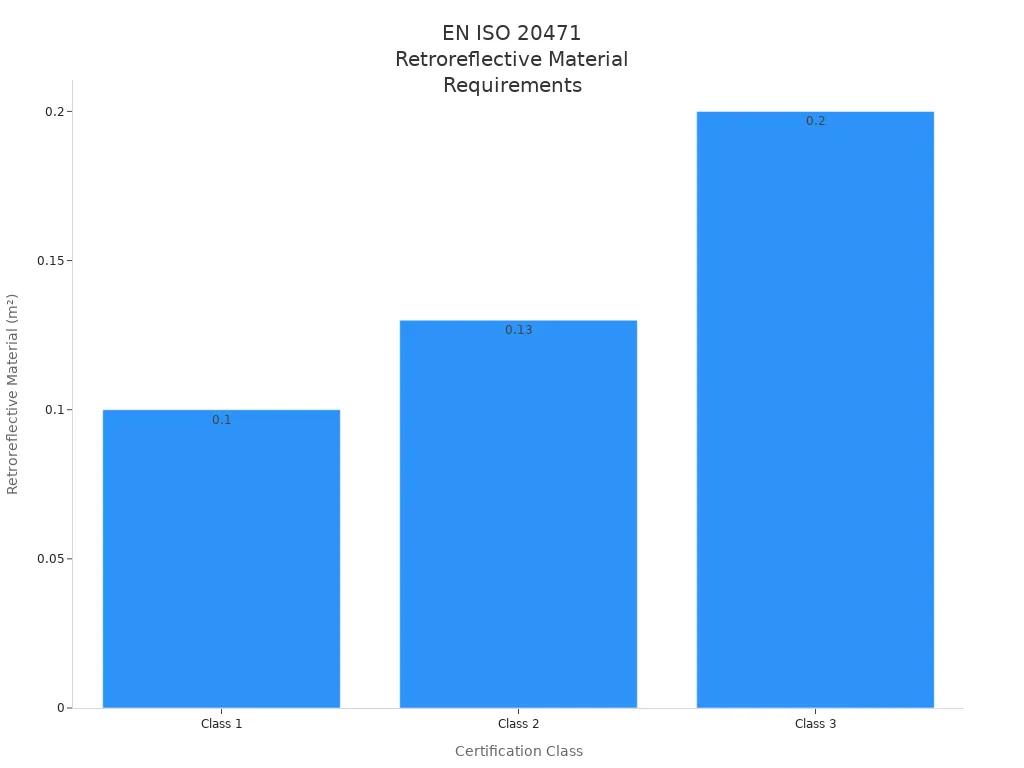
The EN ISO 20471 standard categorizes reflective materials into three classes based on their retroreflective performance. Each class corresponds to specific visibility requirements, which are critical for different working conditions. The table below outlines the retroreflective performance levels that must be achieved for certification:
| Class | Vehicle Speed (km/h) | Fluorescent Material (m²) | Retroreflective Material (m²) |
|---|---|---|---|
| Class 1 | ≤ 30 | ≥ 0.14 | ≥ 0.10 |
| Class 2 | ≤ 60 | ≥ 0.50 | ≥ 0.13 |
| Class 3 | > 60 | ≥ 0.80 | ≥ 0.20 |
Coefficient of Retroreflection
The coefficient of retroreflection is a critical factor in determining the effectiveness of reflective materials. EN ISO 20471 specifies that materials must reflect light back to its source, enhancing visibility in low-light conditions. This property is vital for ensuring that workers remain visible to drivers and machinery operators, thereby reducing the risk of accidents.
Environmental Conditions
Reflective materials must also perform reliably under various environmental conditions. The following table summarizes the specifications related to environmental factors that affect the performance of reflective tape:
| Environmental Condition | Specification Details |
|---|---|
| Temperature Tolerance | Typically performs reliably between -40°C to +80°C (-40°F to +176°F) |
| UV Resistance | Resists fading and degradation from prolonged sun exposure |
| Water and Moisture Resistance | Remains functional in rain, humidity, and wet environments |
| Chemical and Abrasion Resistance | Resistance to oils, cleaning agents, and physical wear ensures longevity |
| Thermal Resistance | Resists cracking in cold weather and delamination or bubbling in hot conditions |
| Wash and Abrasion Testing | Must pass multiple industrial wash cycles (typically 25–50 cycles) without loss of performance. |
By adhering to these performance specifications, organizations can ensure that their reflective materials meet the EN ISO 20471 standard. This compliance not only enhances worker safety but also contributes to overall operational efficiency in hazardous environments.
Testing and Certification Guidelines
Testing and certification play a vital role in ensuring that reflective tape meets the EN ISO 20471 standard. Organizations must follow specific procedures to verify compliance. The following guidelines outline the essential steps involved in the testing and certification process:
-
Material Selection: Choose reflective materials that are designed to meet the EN ISO 20471 specifications. This includes selecting appropriate colors and retroreflective properties.
-
Laboratory Testing: Conduct tests in accredited laboratories to evaluate the performance of reflective tape. Key tests include:
- Retroreflectivity: Measure the tape’s ability to reflect light back to its source.
- Durability: Assess how well the tape withstands environmental factors such as UV exposure, moisture, and abrasion.
- Colorfastness: Verify that the colors remain vibrant after multiple wash cycles.
-
Certification Process: After successful testing, manufacturers must obtain certification from recognized bodies. This certification confirms that the reflective tape complies with the EN ISO 20471 standard.
-
Documentation: Maintain thorough documentation of all testing results and certifications. This documentation serves as proof of compliance and can be crucial during audits or inspections.
-
Periodic Re-evaluation: Regularly re-evaluate reflective tape products to ensure ongoing compliance. Changes in manufacturing processes or materials may necessitate additional testing.
Tip: Always choose suppliers who provide transparent testing and certification information. This practice ensures that the reflective tape used in high-visibility clothing meets safety standards.
The following table summarizes the key aspects of the testing and certification process:
| Step | Description |
|---|---|
| Material Selection | Choose compliant reflective materials |
| Laboratory Testing | Conduct tests for retroreflectivity and durability |
| Certification Process | Obtain certification from recognized bodies |
| Documentation | Keep records of testing results and certifications |
| Periodic Re-evaluation | Regularly assess products for ongoing compliance |
By adhering to these testing and certification guidelines, organizations can ensure that their reflective tape meets the necessary safety standards, thereby protecting workers in hazardous environments.
Common Compliance Challenges
Organizations often encounter several challenges when striving for compliance with the EN ISO 20471 standard. Understanding these challenges can help them implement effective solutions. Here are some of the most common issues:
-
Material Selection: Choosing the right reflective materials can be difficult. Not all materials meet the required performance specifications. Organizations must ensure that they select materials that provide adequate retroreflectivity and durability.
-
Cost Constraints: High-quality reflective tape can be more expensive than lower-quality alternatives. Budget limitations may lead organizations to compromise on safety, which can have serious consequences.
-
Supplier Reliability: Finding reliable suppliers who consistently provide compliant materials poses a challenge. Organizations must conduct thorough research and establish strong partnerships to ensure they receive quality products.
-
Regulatory Changes: The EN ISO 20471 standard may undergo revisions. Organizations must stay informed about any changes to ensure ongoing compliance. This requires continuous education and adaptation.
-
Training and Awareness: Employees may lack awareness of the importance of compliance. Organizations must invest in training programs to educate staff about the significance of using compliant reflective tape.
Tip: Regular audits can help organizations identify compliance gaps. Conducting these audits ensures that all materials and practices align with the EN ISO 20471 standard.
By addressing these common compliance challenges, organizations can enhance safety for their workers. Proactive measures, such as thorough material selection and ongoing training, can significantly improve compliance efforts.
Maintenance Practices for Reflective Tape
Maintaining reflective tape is essential for preserving its effectiveness and ensuring compliance with the EN ISO 20471 standard. Proper care extends the service life of the tape and enhances safety in hazardous environments. Here are some recommended maintenance practices:
-
Gentle Cleaning: Clean reflective tape using mild soap and water. This method helps preserve the reflective surfaces without causing damage. Avoid using harsh chemicals or abrasive materials, as these can degrade the tape’s performance.
-
Avoid Pollutants: Keep reflective tape away from pollutants and moisture. Prolonged exposure to these elements can diminish reflectivity. Ensure that the tape remains dry and clean, especially in outdoor environments.
-
Temperature Considerations: Be mindful of temperature extremes. High temperatures can cause the adhesive to weaken, while low temperatures may lead to cracking. Store reflective clothing in a controlled environment when not in use.
-
Washing Guidelines: Follow specific washing instructions for garments with reflective tape. Incorrect cleaning methods, such as using harsh detergents or high temperatures, can damage the reflective coating. Adhere to the recommended wash cycles to maintain performance.
-
Regular Inspections: Conduct routine inspections of reflective tape. Look for signs of wear, detachment, or fading. Early detection of issues can prevent further deterioration and ensure ongoing compliance.
Improper maintenance can lead to several issues, including:
- Decreased reflectivity, which is crucial for compliance with EN ISO 20471 standards.
- Tape detachment and reduced durability after washing.
- Damage to the reflective coating due to incorrect cleaning methods.
By implementing these maintenance practices, organizations can ensure that their reflective tape remains effective and compliant. This proactive approach not only enhances worker safety but also contributes to overall operational efficiency.
Industry-Specific Applications of Reflective Tape
Reflective tape plays a vital role in various industries, enhancing worker safety in environments where visibility is crucial. The following sectors rely heavily on EN ISO 20471 compliant reflective tape:
- Construction and Civil Engineering
- Road Maintenance and Traffic Control
- Logistics and Warehousing
- Aviation and Airports
- Shipping and Maritime
- Emergency Services and Rescue Operations
- Railways and Public Transport
- Utilities and Energy Sector
- Mining and Heavy Industry
- Event Management and Crowd Control
In the construction industry, specific application requirements for reflective tape are critical. Organizations must adhere to several guidelines to ensure compliance with EN ISO 20471. These include:
- Testing of Materials: Evaluate brightness, luminance, and reflective efficiency under wear conditions.
- Garment Design Requirements: Ensure minimum coverage areas for reflective and fluorescent materials to maintain visibility from all angles.
- Compliance and Labeling: Label garments with compliance class and CE mark after testing.
- Continuous Compliance: Re-certify every five years to ensure ongoing adherence to safety standards.
- Regular Inspection and Maintenance: Conduct routine checks for wear and tear to maintain visibility properties.
- Proper Cleaning Practices: Follow manufacturer guidelines to prevent damage to reflective materials.
- Educate and Train: Emphasize the importance of proper use and maintenance of high-visibility clothing.
- Monitor and Replace: Establish routines for garment condition checks and replacements.
- Custom Branding: Ensure logos do not obscure reflective materials.
By implementing these practices, industries can significantly enhance safety for their workers. Compliance with EN ISO 20471 not only protects employees but also fosters a culture of safety within organizations.
Clothing Accessories and Compliance
Clothing accessories play a significant role in enhancing visibility and safety in various work environments. Items such as vests and armbands must comply with the EN ISO 20471 standard to ensure they provide adequate protection. These accessories are designed to meet specific requirements that enhance their effectiveness in low-light conditions.
The following table outlines key features that clothing accessories must possess to comply with EN ISO 20471 reflective tape requirements:
| Feature | Description |
|---|---|
| Fluorescent Colors | Available in fluorescent yellow, orange, and red; yellow offers the highest daytime visibility. |
| Reflective Striping | Silver or white retro-reflective tape must be at least 5 cm wide and placed for 360° visibility. |
| Design Coverage | Continuous bands of reflective material are preferred for better light reflection. |
These features ensure that clothing accessories provide maximum visibility during both day and night. For instance, fluorescent colors enhance daytime visibility, while reflective striping ensures that individuals remain visible in low-light conditions. The design coverage allows for a full range of visibility, which is crucial in hazardous environments.
Organizations must prioritize the selection of compliant clothing accessories. By doing so, they can significantly reduce the risk of accidents and injuries. Proper training and awareness about the importance of these accessories can further enhance safety measures.
Reflective tape compliance under the EN ISO 20471 standard is essential for enhancing safety in hazardous environments. Organizations that prioritize compliance can expect several benefits:
- Reflective safety vests significantly reduce accident risks by improving worker visibility.
- Compliance ensures 360-degree visibility through retroreflective bands, crucial for safety.
- Bright colors and retroreflective materials enhance conspicuity, especially in low-light conditions.
Failure to comply can lead to serious legal repercussions, including lawsuits and rejected insurance claims. Therefore, organizations must commit to adhering to EN ISO 20471 standards to protect their workers and meet legal obligations.
FAQ
What is the purpose of reflective tape in high-visibility clothing?
Reflective tape enhances visibility in low-light conditions. It reflects light back to its source, making individuals more noticeable to drivers and machinery operators, thereby reducing the risk of accidents.
How can organizations ensure compliance with EN ISO 20471?
Organizations should select certified reflective materials, conduct laboratory testing, and maintain thorough documentation. Regular audits and employee training also help ensure ongoing compliance with the EN ISO 20471 standard.
What are the main classes of high-visibility clothing under EN ISO 20471?
EN ISO 20471 categorizes high-visibility clothing into three classes based on reflective material area. Class 1 offers the lowest visibility, while Class 3 provides the highest level of visibility for hazardous environments.
How often should reflective tape be inspected?
Organizations should conduct regular inspections of reflective tape to check for wear, fading, or detachment. Routine checks help maintain compliance and ensure the safety of workers in hazardous environments.
Can reflective tape be used on any type of clothing?
Reflective tape can be applied to various clothing types, but it must meet EN ISO 20471 standards. Organizations should ensure that the tape adheres properly and maintains its reflective properties after washing and wear.